The Process of Keeping Seafood Fresh from Tank to Table
Discover how KIM Seafood keeps seafood fresh from tank to table, delivering premium freshness and flavor in every dish.
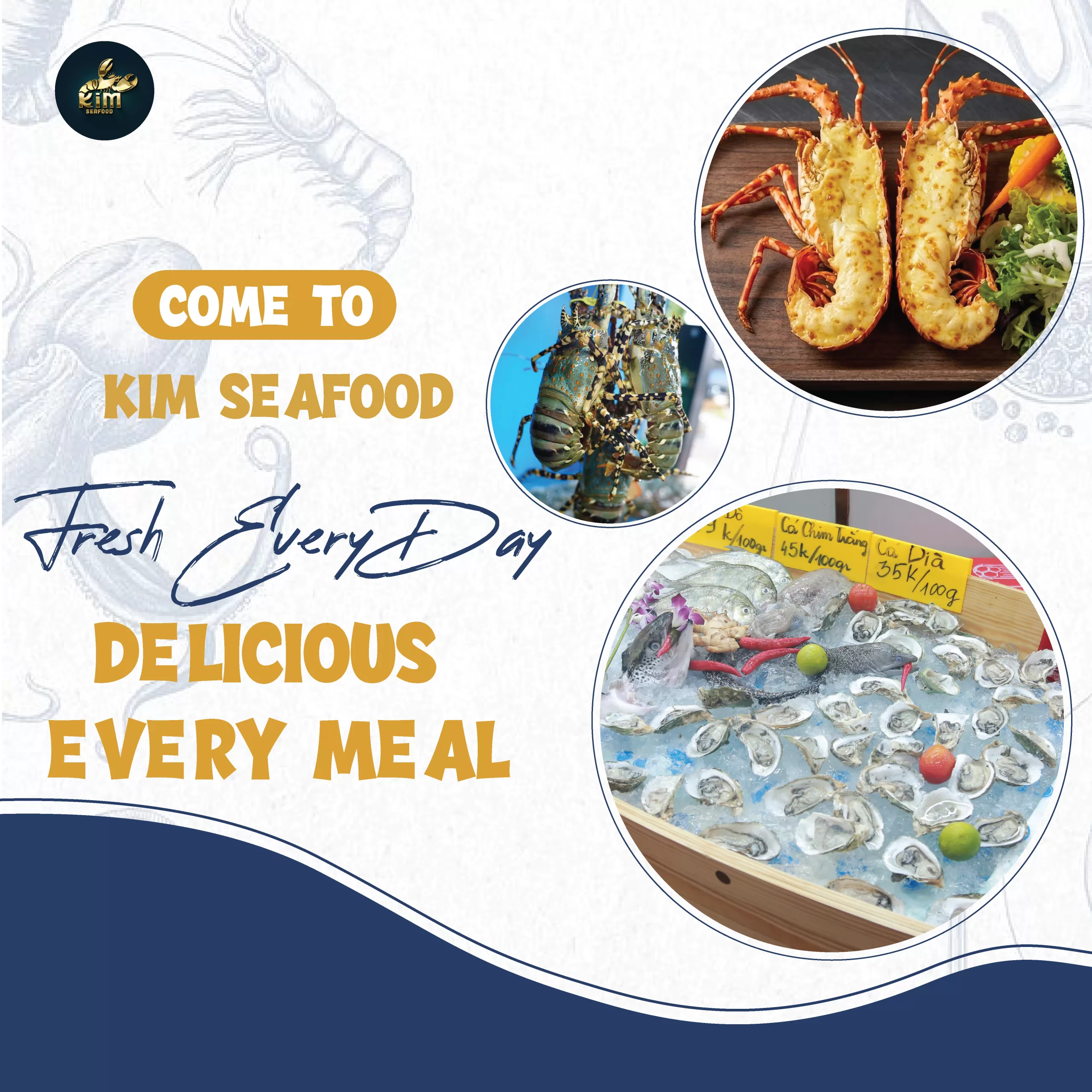
In the heart of Da Nang – a coastal city famous for its abundant seafood – finding a live seafood restaurant in Da Nang that truly preserves freshness from the moment of catch to the moment it reaches your table is no easy task. For discerning diners, “fresh and alive” isn’t just a marketing phrase; it’s an entire process that demands precision, science, and dedication at every single stage. That is exactly what KIM Seafood pursues every day: delivering an experience built on fresh, live seafood – full flavor, full joy.
This article will take you through the entire journey of a shrimp, a crab, or a sea snail – from swimming freely in the ocean to becoming a hot, delicious dish on your table. It also answers a question many diners often ask: how does a restaurant manage to keep its seafood fresh throughout an entire day of service?
Why the Process of Keeping Seafood Fresh Matters So Much
Seafood is an especially delicate type of food. A shift of just a few degrees in temperature, a few hours without enough oxygen, or improper transport can quickly degrade seafood quality – losing its natural sweetness, its characteristic firm texture, and even compromising food safety. That’s why, for any seafood restaurant, the process of keeping seafood fresh and alive is never a side step – it’s the very soul of the entire dining experience.
Under the slogan “Ocean-Fresh Flavor – Complete Joy,” KIM Seafood is clear about one thing: every core value the restaurant stands for – freshness, transparency, dedication, connection, and the authentic taste of the Da Nang coast – begins with tight control over the supply chain and seafood preservation. A healthy king crab or a lobster still flexing its claws when it reaches the table isn’t a coincidence – it’s the result of a carefully built system.
Step 1: Sourcing – Where Everything Begins
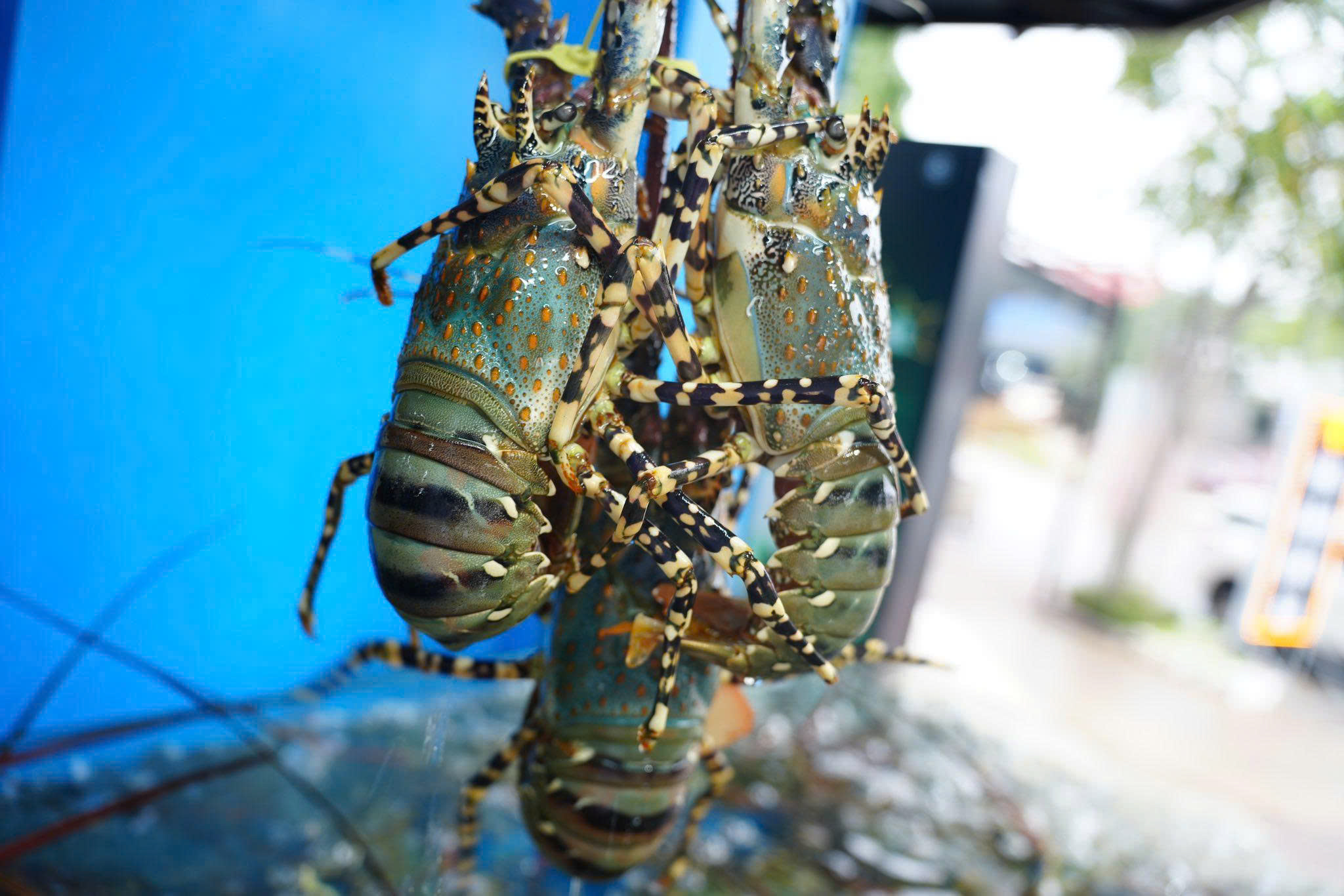
Every story of fresh, delicious seafood starts with its origin. At KIM Seafood, choosing a supplier isn’t just about price – it’s about reputation, reliability, and the ability to guarantee that seafood arrives at the restaurant alive and healthy.
The top criteria in the sourcing process include:
- Clear origin: priority is given to seafood caught in the wild or farmed in clean coastal waters and lagoons where water quality and habitat are carefully monitored.
- Short transport time: seafood is purchased and transported as soon as possible after being caught, minimizing the stress it experiences after leaving its natural habitat.
- Health inspection for every batch: before any seafood is accepted, the kitchen and management team check its mobility, color, smell, and reflexes to ensure only batches that meet standard are brought into the restaurant.
👉 Read more:Fresh Seafood in Da Nang – Kim Seafood’s Commitment 2026
This foundational step is what creates dishes with a naturally sweet taste, firm texture, and food safety – something every live seafood restaurant in Da Nang should place at the very top of its priorities.
Step 2: Transport – The Stage That Decides Life or Death
If sourcing is the starting point, transport is the “life-or-death” stage that determines whether seafood stays alive and fresh. During the journey from the fishing or farming site to the restaurant, seafood faces multiple threats: temperature swings, oxygen shortages, physical impact, or a transport time that simply runs too long.
To minimize these risks, the process of transporting live seafood typically includes:
- Portable oxygenation systems: for crustaceans such as lobster, crab, and mud crab, maintaining sufficient dissolved oxygen in the water throughout the journey is a matter of survival.
- Proper water temperature control: each species has its own ideal temperature range; transport water must be kept close to its natural habitat temperature to prevent thermal shock.
- Reasonable stocking density: seafood is never overcrowded in a single transport tank, avoiding competition for oxygen or physical injury from collisions.
- Shortest possible transport time: the faster seafood reaches the restaurant, the higher its survival rate and the better its meat quality.
This is also why KIM Seafood always prioritizes suppliers close to Da Nang and its surrounding coastal areas – shortening transport time while preserving the authentic taste of the Da Nang coast in every ingredient.
Step 3: The Holding Tank System – Seafood’s “Second Home”
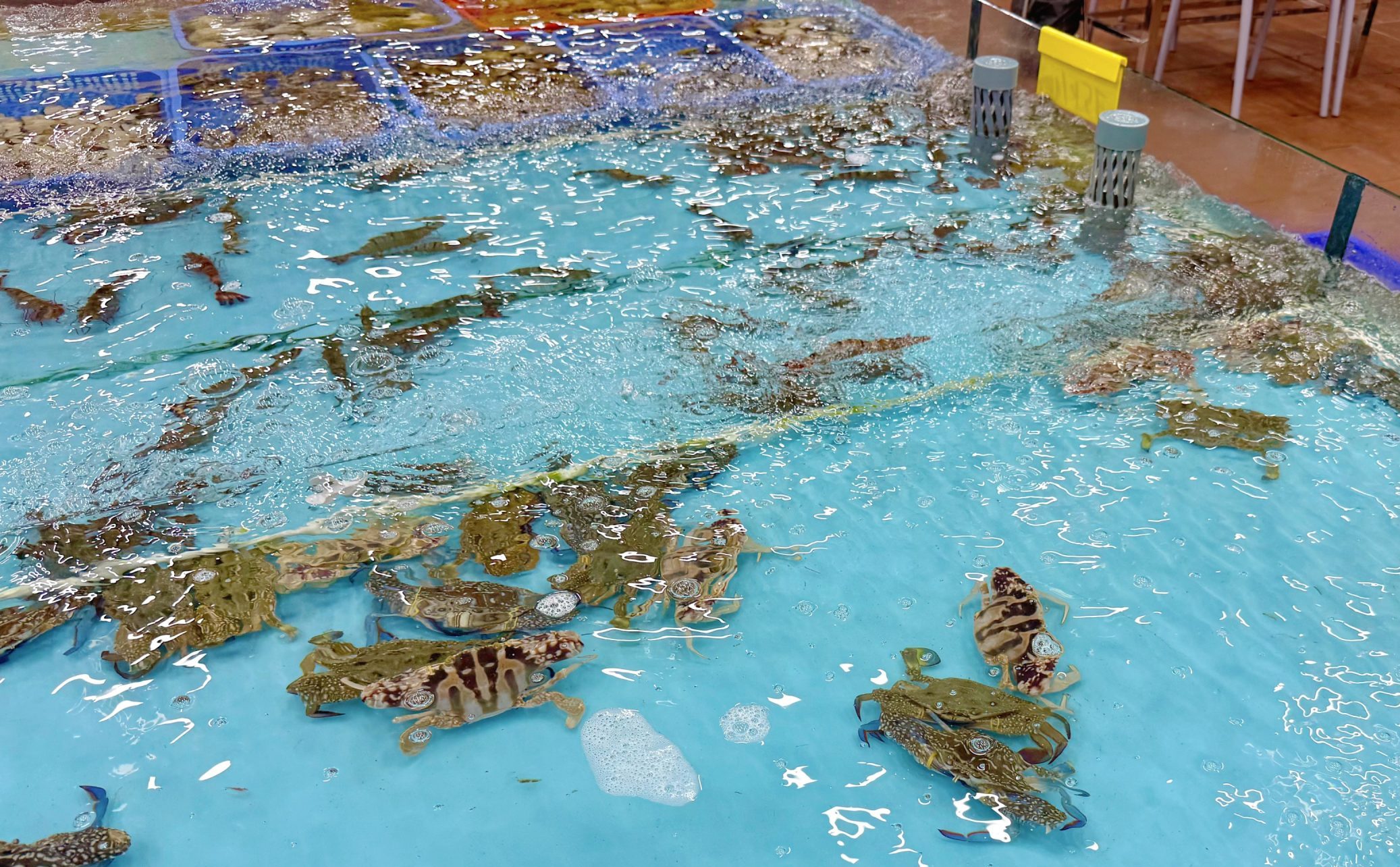
Once seafood arrives at the restaurant, it’s moved into a dedicated holding tank system – a kind of temporary home that helps it recover and stay healthy until it’s time to cook. This is one of the most technically important stages in the entire process of keeping seafood fresh.
A proper holding tank system at a seafood restaurant must meet the following standards:
Water quality and appropriate salinity
Water in the tanks is treated and salinity-controlled to closely match each species’ natural habitat. Seawater is filtered to remove impurities and harmful bacteria before entering the holding tanks.
Temperature and dissolved oxygen
Each tank is equipped with its own oxygenation and temperature-control system, tailored to the biological needs of each species – from lobster and king crab to sea snails and various ocean fish.
Each species kept in its own dedicated zone
Each type of seafood is held in its own designated area, preventing competition or stress between species and making it easier for staff to monitor and maintain quality for each one.
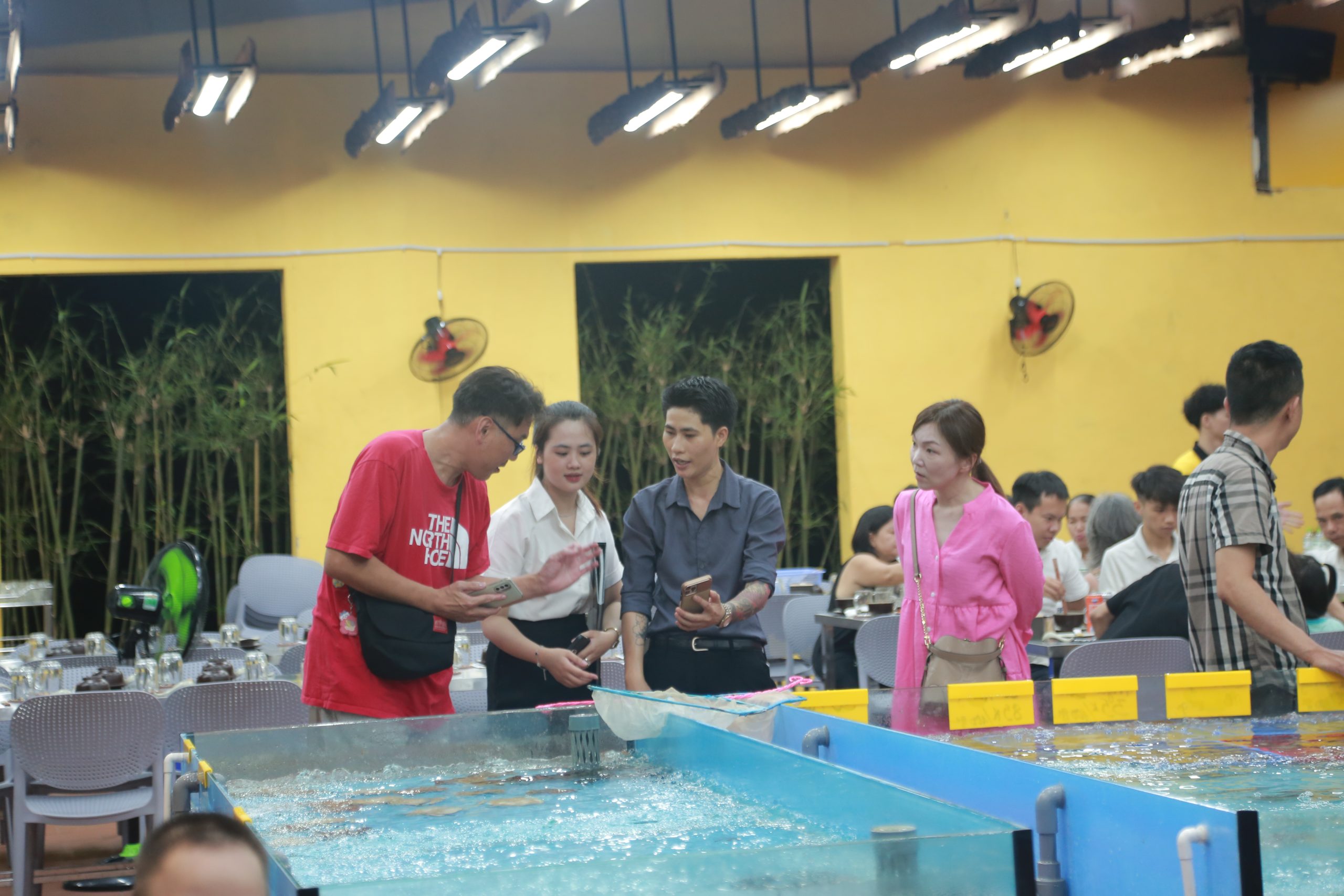
Thanks to this carefully invested tank system, guests visiting KIM Seafood can witness firsthand seafood that is still alive and healthy before choosing their dish.
Step 4: Quality Inspection Before Cooking
Before any piece of seafood goes into the kitchen, KIM Seafood’s culinary team carries out a thorough inspection to guarantee the best possible quality reaches every guest. This inspection includes:
- Observing mobility and reflexes (shrimp flicking their tails, crabs moving briskly, fish swimming actively).
- Checking the color of the shell, carapace, or skin – an important indicator of health.
- Assessing the natural characteristic smell of each species to ensure there’s no unusual odor.
Only ingredients that meet the standard move into the cooking area, in line with the restaurant’s commitment to “seafood cooked fresh, right on the spot.” See here: Quality seafood restaurant Da Nang: Best season to go?
Step 5: Cooking on the Spot – Preserving the Natural Sweetness
One of the defining factors that sets KIM Seafood apart is its philosophy of cooking seafood fresh, right on the spot. As soon as a guest chooses their dish from the live tank, the ingredient goes straight to the kitchen for immediate preparation, preserving its freshness, natural sweetness, and firm texture.
The cooking process at KIM Seafood always follows these principles:
- Fast, technically precise preparation: minimizing the time seafood spends exposed to air after being taken out of the tank, to avoid any loss of freshness.
- Preserving natural flavor: favoring cooking methods that highlight seafood’s inherent sweetness, such as steaming, grilling, and garlic-butter sauce, rather than overloading it with seasoning that masks the original taste.
- Experienced chefs: every dish is prepared by chefs who deeply understand the unique characteristics of each species – from the precise steaming time for king crab to the perfect doneness for lobster sashimi.
Three signature dishes best represent this philosophy at KIM Seafood: King Crab with its firm, sweet meat, Garlic Butter Sea Snails with their rich, fragrant taste, and fresh Lobster Sashimi – three dishes that any lover of fresh seafood should try when visiting the restaurant.
Step 6: Serving – Completing the Journey from Tank to Table
The process of keeping seafood fresh doesn’t end at the cooking stage – it’s completed through how each dish is presented and served to the guest. At KIM Seafood, every dish is served immediately while still hot, preserving its flavor and texture at their absolute best.
The restaurant’s space also plays a crucial role in completing the experience: a view overlooking Da Nang’s famous fire-breathing Dragon Bridge, an open, ocean-inspired atmosphere, and traditional live music performances every weekend that create a setting both cozy and rich in local culture. This is exactly why so many guests choose KIM Seafood not just for the food, but for a complete fresh-seafood experience in the heart of this coastal city.
Common Mistakes That Ruin Seafood Freshness
Not every restaurant executes this entire process well. Here are some common mistakes that cause seafood to lose its freshness quickly:
- Overcrowded tanks: cramming too much seafood into a small tank leaves it short on oxygen, causing it to weaken and die prematurely.
- Uncontrolled water temperature: letting water temperature fluctuate too much causes thermal shock and weakens seafood’s resistance.
- Holding seafood too long before cooking: the longer seafood is held, the greater the risk of quality decline, even if it’s technically still alive.
- Slow preparation and cooking: leaving ingredients exposed to air too long after being taken from the tank causes a loss of freshness and natural sweetness.
Understanding these risks is exactly why KIM Seafood invests seriously in every link of the chain – from sourcing and transport to holding tanks and on-the-spot cooking – to deliver the freshest seafood possible.
Transparency – A Core Value at KIM Seafood
Beyond freshness, transparency is another core value KIM Seafood stands behind. Guests visiting the restaurant can personally observe the seafood in the tanks before choosing, and receive attentive guidance from staff about origin, cooking methods, and the nutritional characteristics of each species.
With a fast customer-response policy – replying to messages in under 5 minutes, comments in under 30 minutes, and reviews within 24 hours – KIM Seafood is committed to always listening and continuously improving its service, reflecting the spirit of connection and dedication the restaurant was built on.
Why Choose KIM Seafood for Fresh Live Seafood in Da Nang?
Da Nang is a seafood lover’s paradise with countless restaurant choices, but not every one of them invests as seriously in the process of keeping seafood fresh as KIM Seafood does. With a standard-compliant tank system, carefully selected seafood sources, experienced chefs, and an on-the-spot cooking philosophy, the restaurant offers a complete dining experience in a refined space.
Beyond the quality of its dishes, KIM Seafood also stands out for its unique Dragon Bridge view, weekend cultural performances, and a 10% bill discount for guests who book a table in advance – a strong bonus for family gatherings, friend meetups, and business entertaining.
👉 Read more:Choosing seafood restaurant that fits your taste and budget
Conclusion
The journey of a piece of seafood from tank to table may seem simple, but it actually requires a closed-loop, scientific, and deeply dedicated process. From sourcing, transport, and tank systems to quality checks, on-the-spot cooking, and serving – every step contributes to the complete, fresh flavor that guests experience in every dish.
At KIM Seafood, the process of keeping seafood fresh isn’t just a promise on paper – it’s something guests can witness firsthand at the restaurant, from the live seafood tanks in a warm, welcoming space to every hot dish cooked right after being chosen. That’s exactly why KIM Seafood proudly stands as the ideal destination for anyone who loves fresh seafood in the heart of Da Nang.
Contact Information:
-
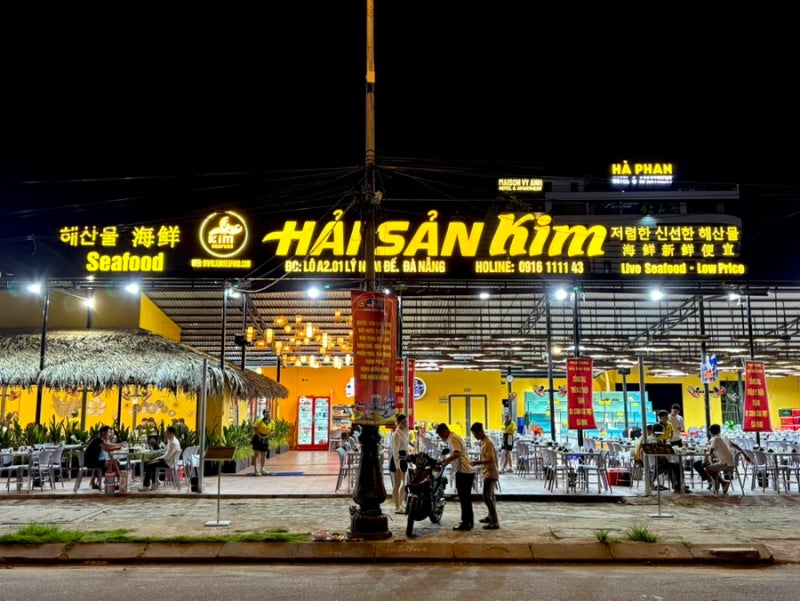
- Address: Kim Seafood, A2.01 Lý Nam Đế, An Hải Trung, Sơn Trà, Đà Nẵng, Việt Nam.
- Phone: 0916111143
- Opening Hours: 10:00 am – 23:00 pm
- Email: hello.kimseafood@gmail.com
- Fanpage Facebook: Hải Sản KIM Seafood