Kim Seafood – The Most Famous Korean-Style Seafood in Da Nang
Korean seafood in Da Nang at Kim Seafood — Korean-style cooking, fresh daily ingredients, trusted by the Korean community and visitors alike.
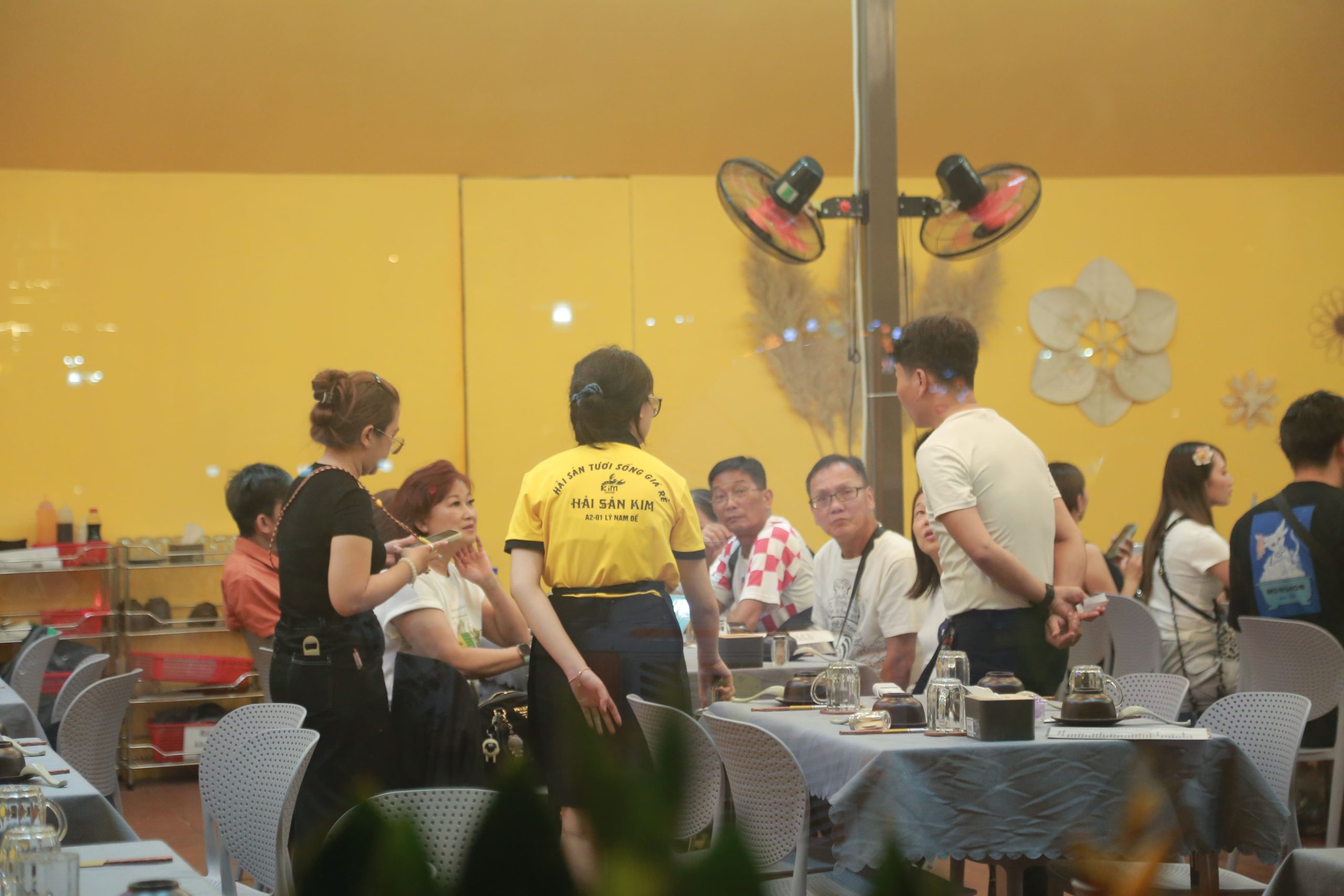
Da Nang has been a familiar destination for Korean travelers for many years. But among hundreds of seafood restaurants in the city, very few genuinely understand Korean dining preferences, serve in the way Korean guests expect, and source ingredients fresh enough to earn a nod of approval from a Korean diner on the very first visit.
This article explains why Korean seafood in Da Nang is about more than hanging a Korean-language sign to attract customers — and why Kim Seafood has become the name that both the Korean expat community in Da Nang and Korean tourists mention most when the question of where to eat comes up.
Da Nang and Korean Seafood Culture — Why This City Works for Korean Diners
Da Nang has consistently ranked as the top international destination for Korean travelers visiting Vietnam. According to data from Vietnam’s National Tourism Administration, Korea has been the largest source of international visitors to Da Nang for multiple consecutive years. The combination of beautiful beaches, rich local cuisine, and costs significantly lower than comparable destinations in Asia makes Da Nang a natural fit for Korean travelers.
Korean seafood in Da Nang appeals particularly strongly to Korean visitors because the variety and freshness of what the city offers is genuinely comparable to what they are used to at home — at a fraction of the price. Da Nang’s fishing boats go out every night and return with fresh catches each morning. The supply chain from ocean to table is shorter here than in most Vietnamese cities.
But the quality standards Korean diners bring with them do not change because they are abroad. They expect the same level of freshness they would apply to raw preparations at home, the same approach to simple cooking that lets the ingredient speak for itself, and ideally a setting where the language barrier does not create a frustrating ordering experience. This is why Korean seafood in Da Nang that genuinely meets Korean standards is rarer than the number of restaurants claiming the label would suggest.
What Does Korean Seafood in Da Nang Actually Mean?
Many restaurants in Da Nang attach the Korean label to their offering as a marketing move. In practice, genuine Korean seafood in Da Nang requires three things to actually deliver on that description: ingredients fresh enough to serve raw, a service style that matches how Korean diners eat seafood, and a menu that includes preparations familiar to Korean palates. Missing any one of the three produces an experience that looks Korean from the outside but does not hold up once the food arrives.
How Korean Seafood Dining Differs from Vietnamese Dining Culture
Korean seafood culture sets an extremely high bar for freshness, particularly for preparations eaten raw or with minimal cooking. Steamed seafood, sashimi, and salt-grilled seafood — these simple preparations have nowhere to hide. There is no marinade, no heavy sauce, no layered seasoning to compensate for an ingredient that has lost its peak freshness. When Korean diners order Korean seafood in Da Nang, the freshness test is often the first thing they apply, consciously or not.
Korean diners are also accustomed to a communal eating style — multiple small dishes arriving together, shared across the table, rather than each person ordering a single individual plate. The table layout, the pacing of service, and the way dishes are arranged all affect how comfortable a Korean diner feels at a restaurant. A venue that understands this creates a meaningfully different experience from one that simply translates the menu into Korean and calls it done.
Beyond the food itself, Korean diners dining on Korean seafood in Da Nang typically want to be able to ask questions: how spicy is this? Can the preparation be adjusted? What came in fresh today? When those questions can be answered directly in Korean — not through a translation app or by pointing at pictures — the entire experience becomes smoother and more satisfying.
Why Korean Visitors Choose Da Nang for Seafood
The price difference between Korean seafood in Da Nang and equivalent quality seafood in Seoul or Busan is substantial. King crab, abalone, Alaska shrimp, and fresh oysters — the premium ingredients that define a quality Korean seafood experience — are available in Da Nang at prices that make a high-quality meal accessible in a way it often is not at home.
This price advantage only delivers real value when the quality of the ingredient justifies it. Korean seafood in Da Nang at Kim Seafood occupies this position: premium ingredients at prices significantly below what the same quality would cost in Korea, prepared in a way that respects both the ingredient and the Korean palate.
Kim Seafood — Korean Seafood in Da Nang Trusted by the Korean Community
Kim Seafood is located at A2.01 Ly Nam De, An Hai Trung, Son Tra — a few minutes from Dragon Bridge by vehicle, in an area where a significant number of Korean visitors stay and move through daily. The location is accessible from both the My Khe beachfront accommodation area and the city center hotel district.
The trust the Korean community has placed in Kim Seafood for Korean seafood in Da Nang did not come from marketing or Korean-language signage. It came from the restaurant resolving the things Korean diners care about most when choosing a seafood restaurant abroad: genuinely fresh ingredients, staff who can communicate in Korean, and a service approach that does not create language barriers at the point of ordering.
These are operational standards that take consistent effort to maintain. Kim Seafood has sustained them over multiple years — which is why when a Korean expat living in Da Nang brings visitors from Korea to eat seafood, Kim Seafood is typically the first address they give.
Daily Fresh Ingredients — The Non-Negotiable Foundation
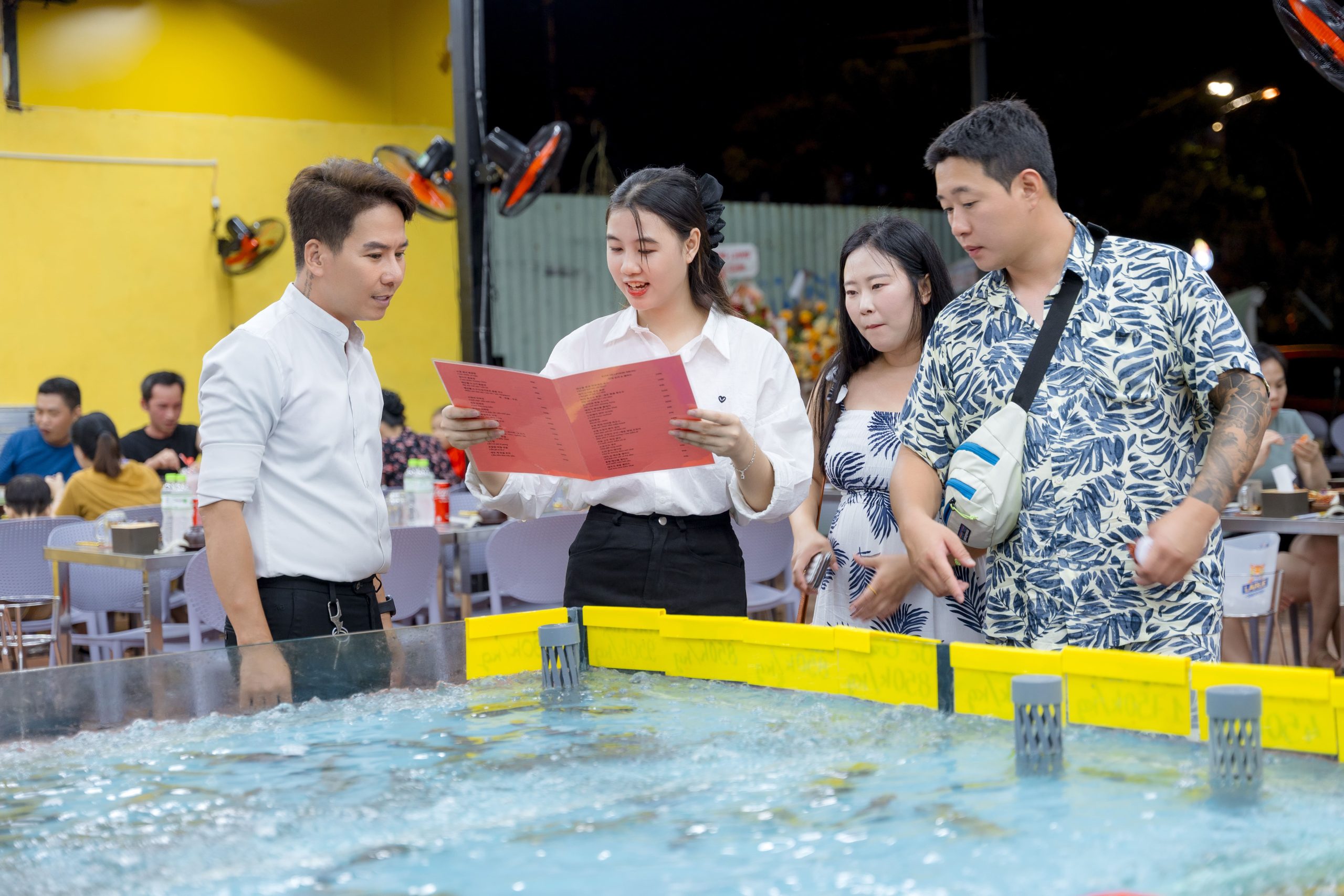
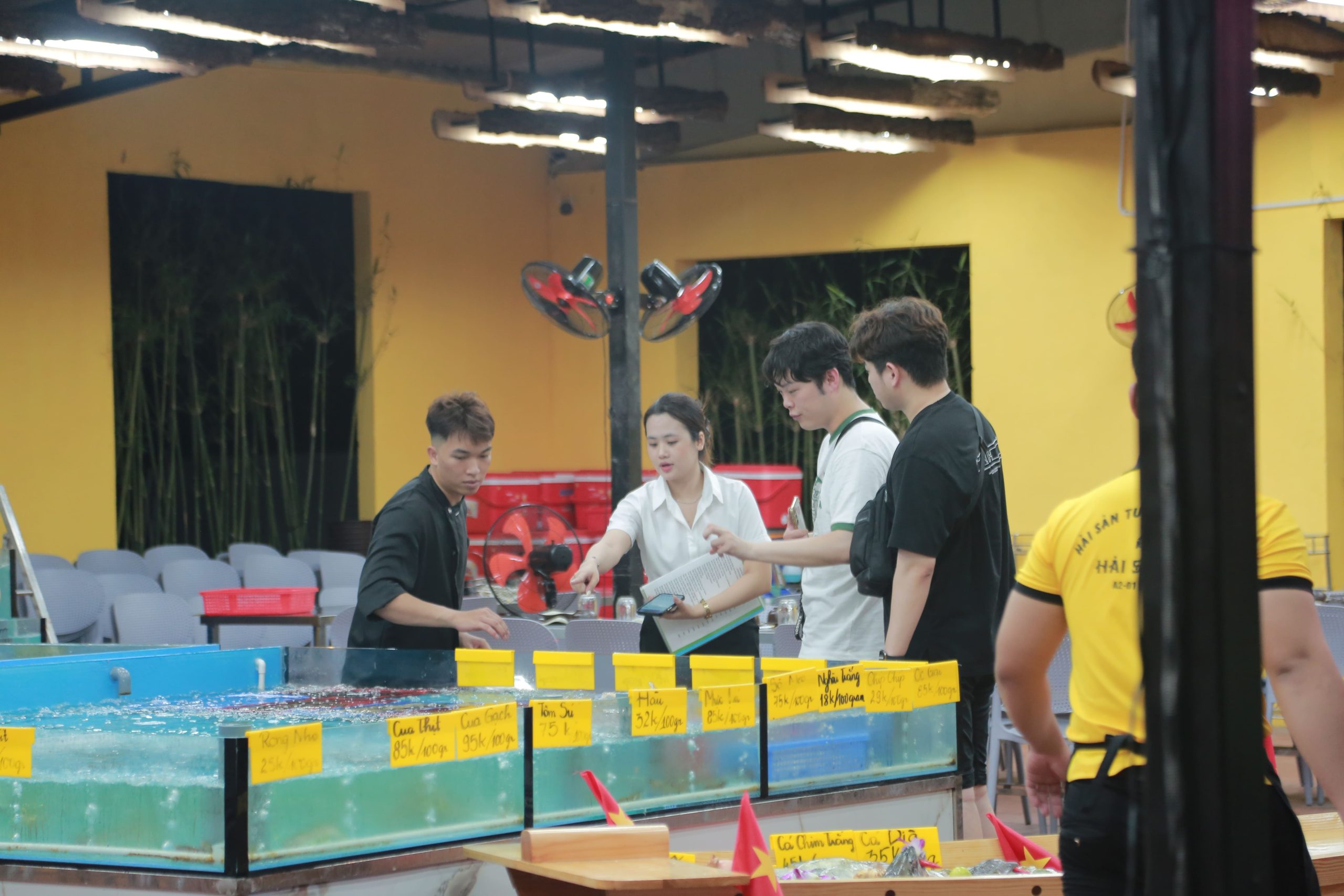
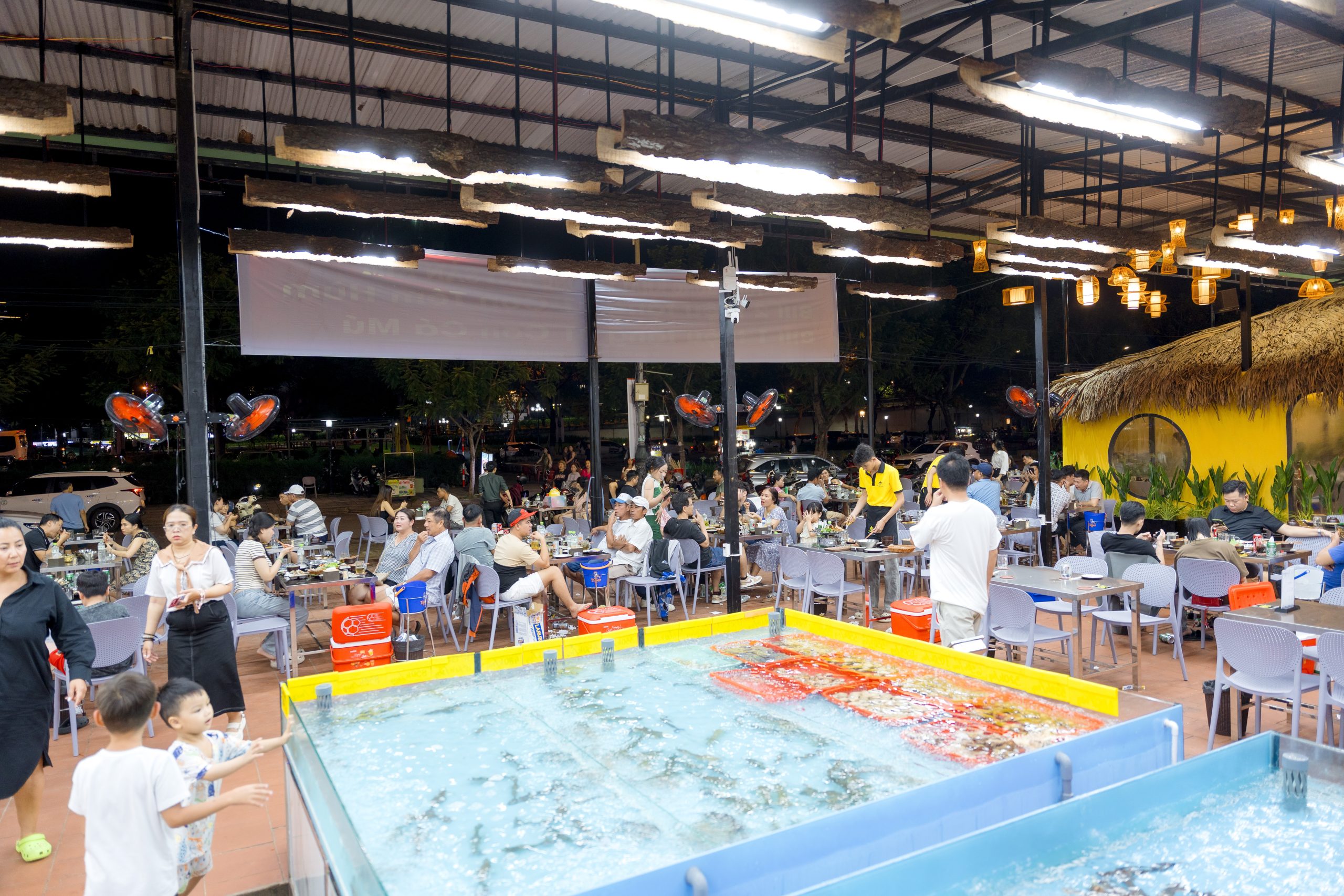
Kim Seafood sources its seafood directly from local fishing ports every morning. The operating principle is straightforward: no ingredients are held over to the following day, and frozen seafood is not used for the main menu items. The restaurant’s holding tanks maintain clean water with live seafood — guests can point to the specific crab, shrimp, or other item they want prepared before placing an order.
For Korean diners who regularly eat seafood sashimi or simply steamed preparations, this is the first criterion they check when evaluating Korean seafood in Da Nang. A restaurant claiming the Korean seafood label but operating with ingredients that are not fresh enough to serve raw is one they will not return to — regardless of price or ambiance. Kim Seafood eliminates this concern by sourcing daily and maintaining visible live holding tanks throughout service.
This daily sourcing also creates natural variation in what is available. On days when a particular species is limited in supply, that limitation is communicated directly rather than filled with a lower-quality substitute. Korean diners familiar with the fish market culture back home recognize and respect this approach — it signals that the kitchen is working with what is actually good today rather than what is most convenient.
Korean-Speaking Staff — A Practical Advantage, Not a Small Detail
Kim Seafood has staff who can communicate in Korean throughout the ordering and dining process. This means Korean guests can ask about preparation methods, request adjustments for spice level, confirm ingredient details, and make reservations — all without needing a translation app or a bilingual companion.
At many Korean seafood restaurants in Da Nang, the language barrier means guests order by pointing at photos or guessing from dish names. The gap between what they expected and what arrives creates frustration that the food itself cannot fully repair. Kim Seafood addresses this with staff trained in direct Korean communication — not basic phrases, but functional hospitality Korean sufficient for a full ordering conversation.
This is particularly valuable for first-time visitors to Da Nang who are not familiar with Vietnamese seafood preparation styles. Being able to ask what a preparation involves, how the sauce is flavored, or which item came in fresh that morning transforms the ordering experience from guesswork into an informed choice.
Five-Language Menu — Genuine Utility
Kim Seafood’s menu is printed in full in Korean, English, Chinese, Russian, and Vietnamese. Each dish includes a description of ingredients and preparation method — not just a translated name. For Korean guests encountering Korean seafood in Da Nang for the first time at this restaurant, being able to read complete dish information before ordering removes the guesswork and sets accurate expectations.
The practical effect is that a table of Korean diners can navigate the menu independently, discuss options among themselves, and make confident choices without waiting for staff assistance at every step. This is a small thing that adds up significantly over the course of a dinner.
👉 Watch more The Ultimate Da Nang Culinary Adventure: Seafood Restaurant Near the Dragon Bridge
The Dishes That Draw Korean Diners to Kim Seafood
A selection of dishes at Kim Seafood consistently appears in Korean diner orders — not because they are flagged as Korean-friendly on the menu, but because they match the preparation standards and flavor expectations that Korean seafood culture brings to the table. These are the dishes that explain why Kim Seafood is considered the leading destination for Korean seafood in Da Nang.
Korean Abalone — Familiar Ingredient, Correctly Prepared
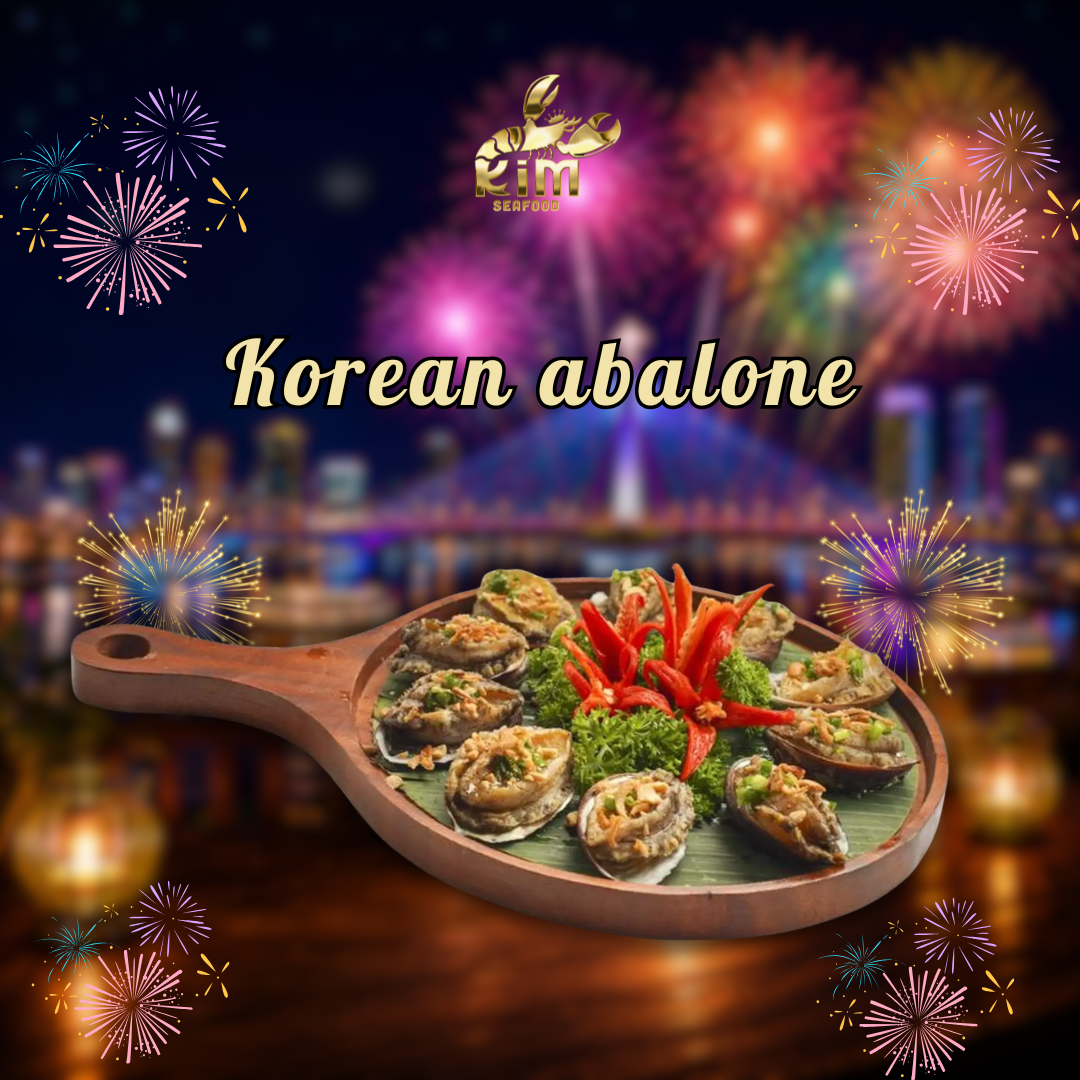
Korean abalone is an ingredient deeply familiar to Korean diners from home. What differentiates the experience at Kim Seafood is not the name on the menu but the preparation: sashimi preserves the abalone’s naturally light crunch and clean ocean flavor; grilled with spring onion oil creates a fragrant, appealing preparation that does not overpower the ingredient underneath.
Steamed with garlic oil, lemongrass steam, and Thai-style steam are additional preparation options for the same ingredient. For Korean diners who grew up eating abalone, encountering the right ingredient prepared correctly at a Korean seafood restaurant in Da Nang creates an immediate sense of confidence in the kitchen. This is the kind of dish that tells an experienced diner whether a restaurant genuinely understands the ingredient or is simply putting a familiar name on an unfamiliar approach.
The abalone served at Kim Seafood is sourced live and held in tanks until preparation. The texture difference between abalone prepared from a live specimen and one that has deteriorated is immediately apparent to any Korean diner who eats this ingredient regularly — and it is a difference Kim Seafood consistently delivers on the right side of.
Alaska Shrimp — Three Preparations from One Ingredient
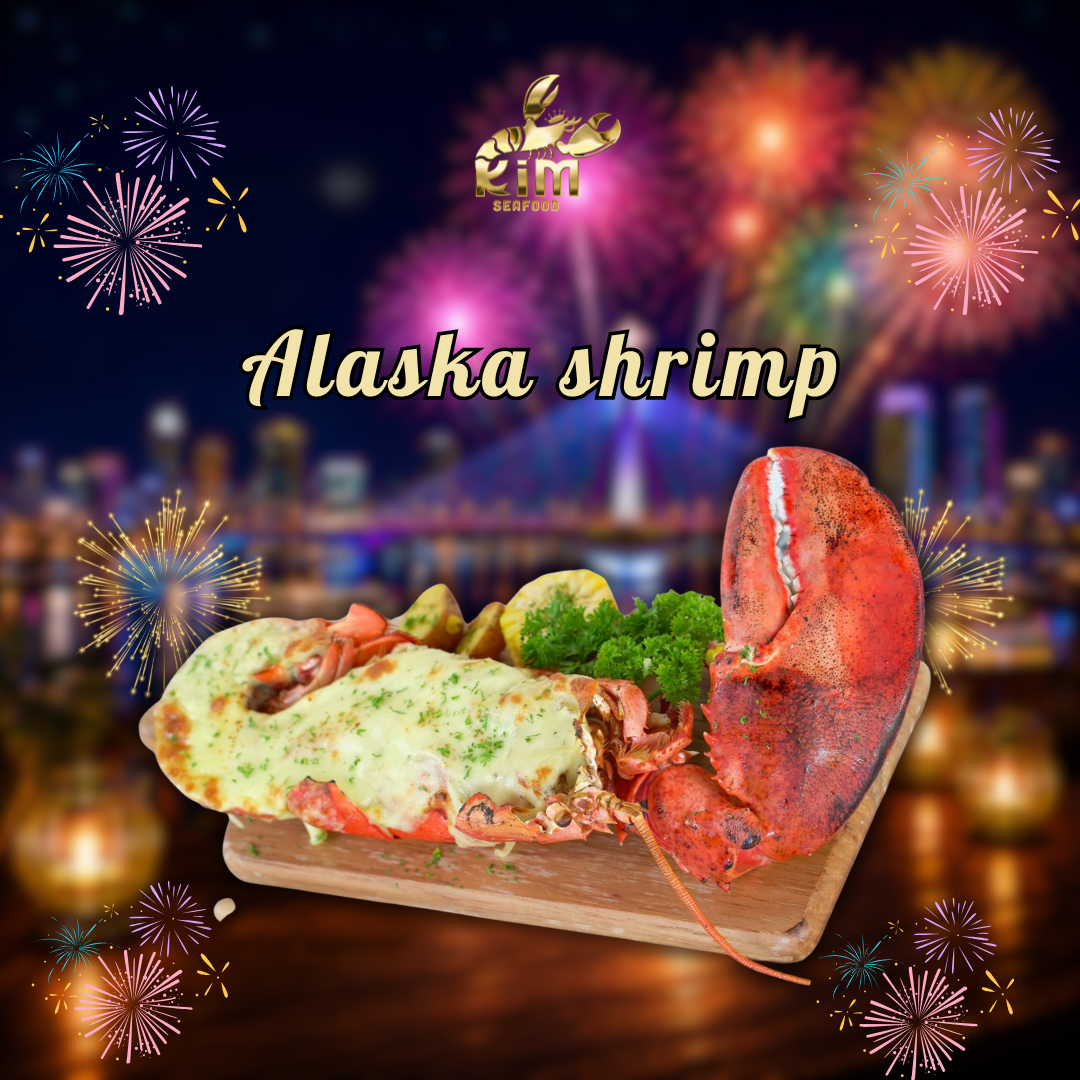
The Alaska shrimp is served at Kim Seafood in a three-part preparation from a single animal: the head is used to make a rich congee with lotus seeds, the body is grilled with cheese until golden and crisp, and the tail section is served as sashimi to experience the raw, unaltered freshness. This approach to fully utilizing a single premium ingredient is immediately recognizable to Korean diners familiar with high-end Korean seafood dining culture.
Very few Korean seafood restaurants in Da Nang execute this correctly — because doing it well requires the Alaska shrimp to be fresh enough to serve as sashimi simultaneously with the two cooked preparations. The sashimi portion demands a level of freshness that cannot be compromised even when the same animal is also going into a hot preparation. Kim Seafood maintains this standard through its daily sourcing model.
The three-preparation format also delivers practical value: a single order of Alaska shrimp creates three distinct flavor and texture experiences at the table, making it one of the most efficient uses of a premium ingredient for a group ordering Korean seafood in Da Nang.
Pork Spare Ribs with Kimchi — The Taste of Home
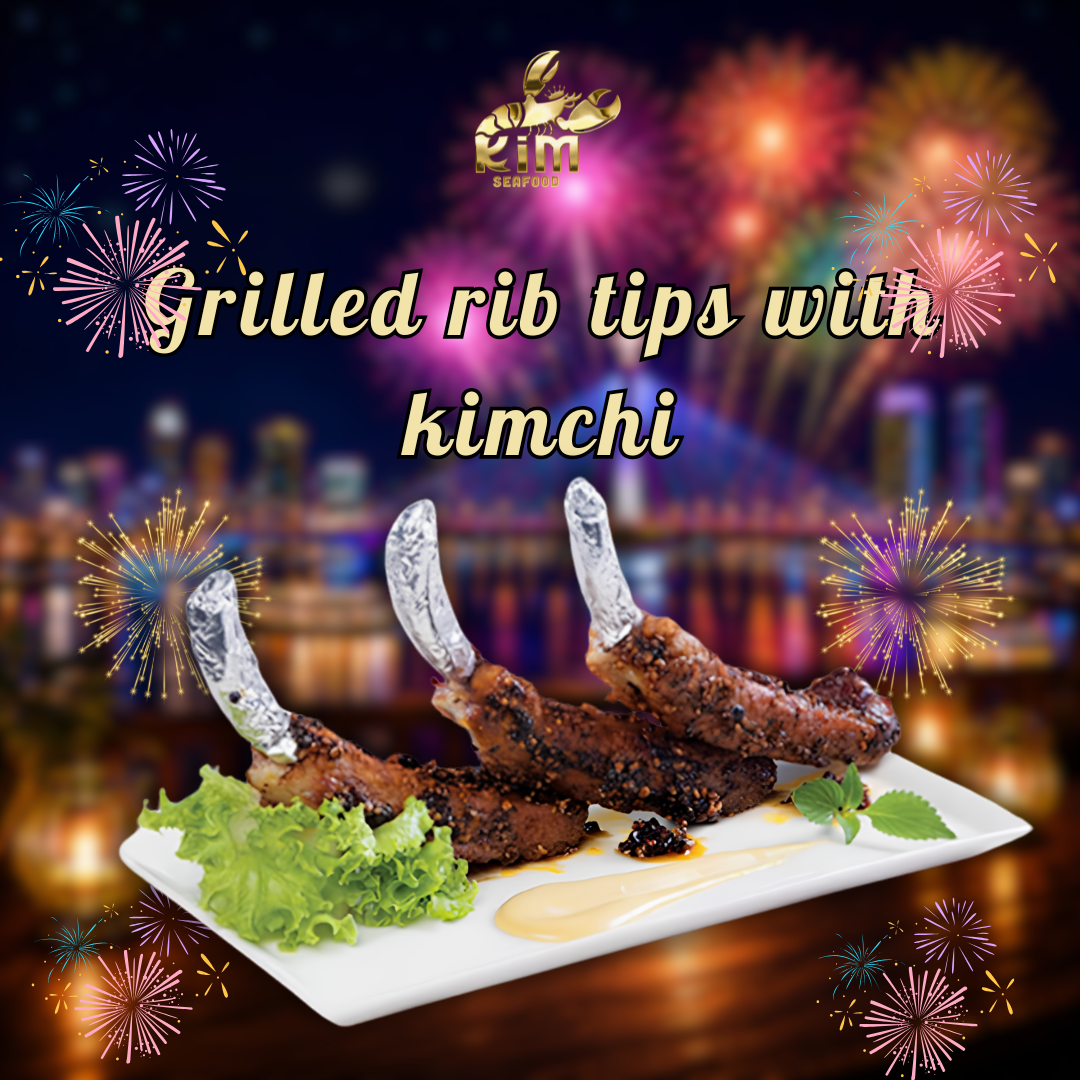
Pork spare ribs with kimchi is a combination rarely seen on Vietnamese seafood restaurant menus, but deeply familiar to Korean diners. The ribs carry a light caramelized exterior from the grilling process with meat that stays moist and tender inside — served alongside traditional kimchi with its characteristic sour and spicy balance.
This dish explains a behavioral pattern at Kim Seafood: Korean guests who come primarily for the seafood frequently order this alongside their main seafood selections. The presence of properly made kimchi and correctly grilled ribs at a Korean seafood restaurant in Da Nang is something many Korean visitors do not expect to find — and finding it reinforces the sense that this restaurant understands the full picture of what Korean dining means, not just the seafood component.
For Korean expats living in Da Nang, this dish also carries a practical dimension: it is a reliable source of the kimchi flavor they may not encounter consistently elsewhere in the city. That reliability becomes its own reason to make Kim Seafood a regular address.
King Crab with Garlic Butter Sauce — The Premium Centerpiece
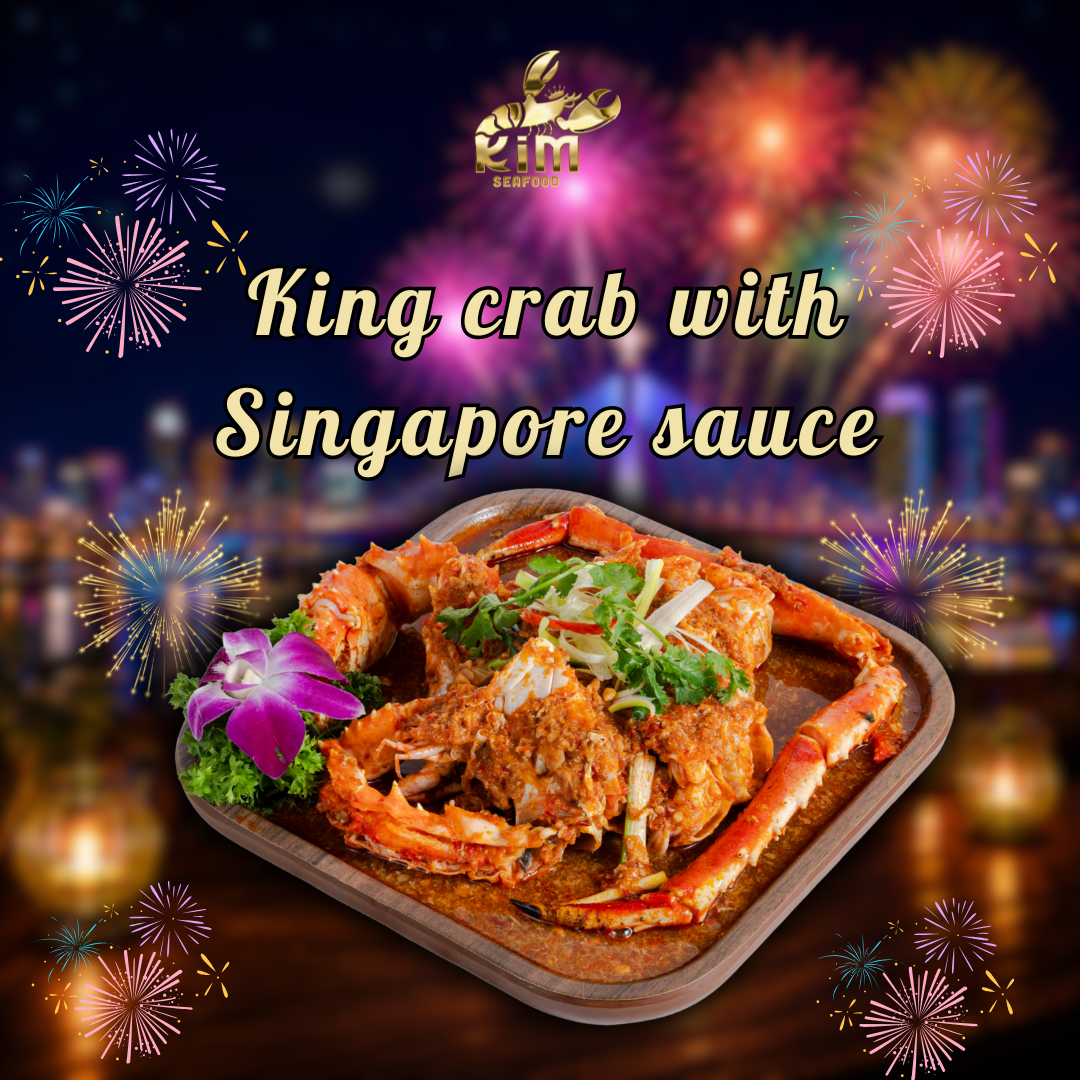
King crab is sourced live and prepared to order. The garlic butter sauce coats each strand of crab meat evenly without overwhelming the deep natural sweetness of fresh crab. For Korean diners accustomed to the standard of live crab from Korean seafood markets, this preparation at Kim Seafood consistently delivers within the expected range — which is a more demanding standard than it might appear.
The cost comparison is also directly relevant to Korean visitors choosing Korean seafood in Da Nang: king crab at the quality level Kim Seafood provides is available at a price point significantly below what an equivalent meal would cost in Seoul or Busan. For Korean guests who want a premium seafood experience without the premium price they would pay at home, king crab at Kim Seafood represents both quality and value simultaneously.
The dish functions as the anchor of a larger table — the item around which other orders are built. Korean groups dining at Kim Seafood frequently order king crab as the shared centerpiece and build the rest of the meal around it, following the communal dining structure natural to Korean seafood culture.
Why the Korean Community in Da Nang Trusts Kim Seafood
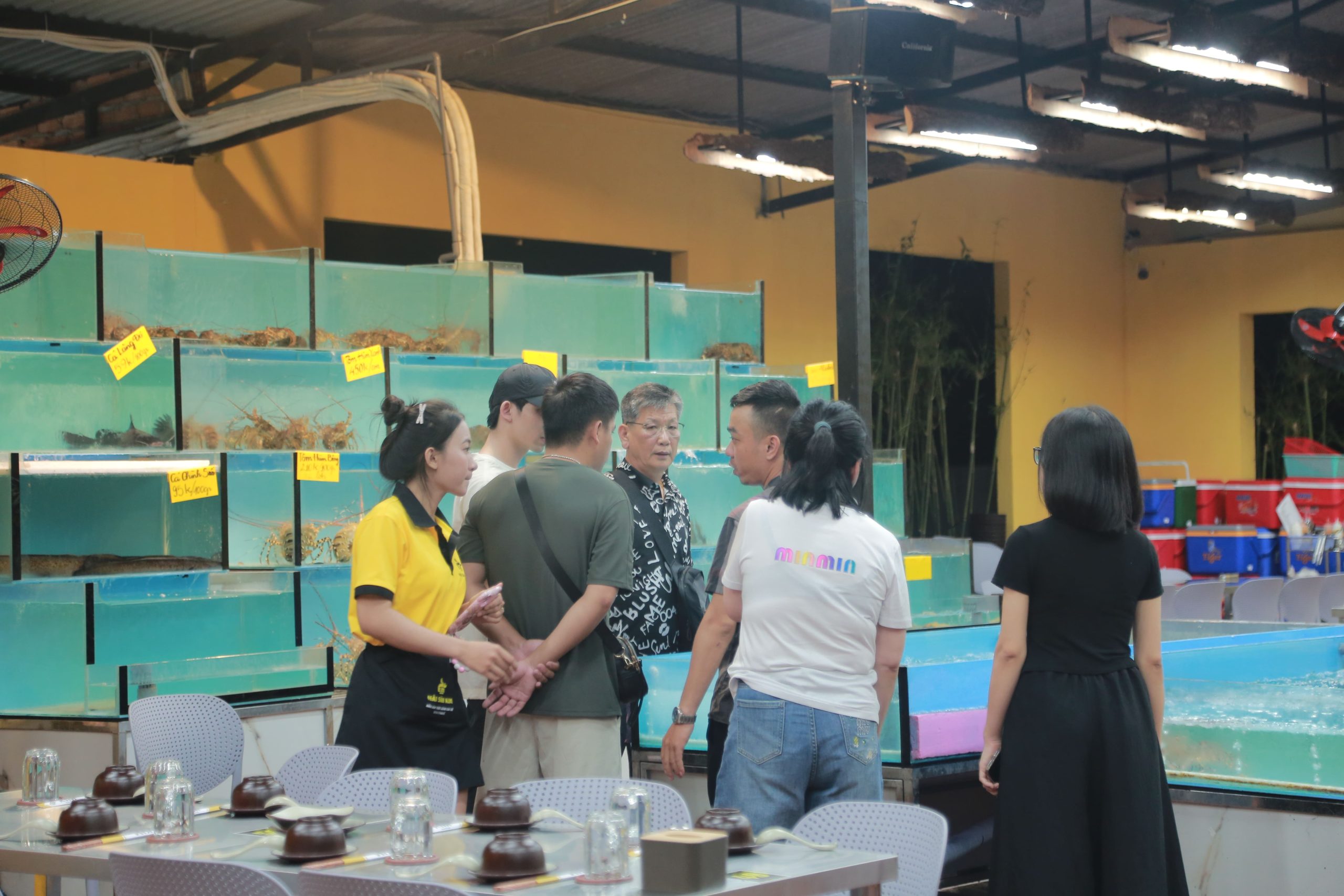
Da Nang has a resident Korean community — not only short-term tourists, but people living and working in the city over extended periods. For this community, finding a Korean seafood restaurant in Da Nang with consistent quality and staff they can communicate with directly is a practical priority, not a casual preference.
When someone from the Korean community in Da Nang brings visitors from Korea for a seafood meal, Kim Seafood is frequently the first choice — because they have visited enough times to trust the quality. This is a different kind of recommendation from a tourist review: it comes from people who have eaten here repeatedly, across different occasions, and found the standard consistent enough to stake their own credibility on.
What Korean Reviews of Kim Seafood Consistently Mention
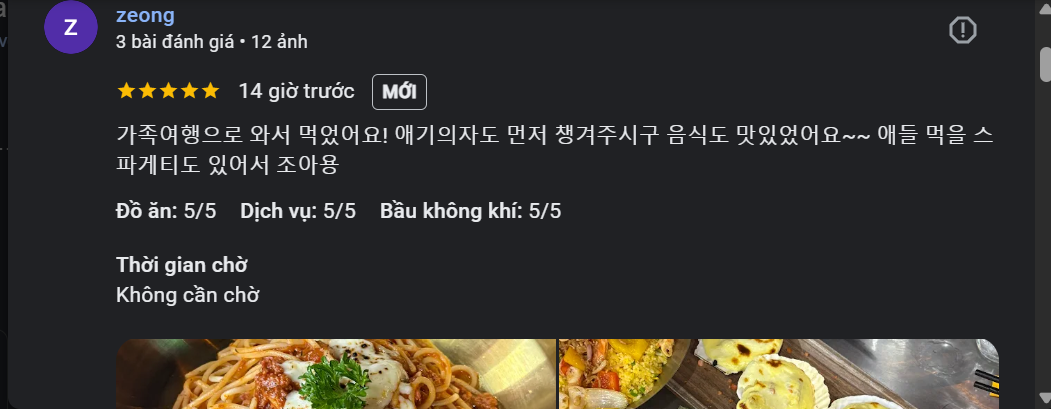
Across Korean-language reviews on Google Maps and Korean travel platforms, Kim Seafood receives consistent mentions of three specific points: seafood fresher than expected, staff who can communicate in Korean, and a space comfortable enough for larger groups.
The most common criticism in these reviews is waiting time on weekend evenings — which occurs because the restaurant fills with guests and not everyone books ahead. This is a solvable issue with a single reservation call, not a quality problem. The fact that the wait exists is itself a signal about how consistently Kim Seafood delivers on Korean seafood in Da Nang — restaurants with quality issues do not have a wait list problem.
Why Korean Guests Rarely Feel Misled at Kim Seafood
Kim Seafood does not attempt to be everything to every guest. The restaurant has a clear understanding of what Korean diners need — fresh sashimi-grade seafood, simply prepared options, kimchi accompaniment, and staff who speak Korean — and concentrates on delivering those things correctly rather than attempting a broader appeal that dilutes each element.
The practical outcome is that Korean seafood in Da Nang at Kim Seafood creates accurate expectations. Korean guests arrive knowing what they will receive, and what they receive matches what they expected. That alignment between expectation and reality is the foundation of long-term trust — and it is why the restaurant’s reputation within the Korean community has sustained and grown through direct recommendation rather than advertising.
Practical Guide for Korean Guests Visiting Kim Seafood
To make a meal at this Korean seafood restaurant in Da Nang go exactly as expected, a few practical points are worth knowing in advance.
Book Ahead — Especially for Weekend Evenings
Kim Seafood fills quickly on Friday through Sunday evenings, particularly between 6pm and 8:30pm. Booking ahead by calling 0916111143 not only secures your seat but also comes with a 10% discount on the total bill — applicable to all guests, including Korean visitors.
For groups of six or more, confirming the reservation the day before allows the restaurant to arrange appropriate seating and prepare accordingly. This is standard practice at quality Korean seafood restaurants and applies equally at Kim Seafood. The discount is applied at the time of payment on presentation of the reservation.
Guests who cannot book in advance will find arrival before 6pm or after 8:30pm on weekend evenings gives a better chance of being seated without waiting. Weekday evenings and lunch service are significantly quieter and rarely require advance booking.
Ask About Today’s Fresh Arrivals — The Menu Does Not Always Capture Everything
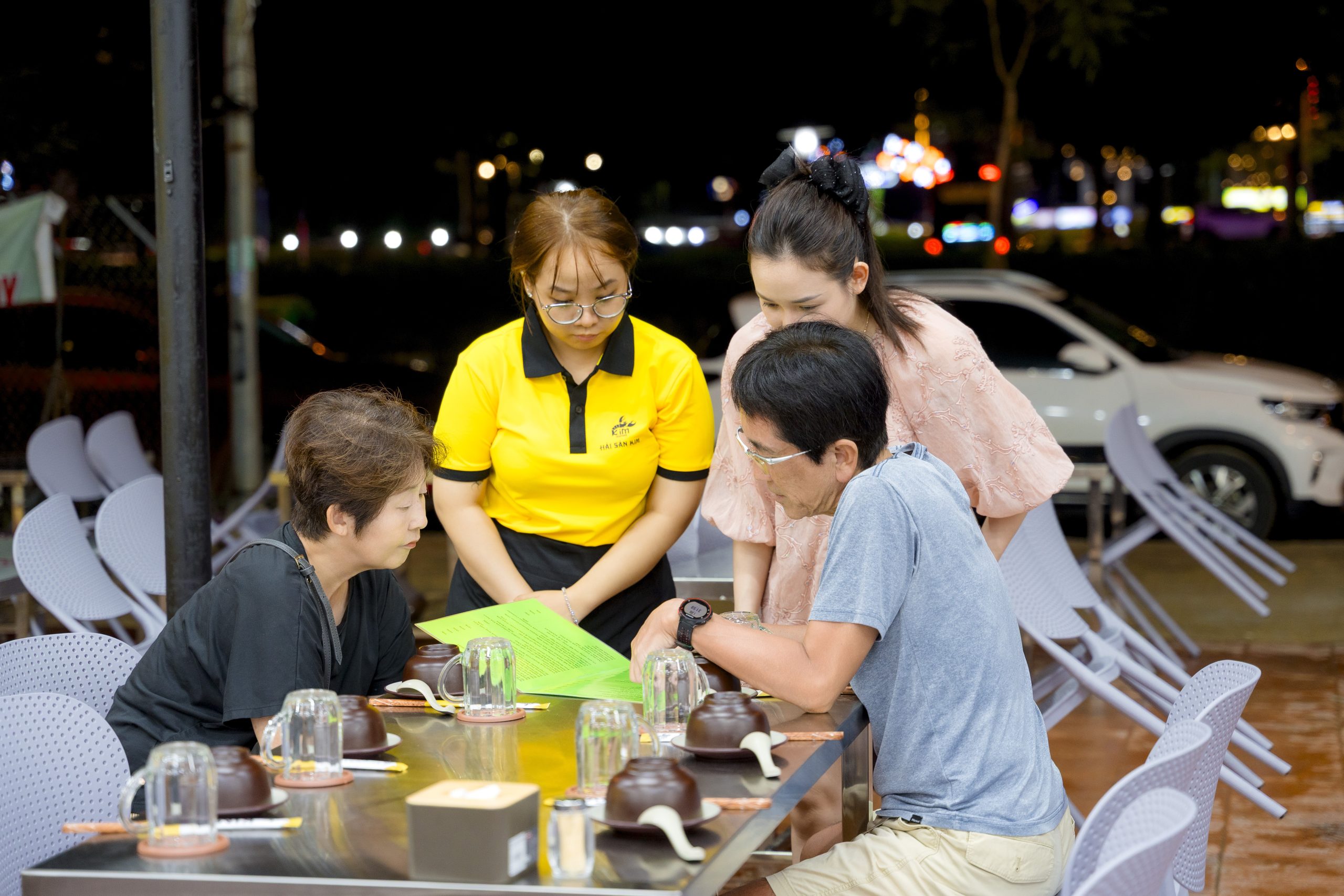
Kim Seafood sources ingredients daily based on what is available from local ports. This means there are frequently items available that have not yet been added to the printed menu — species that came in that morning, seasonal items available only in limited quantity, or premium ingredients available only on specific days.
Korean diners have a natural habit of asking what is fresh today before ordering — the equivalent of asking at a Korean fish market what just came in. At Kim Seafood, the Korean-speaking staff can answer this question directly in Korean without the guest needing a translation app. This question often leads to the best item of the day, which may not appear on the printed menu at all.
Order in Stages, Not All at Once
Each serving at Kim Seafood is generous in portion. A group of four typically finds that one or two main seafood dishes, an appetizer, and a vegetable side is sufficient. Ordering in stages — starting with one or two items, assessing, and adding when needed — gives better cost control than placing a complete order at the start of the meal.
This matches the natural rhythm of Korean seafood dining: order incrementally, eat each stage fully, add when the table wants more. Kim Seafood accommodates this approach without friction — dishes can be added throughout the meal at the same pace the table moves through them. It is worth noting that the kitchen will not rush the table, which aligns with how Korean diners prefer to eat — at their own pace, not on a schedule set by the restaurant.
Understanding the Holding Tank System
The live holding tanks at Kim Seafood are not just display — they are the functional supply point for the kitchen. Guests who want to select specific items can do so directly from the tanks before ordering. For Korean diners accustomed to this practice from seafood markets at home, the ability to choose the specific crab, abalone, or shrimp they want is both a quality signal and a practical convenience.
Staff who speak Korean can assist with this selection process — explaining the size, estimated yield, and recommended preparation for each item. This kind of pre-order conversation is where the language capability of Kim Seafood’s team adds the most concrete value for Korean guests choosing Korean seafood in Da Nang.
👉 Watch more Kim Seafood – Authentic Vietnamese Dishes, True Local Flavors
Frequently Asked Questions — Korean Seafood at Kim Seafood Da Nang
Does Kim Seafood have Korean-speaking staff?
Yes. Kim Seafood has staff who communicate in Korean throughout the ordering and dining process. This is not limited to basic greeting phrases — staff are trained to explain preparation methods, adjust dishes to guest preference, answer ingredient questions, and assist with menu navigation in Korean. This is one of the consistent points mentioned in Korean-language reviews of Kim Seafood.
Is the menu available in Korean?
Yes. The full menu at Kim Seafood is printed in five languages: Vietnamese, English, Korean, Chinese, and Russian. Each dish includes a description of ingredients and preparation method in every language — not only a translated name. Korean guests can read the full dish information independently before ordering.
Does Kim Seafood serve dishes suited to Korean palates?
Yes. Korean abalone, Alaska shrimp sashimi, pork spare ribs with kimchi, king crab with garlic butter sauce, and a range of simply steamed and grilled seafood preparations are all consistent with Korean seafood dining culture. These are the dishes ordered most frequently by Korean guests at this Korean seafood restaurant in Da Nang.
Do I need to book a table before visiting?
Not required, but strongly recommended for weekend evenings. Call 0916111143 to reserve — guests who book ahead receive a 10% discount on the total bill. Weekday visits and lunch service typically do not require advance booking.
Where is Kim Seafood located in Da Nang?
Kim Seafood is located at A2.01 Ly Nam De, An Hai Trung, Son Tra district — approximately 3 to 5 minutes from Dragon Bridge by motorbike or car. The location is convenient for guests staying along the My Khe beachfront as well as those in the central city hotel district.
How does Kim Seafood compare to other Korean seafood restaurants in Da Nang?
Most restaurants in Da Nang using the Korean seafood label do so for marketing purposes without substantively adjusting ingredients, preparation, or service to match Korean dining standards. Kim Seafood operates differently: daily fresh sourcing, Korean-speaking staff for direct communication, and a menu with preparations that match Korean palate expectations. The difference is most visible in the repeat visit pattern — Korean guests who find what they expect at Kim Seafood come back, and they bring others.
Can I visit Kim Seafood if I am not Korean?
Yes, completely. Kim Seafood serves guests of all nationalities. The five-language menu, English-speaking staff, and food quality standards are designed to serve a diverse international clientele — not exclusively Korean visitors. The Korean seafood in Da Nang positioning reflects where the restaurant has developed particular depth and expertise, not an exclusivity of any kind. Non-Korean guests who enjoy fresh seafood prepared simply and correctly will find exactly the same quality that Korean guests value.
Conclusion — Korean Seafood in Da Nang That Actually Delivers
Da Nang has many restaurants using the Korean seafood label. Few of them meet the three standards that actually define the category for Korean diners: fresh enough to serve raw, staff who can communicate in Korean, and a service approach that does not create barriers.
Kim Seafood has built its position as the leading Korean seafood restaurant in Da Nang not through advertising directed at the Korean market, but through consistent quality that causes Korean guests to recommend it to each other — visit after visit, year after year. When you see Kim Seafood mentioned in Korean travel groups, Korean tourist review platforms, or in advice from friends who have already been to Da Nang, that accumulated trust is the most accurate indicator of what you will actually find when you arrive.
Whether you are a Korean visitor looking for a seafood meal that tastes right, a Korean expat bringing guests from home, or any traveler seeking fresh seafood prepared to a high and consistent standard — Kim Seafood is the direct answer to the question of where to go for Korean seafood in Da Nang.
One more thing worth noting: Kim Seafood does not serve only Korean guests. But the way the restaurant operates — daily fresh ingredients, Korean-speaking staff, five-language menu, space comfortable for groups — happens to be exactly what Korean diners need when choosing a Korean seafood restaurant abroad. This is not coincidence. It is the result of years of listening to actual guest feedback and adjusting operations accordingly.
👉 Watch more Kim Seafood – Authentic Vietnamese Dishes, True Local Flavors
Contact Information:
- Address: Kim Seafood, A2.01 Ly Nam De Street, An Hai Trung Ward, Son Tra District, Da Nang, Vietnam.
- Phone: 0916111143
- Opening Hours: 10:00 AM – 11:00 PM
- Email: hello.kimseafood@gmail.com
- Facebook Fanpage: Hải sản KIM Seafood