Kim Seafood – Authentic Vietnamese Dishes, True Local Flavors
Vietnamese dishes at Kim Seafood Da Nang — an authentic lunch menu rooted in Central Vietnamese tradition, fresh ingredients every day, true flavors from the heart of the region. When people mention Kim Seafood, the first thing that comes to mind is usually seafood. But from 11am to 4pm, the restaurant serves a completely different menu — familiar Vietnamese dishes made from properly sourced ingredients, cooked in the traditional way.
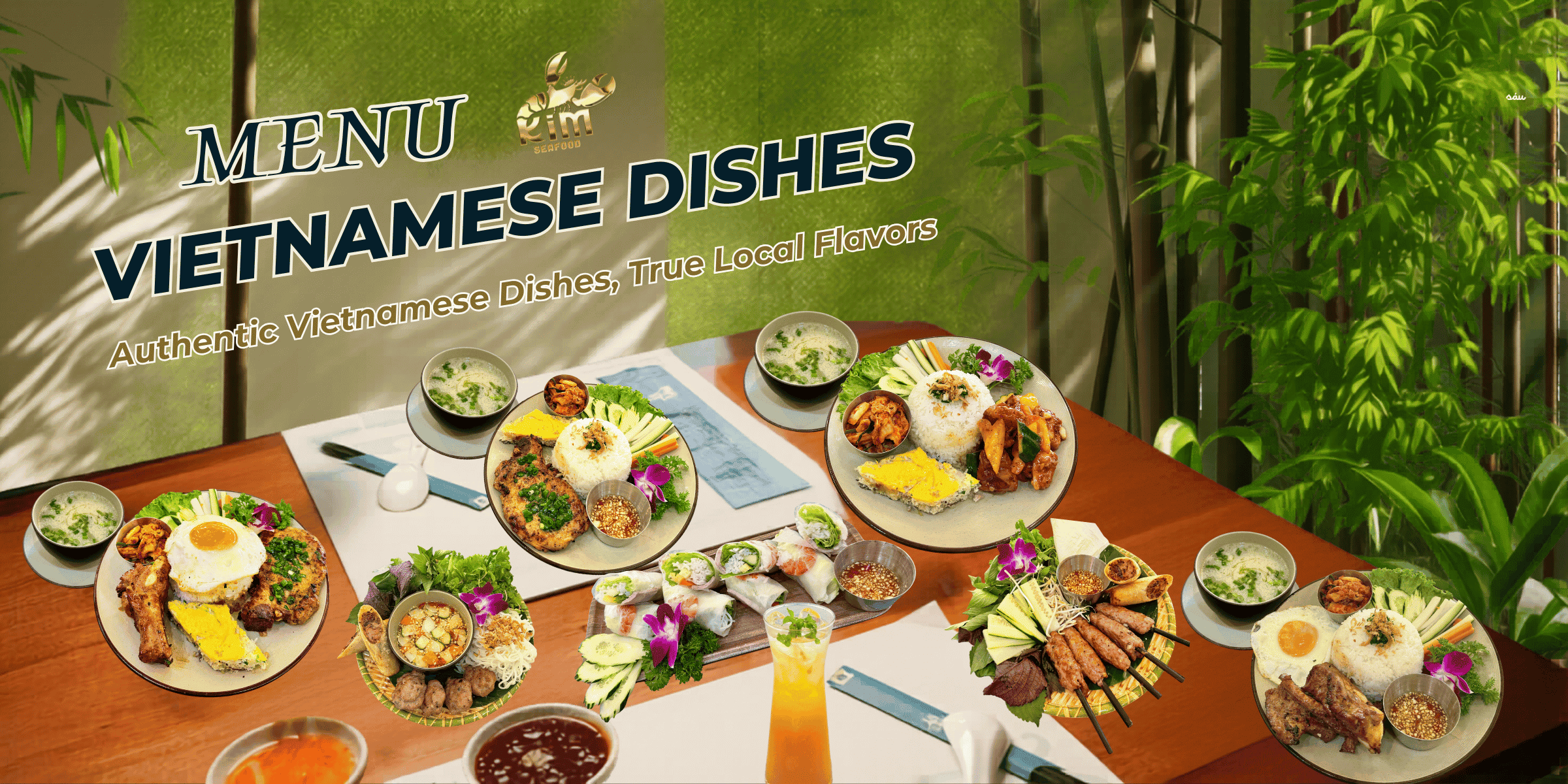
Da Nang has dozens of lunch options. But finding a place that serves Vietnamese dishes exactly as they should taste — without cutting corners on ingredients and without commercial shortcuts that compromise the original flavors — is harder than it sounds.
This article gets specific: which Vietnamese dishes Kim Seafood serves at lunch, what makes each one worth ordering, and why this is a genuine option for a proper midday meal in Da Nang.
1. Vietnamese Dishes at Kim Seafood Da Nang — Why the Lunch Menu Matters
Da Nang sits at the geographic and culinary heart of Central Vietnam. The dishes that define this region — broken rice, Grilled Pork with Vermicelli, Lemongrass Pork Skewers, fresh spring rolls, Vietnamese Wrap Platter — are not tourist adaptations. They are everyday foods that local people have eaten for generations, with flavors shaped by the specific ingredients and cooking traditions of this part of the country.
Finding Vietnamese dishes that reflect this in a restaurant setting is a different challenge. Many places serve the names of these dishes while changing the ingredients, simplifying the preparation, or adjusting flavors toward a broader audience. What arrives on the plate looks familiar but tastes slightly off to anyone who knows the original.
Kim Seafood’s lunch menu operates on a different principle. The Vietnamese dishes served from 11am to 4pm are held to the same ingredient standards the restaurant applies to its seafood side: fresh daily, properly prepared, served correctly. The lunch menu is not an afterthought — it is a deliberate part of what the restaurant offers.
2. What Vietnamese Dishes Does Kim Seafood Serve at Lunch?
The lunch menu at Kim Seafood is completely separate from the evening seafood menu. From 11am to 4pm, the restaurant serves a focused selection of Vietnamese dishes rooted in Central Vietnamese eating culture: Broken Rice, Grilled Pork with Vermicelli, Lemongrass Pork Skewers, Fresh Spring Rolls with Shrimp & Pork, and Vietnamese Wrap Platter.
These are not side dishes or token additions. Kim Seafood invests in this group of Vietnamese dishes with the same criteria applied to the seafood menu: fresh ingredients, correct preparation, and service timed properly for a lunch crowd.
The result is a lunch menu where each Vietnamese dish on the list is fully realized — not simplified into a version that is easier to produce at scale, but made in the way these dishes are meant to be made.
3. Broken Rice — The Lunch Staple That Never Goes Out of Style
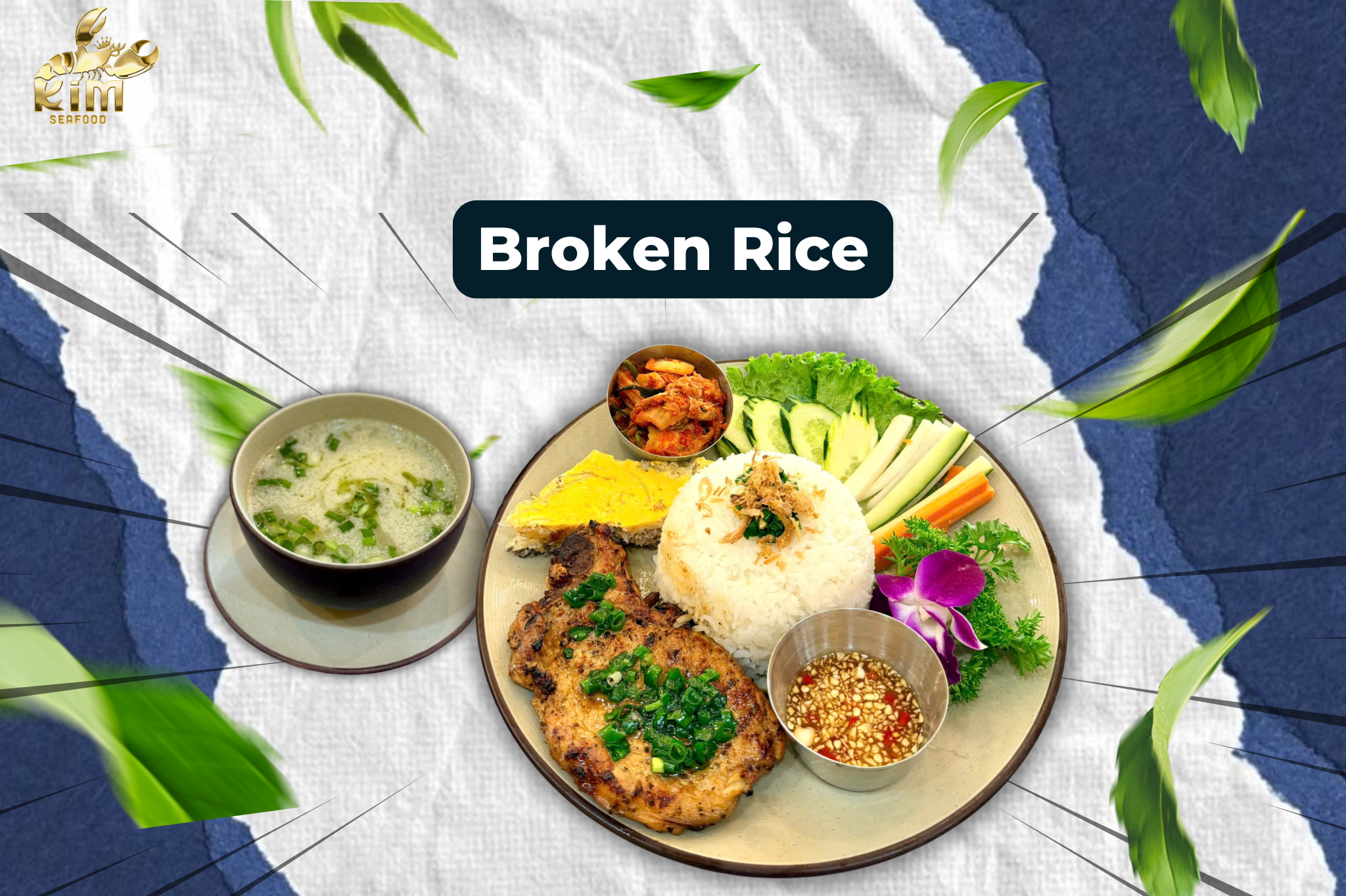
Com tam is one of the most recognizable Vietnamese dishes on any Da Nang lunch table. The broken rice grains are smaller than regular rice, softer in texture, and absorb pork fat and fish sauce in a way that ordinary rice does not replicate. This is not just a visual difference — it is a textural and flavor difference that anyone who eats broken rice regularly will notice immediately.
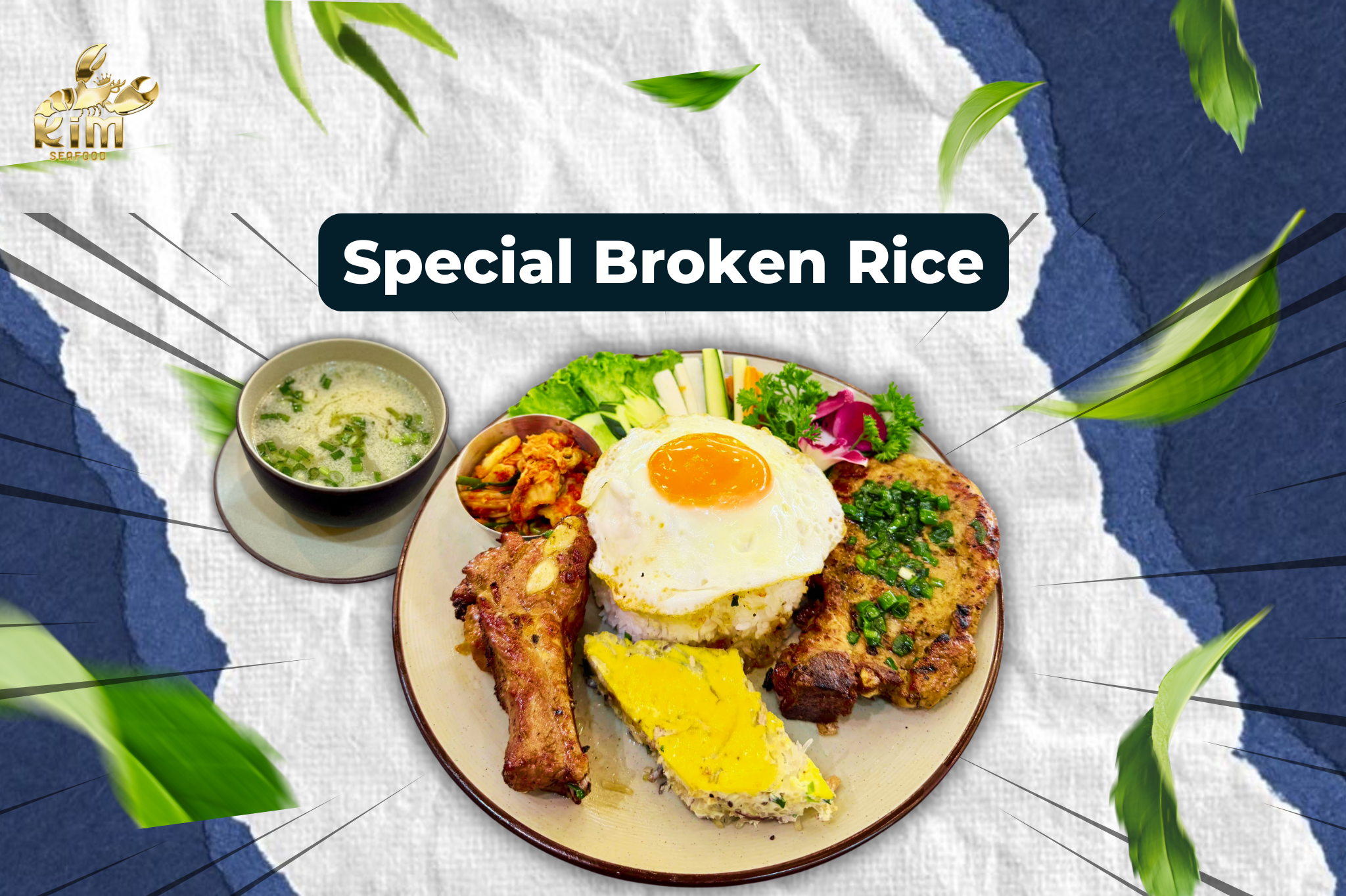
At Kim Seafood, broken rice is served in several formats. The straightforward version pairs the broken rice with pickled vegetables, fresh herbs, and dipping fish sauce. The Special Broken Rice — the special version — adds a fuller set of toppings for those who want a more complete and substantial meal.
The fish sauce dressing is what determines the character of a broken rice plate. Too sweet and it loses the clean sourness that balances the pork. Too sour and it overwhelms the meat. Kim Seafood keeps the dressing calibrated — sour, sweet, salty and mildly spicy in the proportion that these Vietnamese dishes require. This is something many commercial broken rice shops skip, but it is exactly what experienced eaters notice immediately when it is right.
3.1. Rice with Sweet & Sour Pork Ribs and Rice with Pork Spare Ribs — Two Different Approaches to Grilled Pork
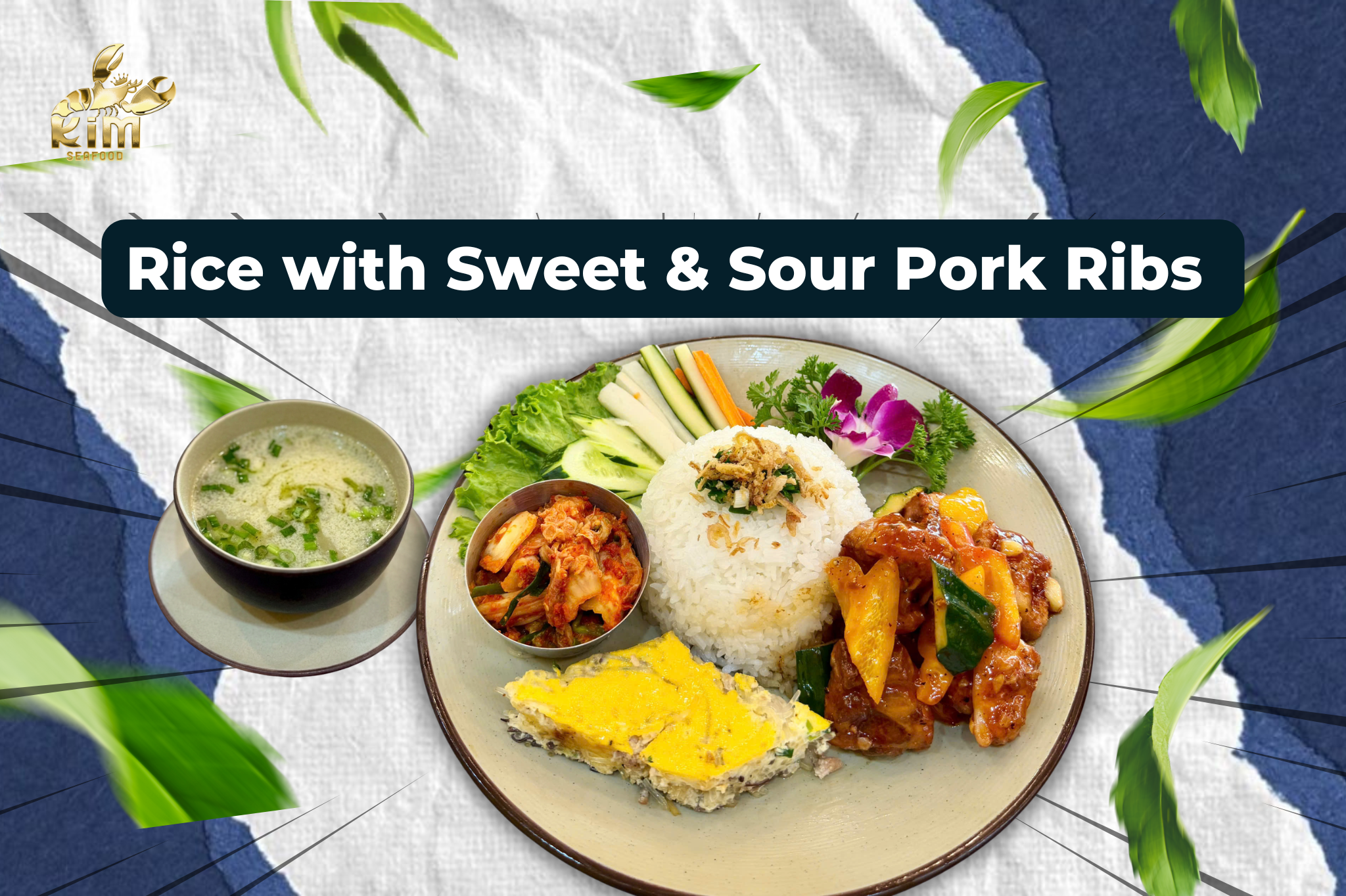
Rice with Sweet & Sour Pork Ribs uses young pork ribs marinated in the sweet-sour style common in Southern Vietnamese cooking, served on broken rice. The meat absorbs the marinade throughout, with a brown-gold exterior from the frying or grilling process and a soft interior that retains the natural moisture of the pork. This is the broken rice format that brings both flavor layers — the rice and the sauce — into direct conversation.
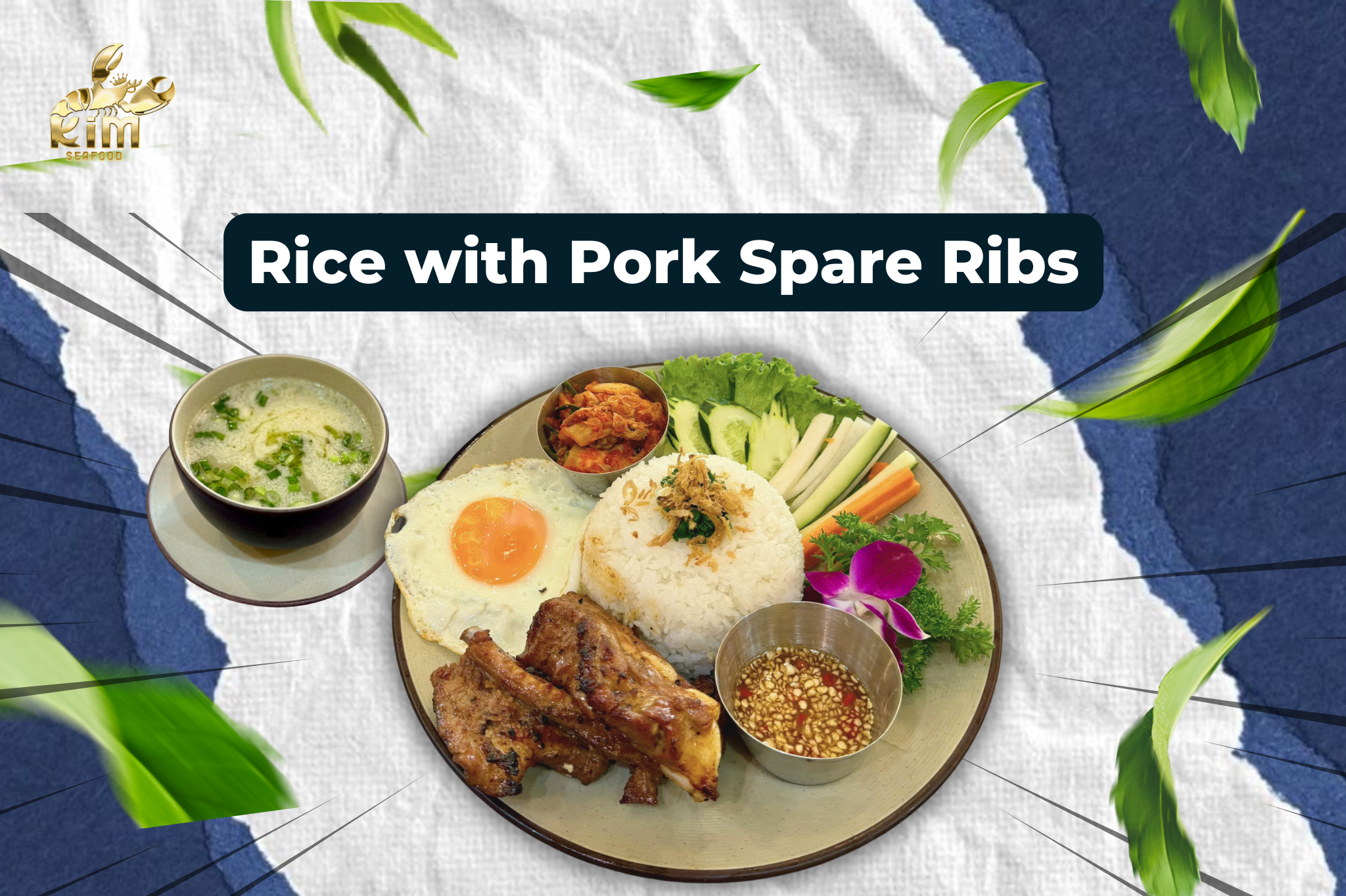
Rice with Pork Spare Ribs takes a different approach. The ribs are seasoned simply rather than marinated in a sweet-sour sauce, giving them a lightly crisp exterior while the meat inside stays tender. This version is for those who prefer the natural pork flavor to come through rather than the marinade. The Vietnamese dish character shifts: less sauce-forward, more meat-forward.
Both are served with broken rice, fresh vegetables, pickled greens, and fish sauce dressing — complete Vietnamese dishes in a single plate, nothing extra required.
3.2. Mixed Rice with Pork & Water Spinach — A Flavor Locals Know Well
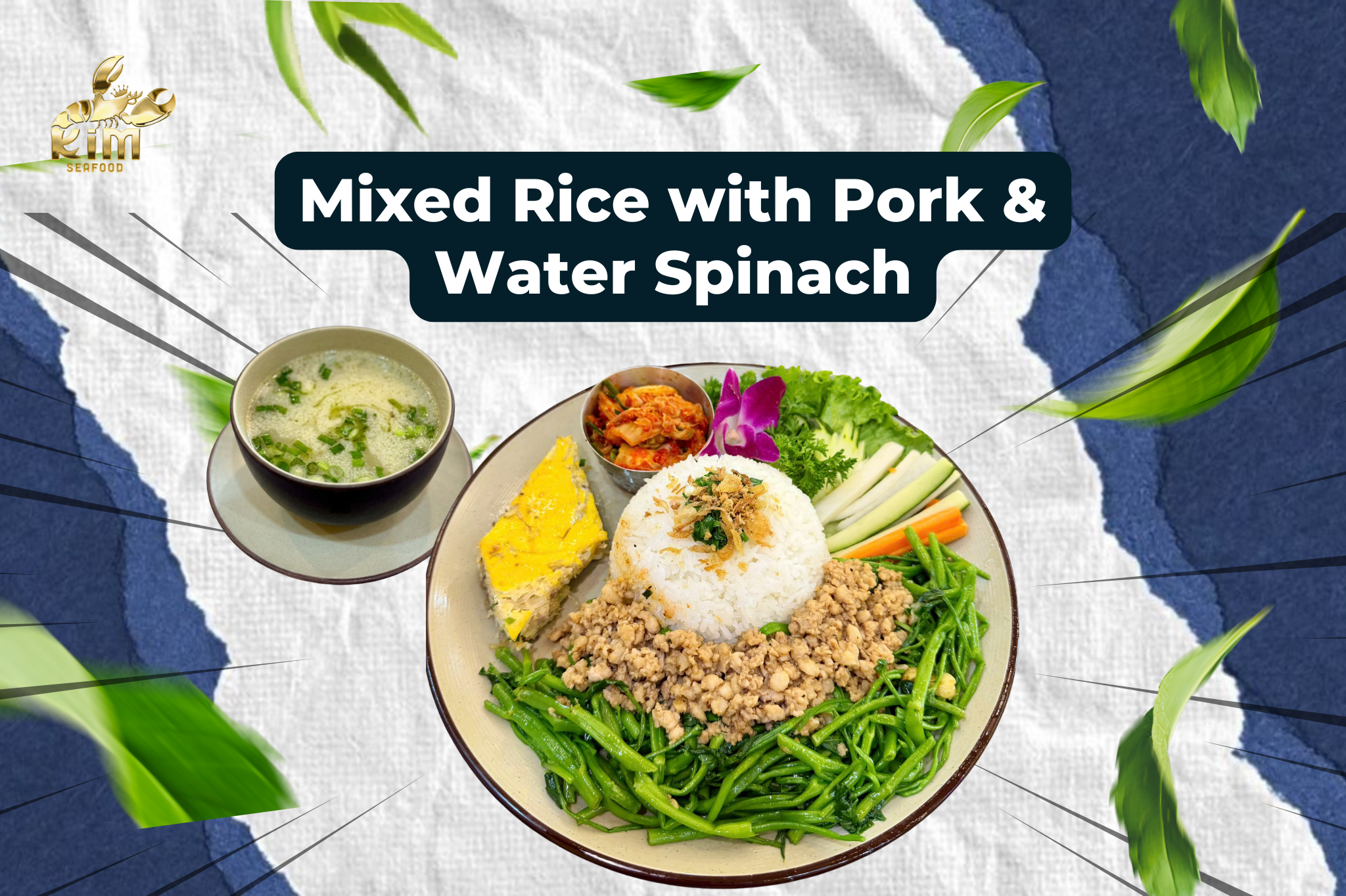
This is a broken rice format rarely seen on larger restaurant menus but deeply familiar in everyday Da Nang eating. Water spinach, boiled and tossed with stir-fried minced pork, served on broken rice with fish sauce. Simple in construction, complete in flavor.
The Vietnamese dish character here is defined by the absence of complexity. Sweetness comes from fresh water spinach. Saltiness comes from fish sauce and pork. A light richness comes from the minced pork fat. The overall taste is clean and not heavy — the right choice for a lunch when something substantial but not overwhelming is the goal.
4. Lemongrass Pork Skewers (Nem Lui) — The Central Vietnamese Specialty That Defines This Region’s Dishes
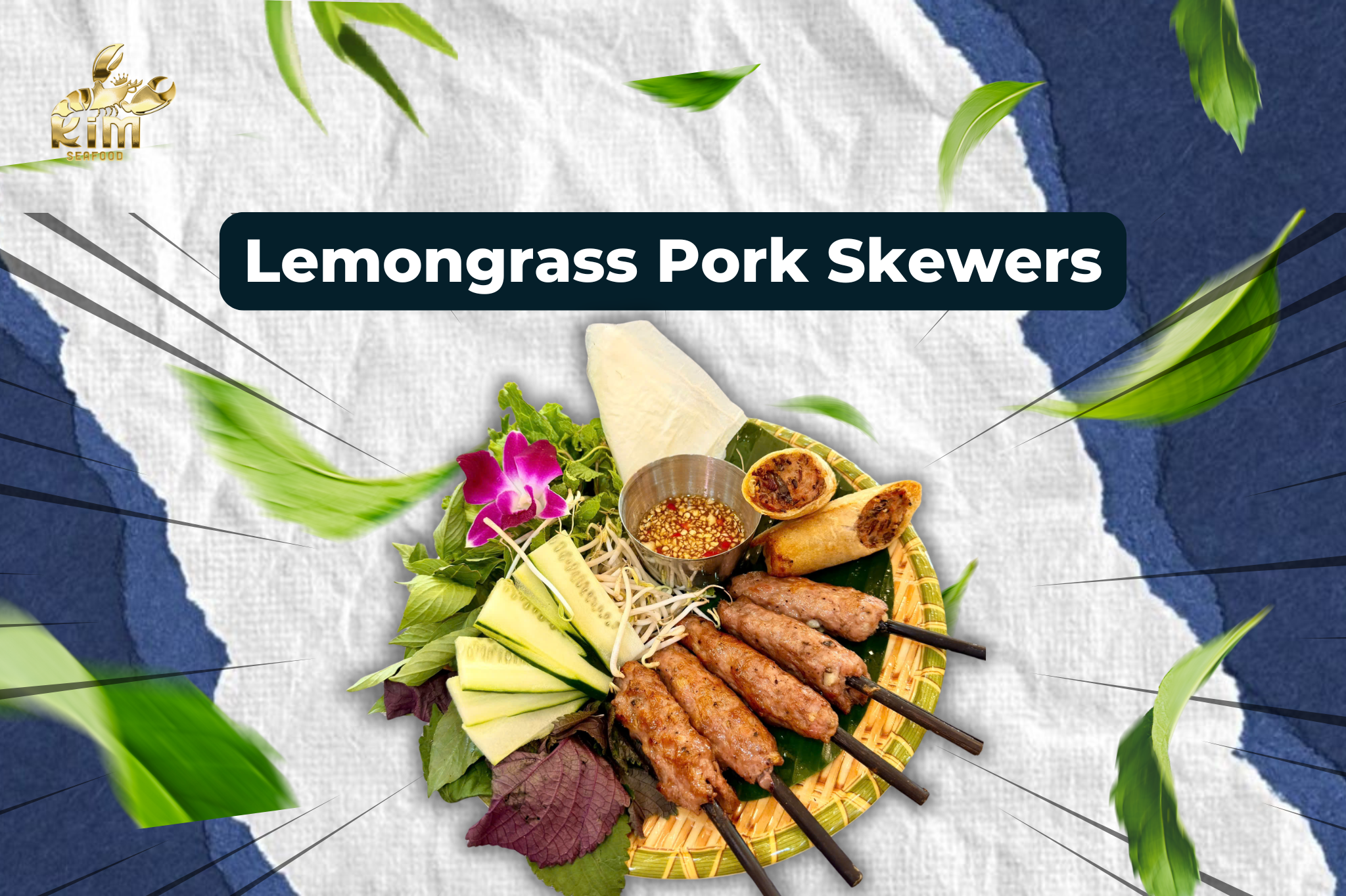
Nem lui is one of the Vietnamese dishes most specific to Da Nang and the Central region. Ground pork mixed with lemongrass, chili, and spices is packed tightly around a fresh lemongrass stalk and grilled over charcoal. The aroma from the lemongrass combined with charcoal smoke creates a scent that few other Vietnamese dishes in this category can match.
Eating Lemongrass Pork Skewers correctly means wrapping it: rice paper, fresh herbs, thinly sliced green banana, and sour starfruit, then dipping into a thick peanut-based sauce. This is not a dish that can be rushed — it requires time to wrap each roll and eat it properly, piece by piece.
At Kim Seafood, Lemongrass Pork Skewers comes with the full accompaniment: rice paper, fresh herb plate, and the traditional dipping sauce as Central Vietnamese eating culture defines it. This is not a shortened version of the dish designed to save on ingredients. It is the complete format that Da Nang people have been eating for decades — the full experience, not a simplified approximation.
For visitors unfamiliar with this Vietnamese dish, the staff at Kim Seafood can explain the wrapping technique if needed. The way the ingredients are combined in each roll is part of what makes Lemongrass Pork Skewers distinctly itself — and doing it correctly makes the difference between a decent meal and a genuinely memorable one.
5. Grilled Pork with Vermicelli (Bun Cha) — Hanoi Flavors Served with Da Nang Standards
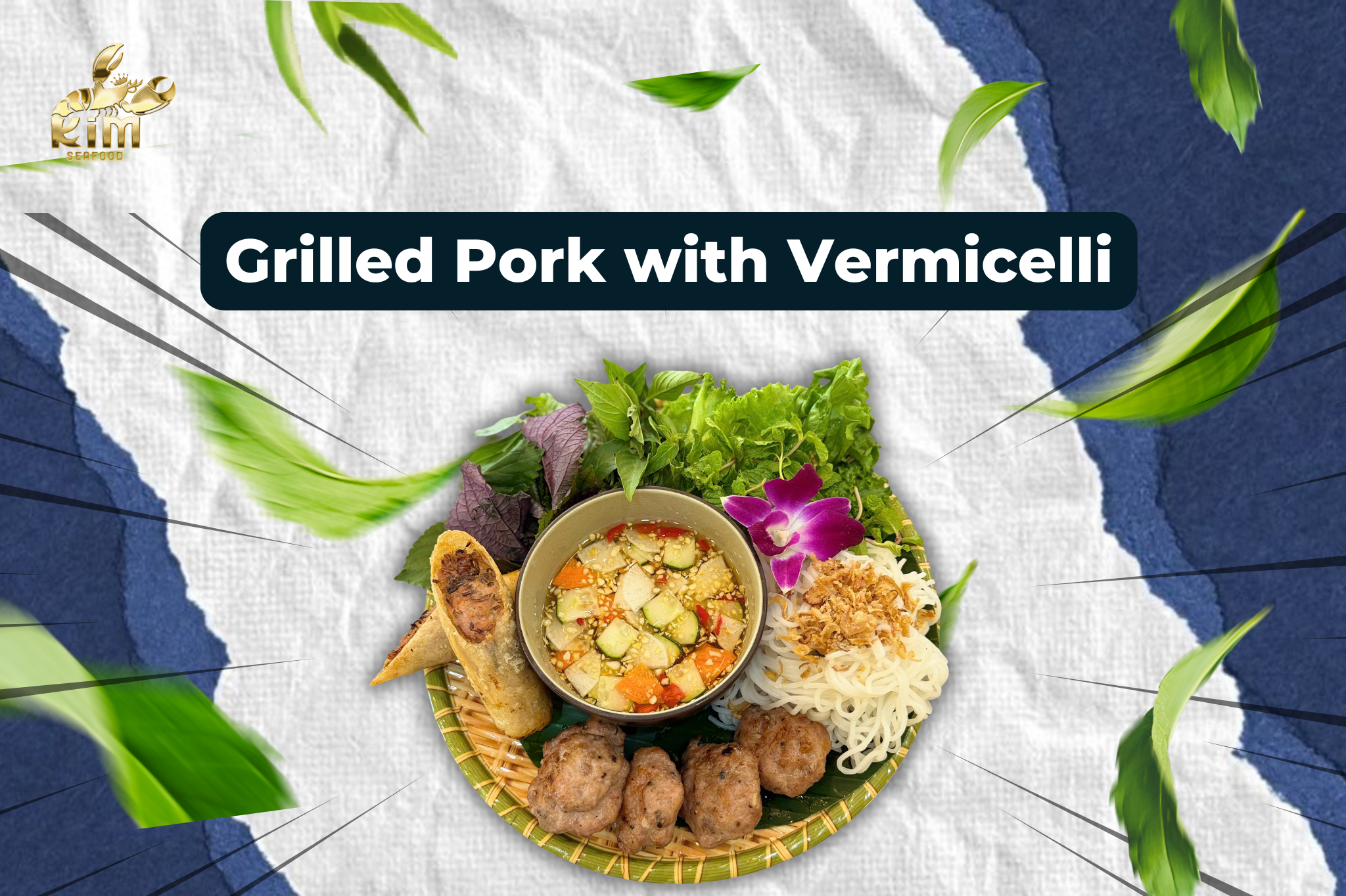
Bun cha originates in Hanoi but has become one of the Vietnamese dishes most actively sought in Da Nang. The grilled pork comes in two forms: pork patties and pork belly slices. The patties are made from seasoned minced pork, grilled until the exterior is firm and fragrant. The pork belly slices are marinated thin-cut, grilled so the fat renders into the meat and creates a natural richness.
The dipping broth is what gives Grilled Pork with Vermicelli its identity. Made from fish sauce, vinegar, sugar, and minced garlic and chili, the flavor needs to balance mild sourness against measured sweetness — not heavy enough to dominate the pork, but substantial enough for fresh rice noodles to absorb it fully with each dip.
Kim Seafood serves Grilled Pork with Vermicelli in the traditional format: fresh rice noodles, charcoal-grilled pork, fresh herb plate. The charcoal grilling is a detail that separates this Vietnamese dish from versions cooked on electric grills. The smoke penetrates the meat during the cooking process in a way that electric heat does not replicate. The result is a pork flavor with a depth that is specific to charcoal preparation.
This is one of the Vietnamese dishes on the Kim Seafood lunch menu with the highest repeat order rate. Customers who try it once tend to come back specifically for this. That pattern is not accidental — it reflects consistent execution of a dish where the details matter.
6. Fresh Spring Rolls with Shrimp & Pork — Light, Fresh, Right for Any Lunch
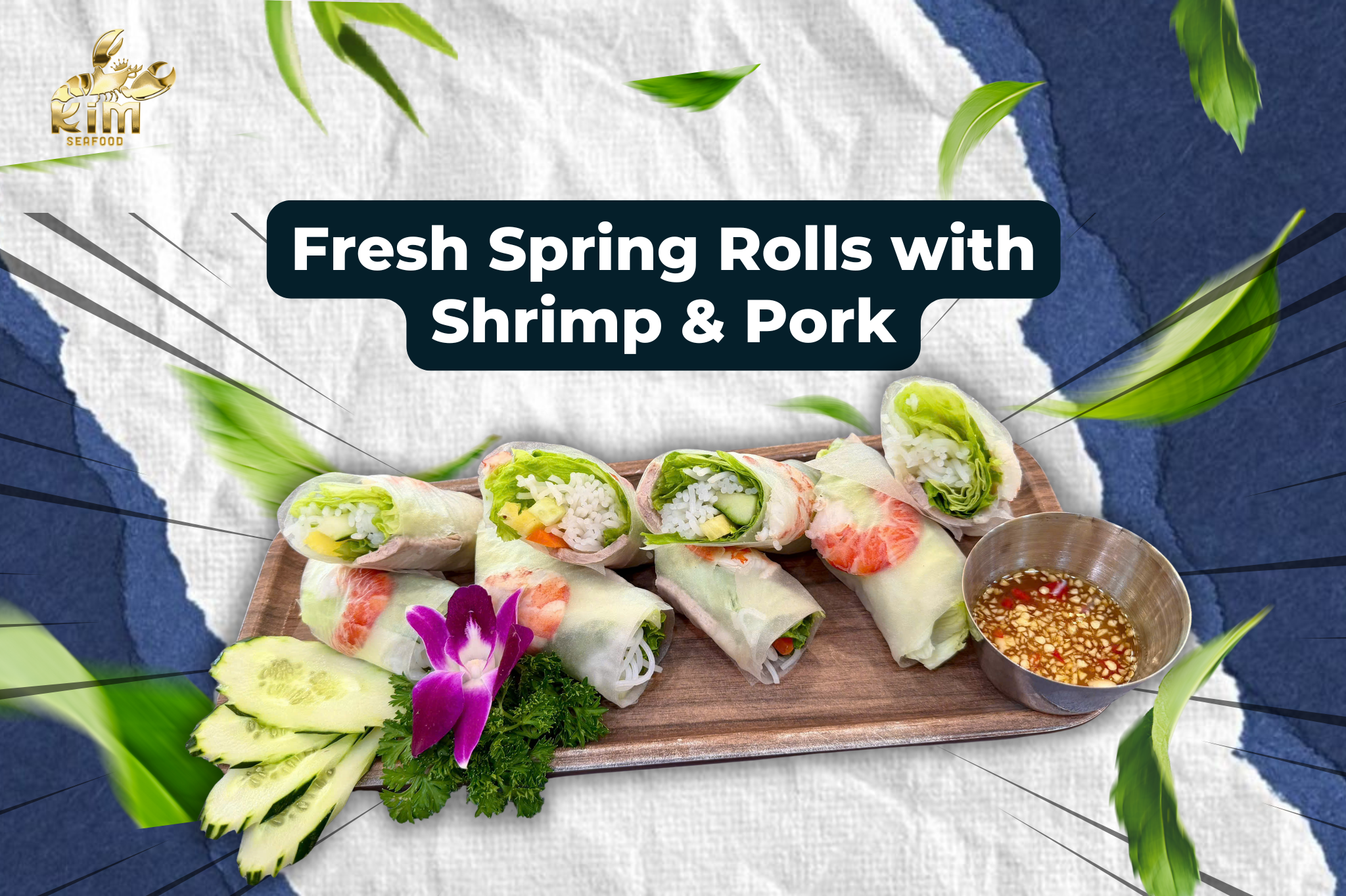
Goi cuon is the Vietnamese dish best suited to a lunch where lightness is the goal. Wet rice paper wraps fresh shrimp, thinly sliced boiled pork, vermicelli, herbs, and bean sprouts — no oil, no frying, nothing that sits heavily after the meal.
The flavor of fresh spring rolls comes from a simple combination: sweet shrimp, tender pork, crisp fresh herbs, and hoisin-peanut dipping sauce. The sauce matters more than it might appear — it is not just a condiment but the element that ties all the ingredients into a single coherent flavor. Too thin and the roll tastes flat. Too thick and it overpowers the shrimp and herbs.
At Kim Seafood, fresh spring rolls uses fresh shrimp — this creates a direct difference compared to places that use frozen and thawed shrimp. The natural sweetness of fresh shrimp inside a thin rice paper wrapper is something you notice from the first bite. It is one of those Vietnamese dish details that cannot be replicated once you have tasted the version that gets it right.
Goi cuon at Kim Seafood also works well as part of a wider table. Ordering it alongside a heavier Vietnamese dish like Lemongrass Pork Skewers or Grilled Pork with Vermicelli gives the meal a balance of textures and weights — the lightness of the fresh roll against the charcoal intensity of the grilled protein.
7. Vietnamese Wrap Platter — The Central-Style Mixed Wrap Few Restaurants Serve Completely
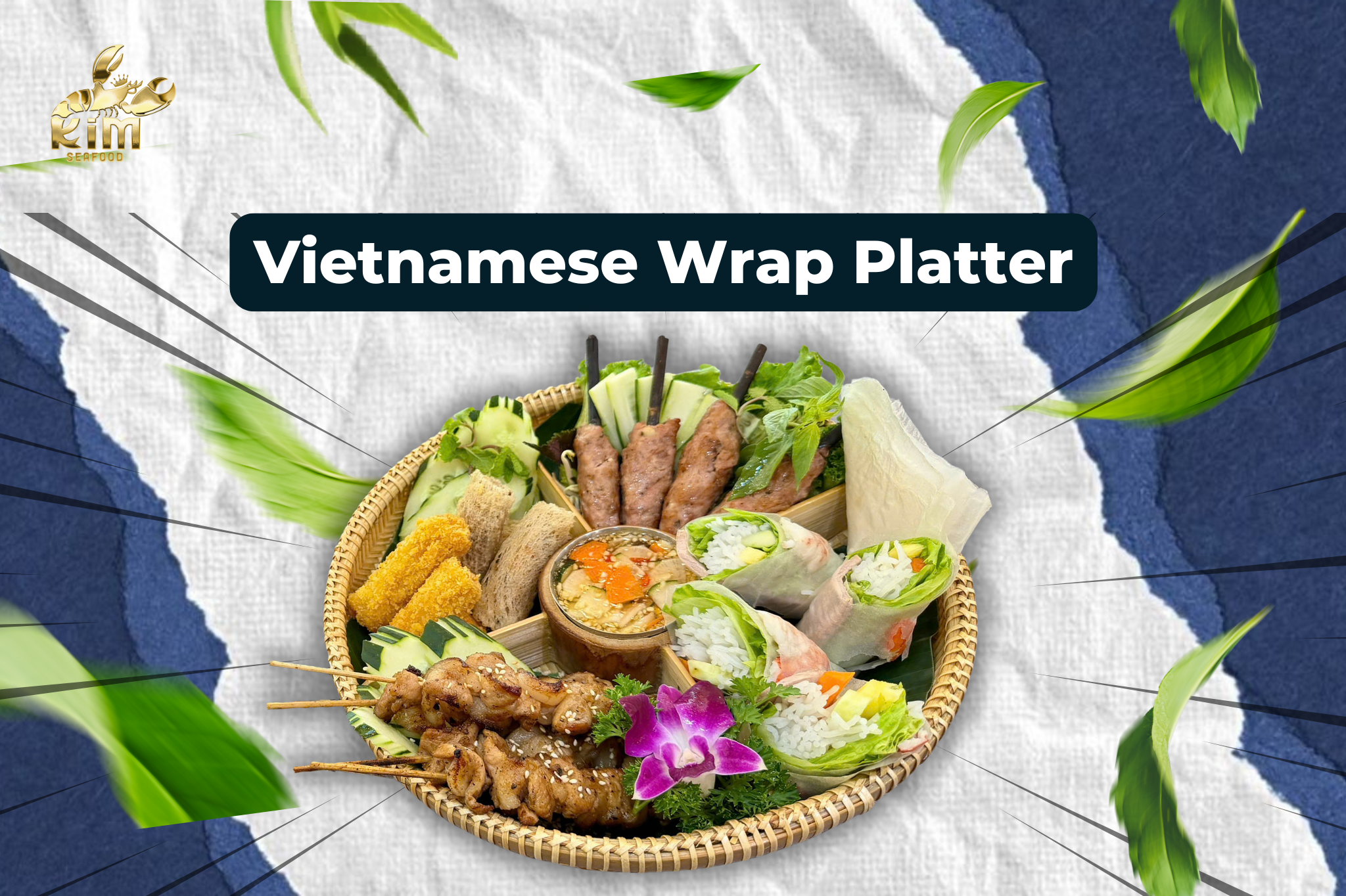
Met cuon is less widely known than fresh spring rolls outside the Central region, but it is one of the Vietnamese dishes most deeply embedded in the eating culture here. It is a mixed wrap platter with multiple filling types: Lemongrass Pork Skewers, grilled meat, Vietnamese sausage, vermicelli, and fresh herbs — all wrapped in rice paper by the person eating, who selects their own combination of fillings.
The difference between Vietnamese Wrap Platter and fresh spring rolls is the active participation of the person eating and the diversity of what goes inside. There is no fixed formula — more meat if that is your preference, more herbs if you want something lighter, more or less dipping sauce adjusted as you go. This is a Vietnamese dish that adapts to each person at the table rather than arriving as a fixed unit.
Kim Seafood serves Vietnamese Wrap Platter as a complete platter — all filling types, full herb plate, and the correct dipping sauce. This is not a partial version. The variety of fillings is what defines Vietnamese Wrap Platter as a Vietnamese dish, and serving it correctly means providing everything without substitutions.
This is the Vietnamese dish on the Kim Seafood lunch menu most frequently ordered by family groups. The reason is practical: one platter serves multiple preferences simultaneously. Those who want more grilled protein take more. Those who want a lighter combination take more herbs and less meat. The table shares one dish and everyone eats it differently.
8. Vietnamese Wrap Platter Combo — The Complete Lunch Option
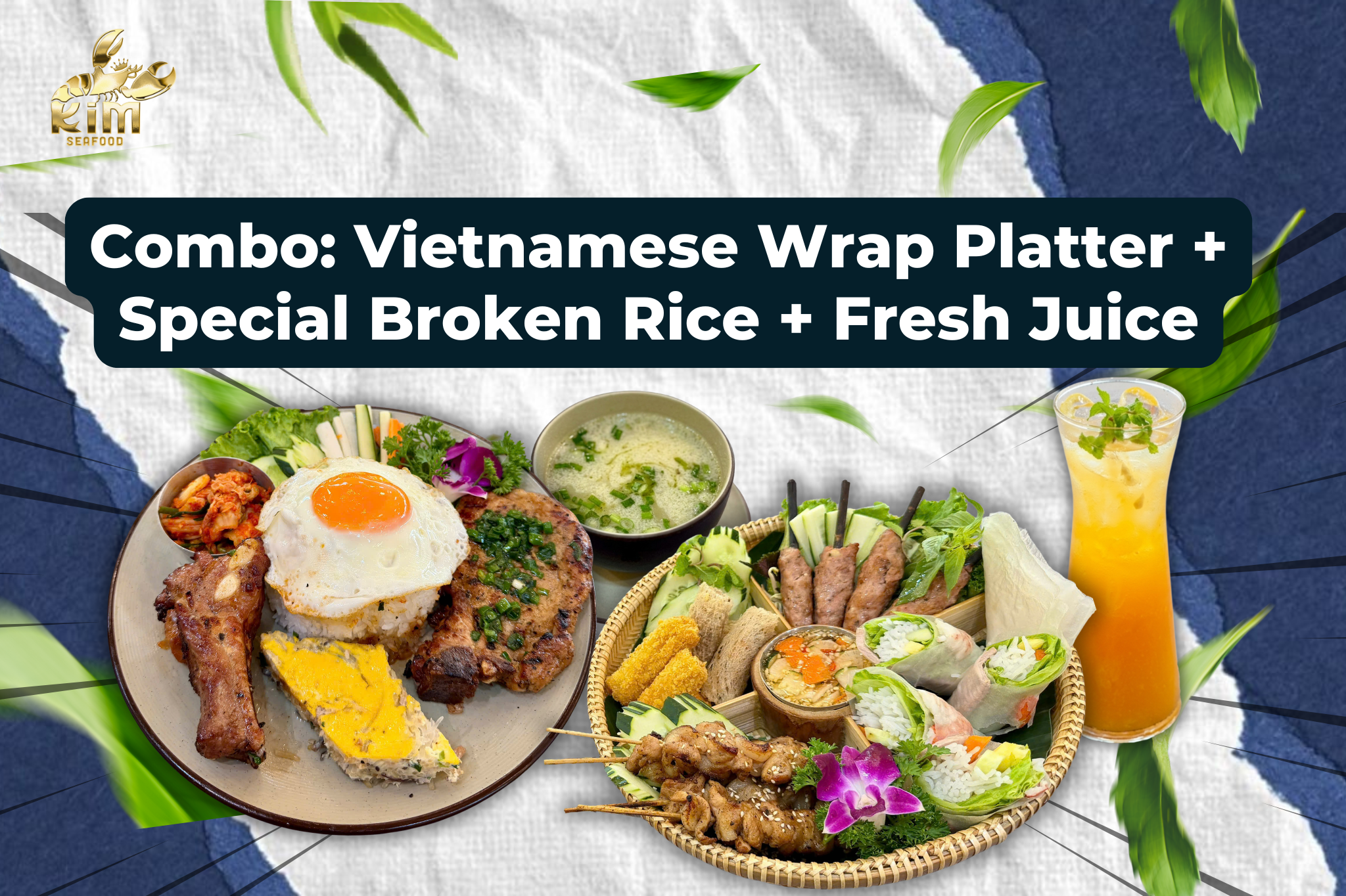
Kim Seafood offers a Vietnamese Wrap Platter Combo that combines the Vietnamese Wrap Platter, Special Broken Rice, and a fresh-pressed juice in a single set. This is the option for those who want to experience multiple Vietnamese dishes in one sitting without ordering each element separately.
The juice in the combo is pressed from fresh fruit — not a canned or pre-mixed product. This is a detail that matters in the context of a lunch built on ingredient quality. A fresh-pressed juice alongside Vietnamese dishes made from daily-fresh ingredients keeps the meal consistent throughout, from the first dish to the last sip.
The combo also solves a practical problem: it removes the decision-making from a busy lunch. One order covers a full and varied meal. For visitors to Da Nang who want to experience a selection of Vietnamese dishes without navigating an unfamiliar menu, the combo format provides a clear starting point.
👉 Watch more Top Korean Seafood Da Nang: The Ultimate Culinary Guide For Seafood Lovers
9. Ingredients in Vietnamese Dishes — What Actually Creates the Difference
When people talk about Vietnamese dishes, the focus tends to land on the recipe. But the recipe is just the framework — the ingredients are what determine whether the meal is genuinely good or merely familiar-looking. Two kitchens making broken rice from the same recipe with different pork will produce two completely different plates.
Kim Seafood controls ingredients for the lunch menu with consistent standards: pork for ribs and grilled patties comes from verified quality sources, fresh herbs are never held overnight, shrimp in fresh spring rolls is fresh-delivered that day rather than frozen and thawed. These are small criteria individually, but each one has a direct effect on the flavor of the Vietnamese dish when it reaches the table.
Fresh herbs are the element most commonly undervalued by larger restaurants. Herbs cut in the morning and left to sit will wilt and lose their natural crispness. Eating Lemongrass Pork Skewers with wilted herbs or fresh spring rolls with limp greens is an entirely different experience from eating the same Vietnamese dishes with herbs prepared fresh before service. Kim Seafood maintains this standard — not because it is complicated, but because it is fundamental to what makes these Vietnamese dishes taste correct.
The charcoal in Grilled Pork with Vermicelli and Lemongrass Pork Skewers is another ingredient choice rather than a convenience compromise. Electric grills are faster and easier to manage. Charcoal requires attention and preparation time. The difference in the grilled meat is real — the smoke penetration during cooking creates a depth in the protein that the finished Vietnamese dish carries through to the plate. This is the kind of choice that shapes whether a dish is merely adequate or genuinely worth coming back for.
10. Why Eating Vietnamese Dishes at Kim Seafood Is Different
The answer is not that Kim Seafood invented something new. The Vietnamese dishes on the lunch menu are all familiar — broken rice, Grilled Pork with Vermicelli, Lemongrass Pork Skewers, fresh spring rolls. What creates the value here is how these dishes are made every day.
Ingredients are controlled to the same standards applied to the seafood side of the restaurant. The shrimp in fresh spring rolls is fresh-delivered that day. The pork in Grilled Pork with Vermicelli is grilled over real charcoal, not an electric element. The fresh herbs are complete and properly fresh, not pre-cut and held over from the morning.
This is what creates the difference between a broken rice plate that tastes correct and a broken rice plate that only looks familiar. Regular eaters notice immediately — and this is why many people seek out Kim Seafood not only for the seafood but specifically for the Vietnamese dishes on the lunch menu.
There is also a consistency element. A Vietnamese dish that is right on one visit but different on the next is not a foundation for a regular customer. Kim Seafood’s lunch menu works because the standards are applied consistently — the same ingredient criteria, the same preparation approach, the same dressing calibration — each time the dish goes out.
11. Who Is the Kim Seafood Vietnamese Dishes Lunch Menu Right For?
11.1. Visitors Looking for Authentic Local Vietnamese Food
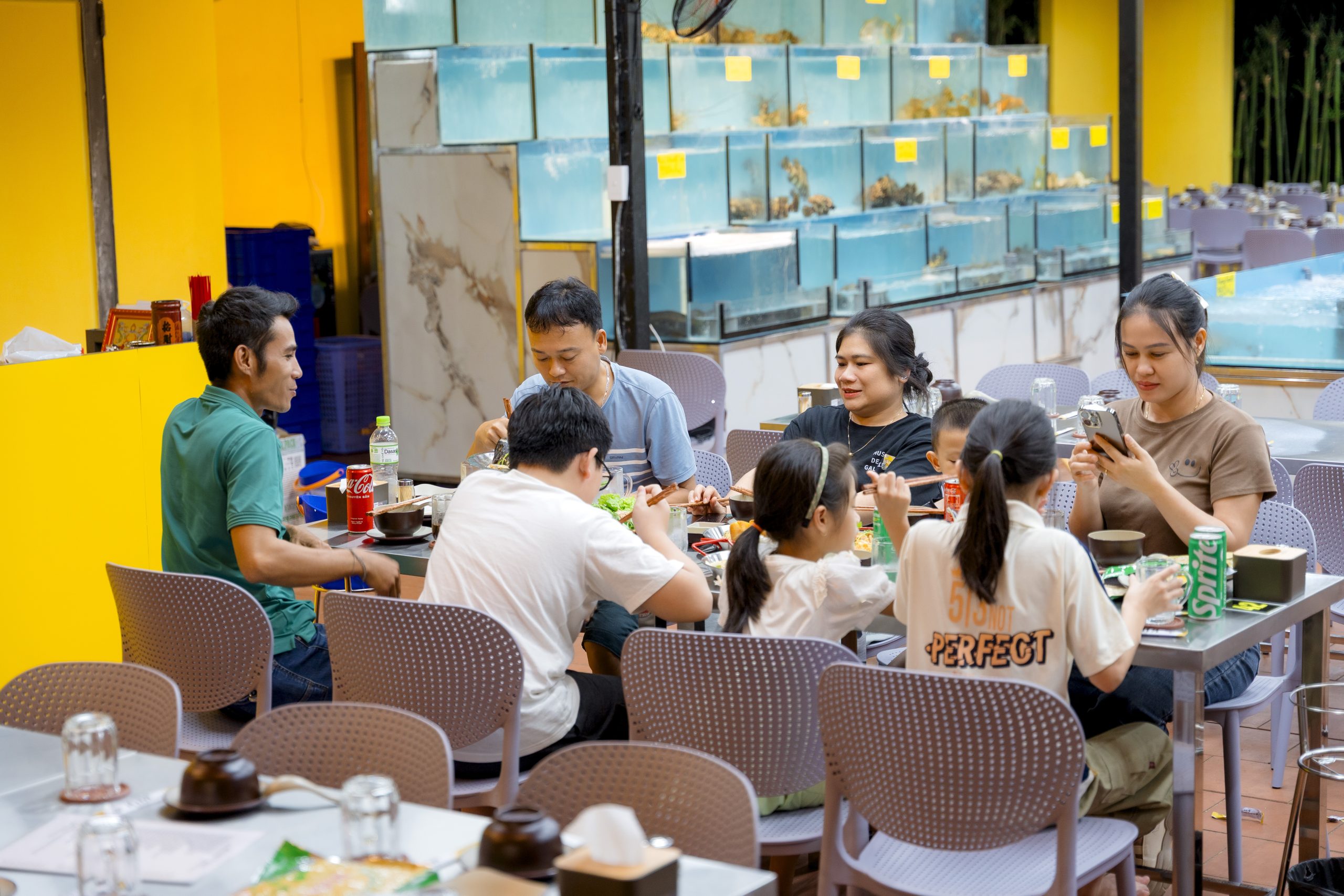
Many visitors to Da Nang specifically seek Vietnamese dishes that reflect the local version of these foods — not an adjusted version designed for broader appeal. Kim Seafood serves these dishes in the format they belong to: Lemongrass Pork Skewers as a complete wrap experience with rice paper and proper dipping sauce, Grilled Pork with Vermicelli grilled over charcoal, fresh spring rolls with fresh shrimp.
This is where visitors from other regions of Vietnam — and international travelers who have read about Central Vietnamese food — find confirmation of what they were looking for. The Vietnamese dishes here correspond to the descriptions and expectations they arrived with, which is less common than it should be.
For international visitors specifically, the lunch menu provides a lower-pressure way to experience authentic Vietnamese dishes than navigating a full seafood dinner. The familiar formats — rice, noodles, fresh rolls — are approachable even for first-time visitors to Vietnam, while the ingredients and preparation hold to local standards rather than tourist-adapted ones.
11.2. Local Residents Looking for a Proper Lunch
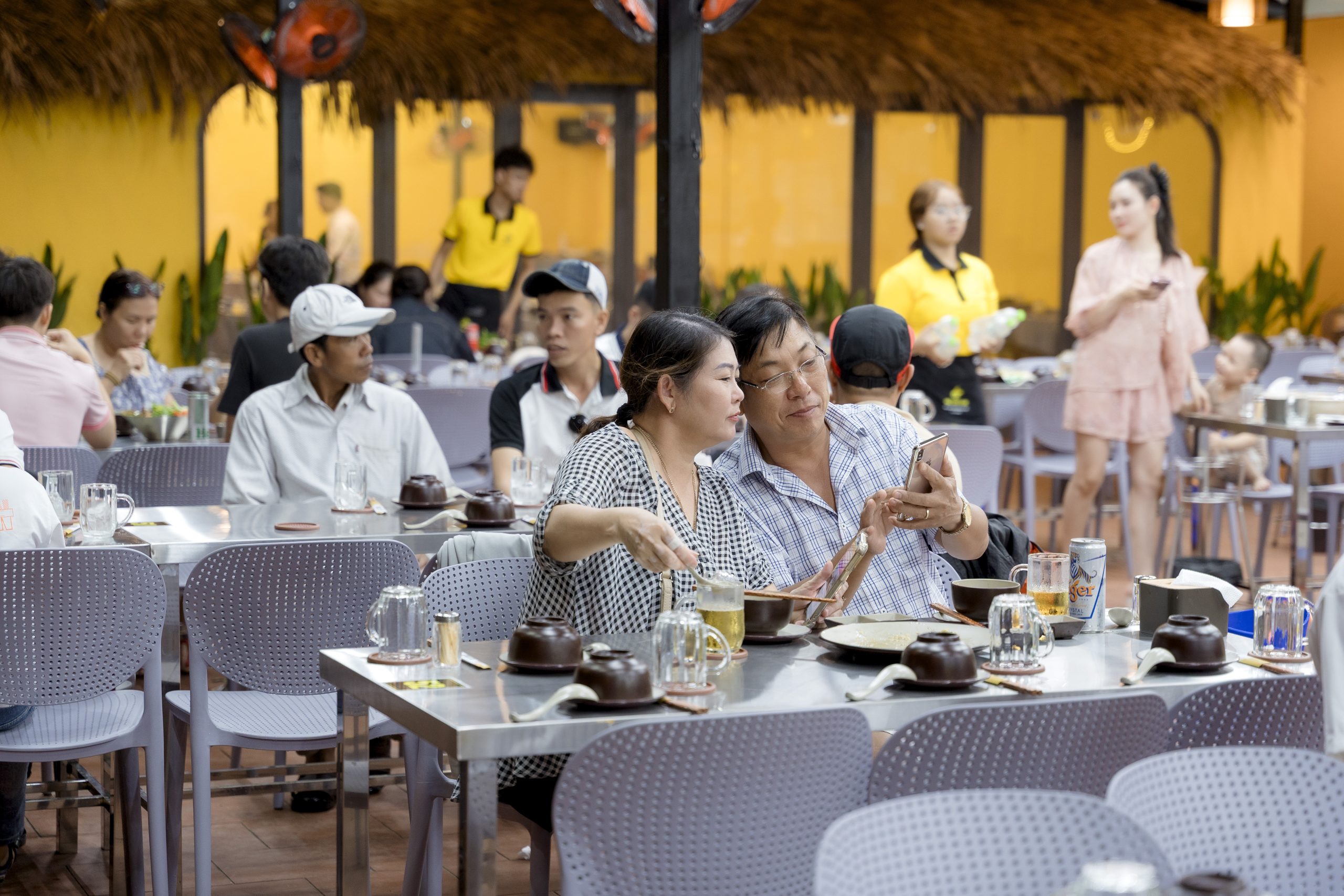
Da Nang people eat broken rice, Grilled Pork with Vermicelli, and Lemongrass Pork Skewers regularly — and they know what is correct and what falls short. The fact that Kim Seafood maintains the full ingredient set and proper flavor calibration is why the lunch menu draws regular local customers, not just visitors passing through.
For locals, the choice of where to eat Vietnamese dishes for lunch comes down to trust: which places consistently deliver what the dish is supposed to taste like. Kim Seafood has earned that trust through consistent execution, which is why its lunch menu serves both local regulars and visitors rather than depending on one group or the other.
11.3. Office Groups and Family Lunch Parties
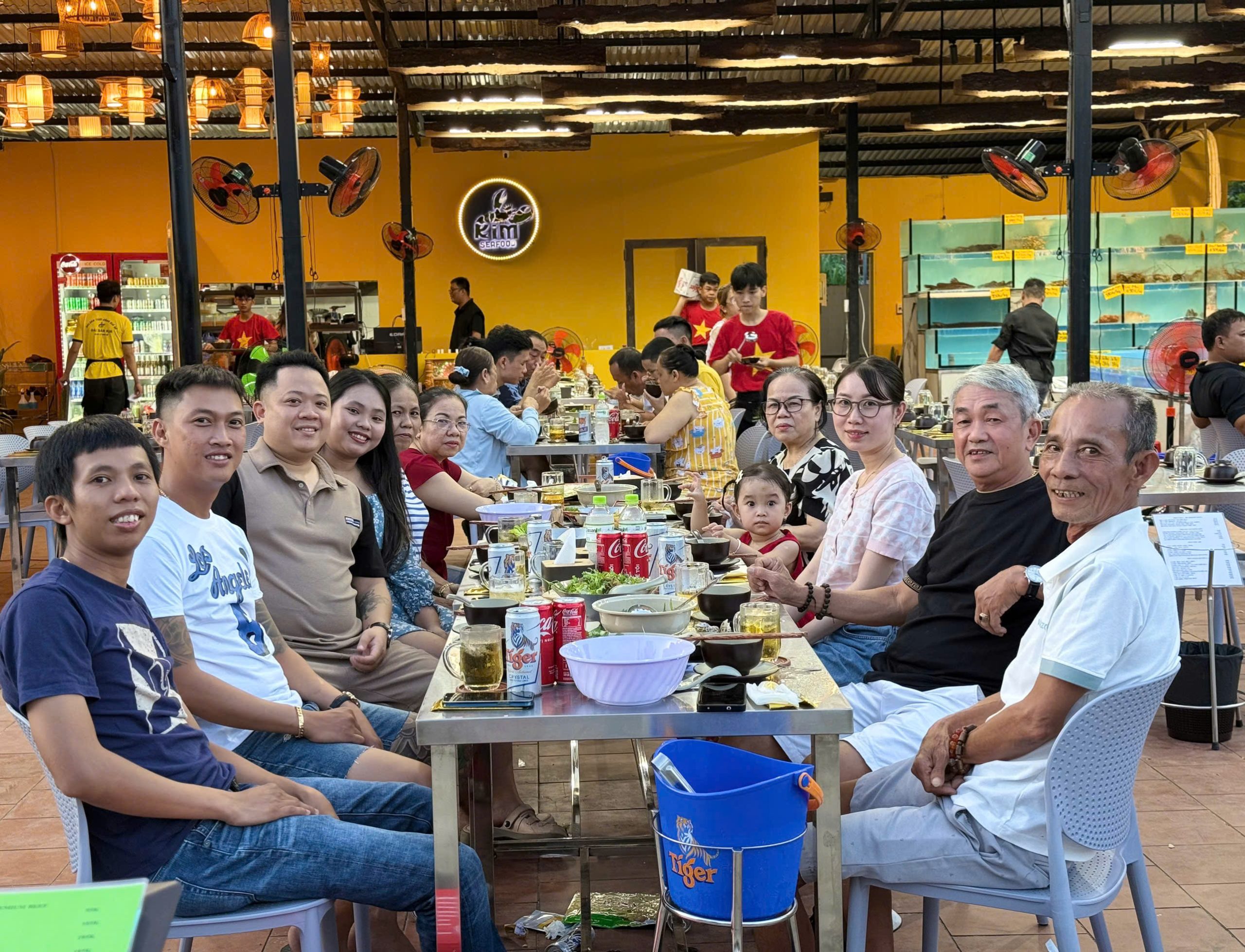
The Vietnamese dishes lunch menu at Kim Seafood has enough variety for a full table to order by individual preference without needing to agree on a single dish. Com tam for those who want something substantial. Goi cuon for those who want something light. Met cuon for those who want to sample multiple things. All available in a single menu, served in the same time window.
For family groups in particular, Vietnamese Wrap Platter works as a shared centerpiece alongside individual orders. The platter format naturally distributes across a table, with each person customizing their wraps while sharing the same ingredients. This is the Vietnamese dish format most naturally suited to group eating where preferences differ.
12. Practical Notes for Visiting Kim Seafood at Lunch
The Vietnamese dishes lunch menu is only served from 11am to 4pm. After 4pm, the restaurant transitions to the evening seafood menu. This is the most important logistical detail for first-time visitors who specifically want the lunch menu.
The peak window is 11:30am to 1pm. For groups larger than four, making a reservation before arriving avoids waiting and ensures the right seating arrangement. Kim Seafood can accommodate both family groups and office parties — the dining room has sufficient capacity, but peak lunch hours fill quickly.
Some Vietnamese dishes on the lunch menu — Vietnamese Wrap Platter in particular — are better suited to groups of two or more. The self-wrap format and shared platter structure creates a different experience from eating alone. A solo diner can certainly order it, but the dynamic of selecting fillings and wrapping with others at the table is part of what makes this dish work the way it does.
For those who are uncertain about what to order, the Vietnamese Wrap Platter Combo is the clearest starting point: it covers the most ground in a single order and gives a representative sample of the Vietnamese dishes Kim Seafood does best at lunch. From there, return visits with specific orders become easier to plan.
👉 Watch more The Ultimate Da Nang Culinary Adventure: Seafood Restaurant Near the Dragon Bridge
13. Understanding How to Eat Vietnamese Dishes the Right Way
Those unfamiliar with Central Vietnamese eating culture sometimes find certain Vietnamese dishes slightly different from what they expected — because the eating method requires a bit more active participation than a standard rice plate. Nem lui and Vietnamese Wrap Platter are two examples: not dishes you simply receive and eat directly, but dishes where you wrap, choose your fillings, and adjust dipping sauce according to preference.
For Lemongrass Pork Skewers, the correct approach is to place one skewer on a sheet of rice paper, add a small amount of vermicelli, a few fresh herb leaves, a thin slice of green banana, and a piece of sour starfruit, then roll firmly and dip into the thick peanut sauce. Not too thick — rice paper tears when overfilled — but substantial enough that the balance of filling types comes through in each bite. The staff at Kim Seafood can demonstrate this if it is your first time with this Vietnamese dish.
For Grilled Pork with Vermicelli, the correct way to eat it is to dip the noodles and fresh herbs directly into the bowl of dipping broth rather than pouring the broth over the noodles separately. This method lets each strand of vermicelli absorb the broth evenly without the noodles becoming too heavy with sauce. The pork patties and sliced pork belly are eaten from the same bowl — the flavors blend naturally without needing any additional seasoning.
Understanding the correct eating method for each Vietnamese dish does not make the meal more complicated — it does the opposite. It allows you to experience everything the person who made that dish intended. And that is what separates a lunch that fills you up from a lunch that you actually remember.
14. Frequently Asked Questions — Vietnamese Dishes at Kim Seafood Da Nang
14.1. What time does the Vietnamese dishes lunch menu start and end?
The Vietnamese dishes lunch menu at Kim Seafood is served from 11am to 4pm daily. After 4pm, the restaurant transitions to the evening seafood menu. If you are specifically visiting for the lunch Vietnamese dishes, arriving before 4pm is essential.
14.2. What are the must-order Vietnamese dishes at Kim Seafood for a first visit?
For a first visit, the Vietnamese Wrap Platter Combo covers the most ground: it includes the Vietnamese Wrap Platter wrap platter, Special Broken Rice, and a fresh-pressed juice. This gives you experience with both the wrap-based Vietnamese dishes and the broken rice format in a single order. If ordering individually, Lemongrass Pork Skewers and Grilled Pork with Vermicelli are the dishes that most clearly reflect Central Vietnamese cooking — both are done correctly here and are the items with the highest repeat order rate.
14.3. Is the Vietnamese dishes menu suitable for international visitors?
Yes. The Vietnamese dishes on the Kim Seafood lunch menu are served in their traditional formats, but the familiar structures — rice plates, noodle dishes, fresh rolls — are accessible to first-time visitors. The staff can explain the eating method for wrap-based dishes like Lemongrass Pork Skewers and Vietnamese Wrap Platter. The menu is available in multiple languages, and English and Korean-speaking staff are available to assist with ordering.
14.4. Can I visit Kim Seafood only for the lunch Vietnamese dishes, not for seafood?
Yes, completely. The lunch Vietnamese dishes menu operates independently of the evening seafood menu. Many regular customers visit Kim Seafood specifically for the lunch menu and not for the seafood side. There is no requirement to order from the seafood menu, and the lunch Vietnamese dishes stand entirely on their own as a reason to visit.
14.5. Does Kim Seafood use fresh or frozen shrimp in fresh spring rolls?
Kim Seafood uses fresh shrimp in fresh spring rolls, delivered that day. This is a meaningful difference compared to versions made with frozen and thawed shrimp: the natural sweetness and firm texture of fresh shrimp are preserved in the roll, which is exactly what makes fresh spring rolls one of the Vietnamese dishes worth paying attention to when the ingredient is right.
14.6. Is the charcoal grilling in Grilled Pork with Vermicelli and Lemongrass Pork Skewers real charcoal?
Yes. Kim Seafood uses real charcoal for the grilled elements in Grilled Pork with Vermicelli and Lemongrass Pork Skewers. This is a preparation choice rather than a shortcut decision. The smoke from charcoal grilling penetrates the pork during cooking in a way that electric grills cannot replicate, creating the depth of flavor that defines these Vietnamese dishes when made correctly.
14.7. Do I need to book a table for the Vietnamese dishes lunch?
Booking is not required but is recommended for groups of four or more, especially during the peak lunch window of 11:30am to 1pm. Kim Seafood fills quickly during this period. Calling ahead at 0916111143 ensures your group has seating without waiting and allows the kitchen to prepare accordingly.
15. Conclusion — Vietnamese Dishes at Kim Seafood Are Worth Knowing About
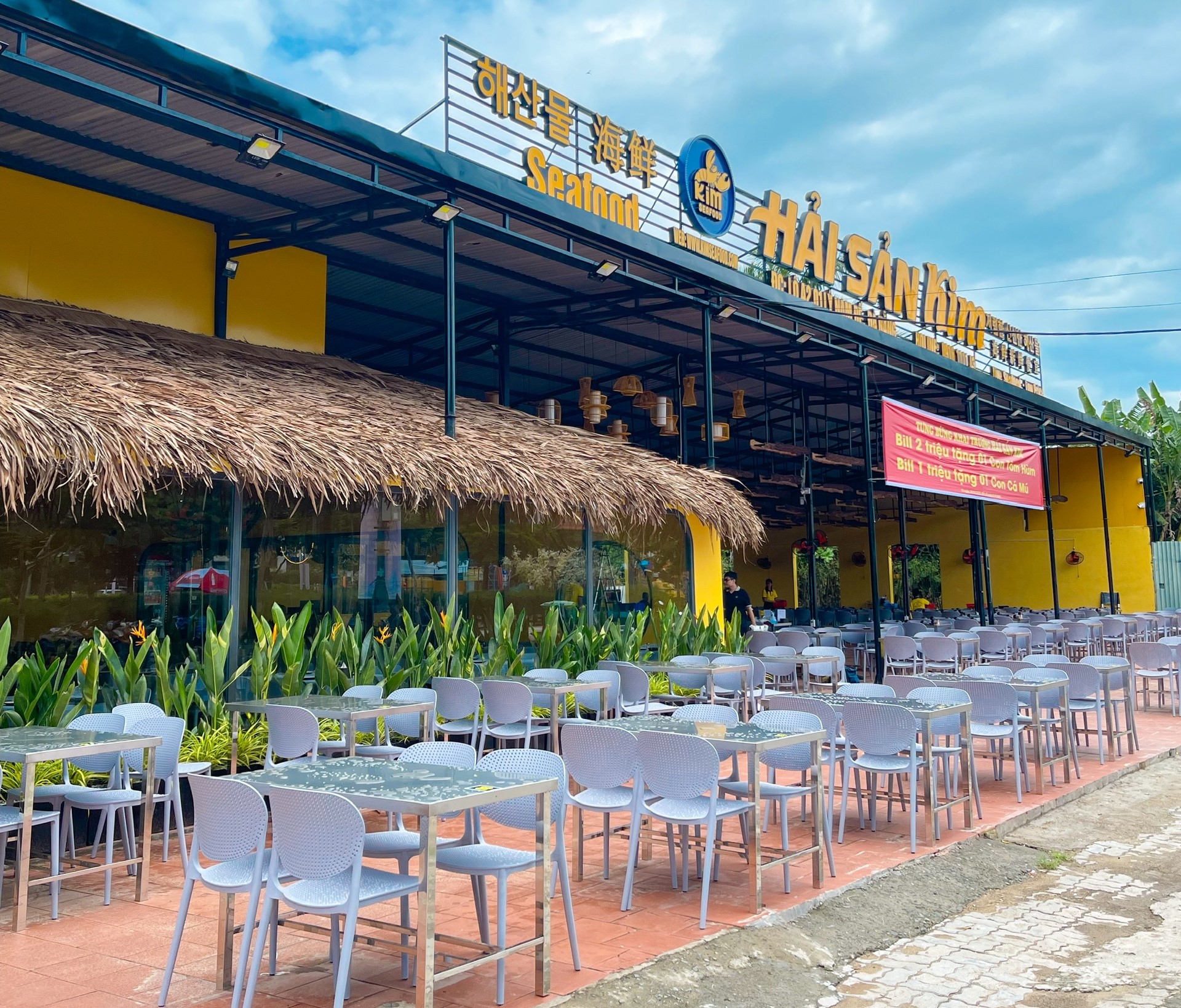
Kim Seafood is most often mentioned for its seafood. But the lunch menu — broken rice, Grilled Pork with Vermicelli, Lemongrass Pork Skewers, fresh spring rolls, Vietnamese Wrap Platter — is the part of the restaurant that fewer people know about and more people should.
These are not unusual Vietnamese dishes. They are among the most familiar foods in Da Nang. What makes them worth seeking out at Kim Seafood is the execution: ingredients that are correct, preparation that is done the right way, and a consistent standard maintained across every service.
A broken rice plate where the fish sauce is calibrated correctly, Lemongrass Pork Skewers served with the full accompaniment, fresh spring rolls made with fresh shrimp — these are small details individually. Together, they are what separates a Vietnamese dish that tastes right from one that only looks familiar.
If you are in Da Nang and looking for a lunch that delivers authentic Vietnamese dishes without compromise, Kim Seafood is the address worth visiting — not just once.
👉 Watch more Seafood Feast in Da Nang – Kim Seafood, Elegant and Memorable
Contact Information:
- Address: Kim Seafood, A2.01 Ly Nam De Street, An Hai Trung Ward, Son Tra District, Da Nang, Vietnam.
- Phone: 0916111143
- Opening Hours: 10:00 AM – 11:00 PM
- Email: hello.kimseafood@gmail.com
- Facebook Fanpage: Hải sản KIM Seafood