Reliable seafood restaurant in Da Nang trusted by many diners
Da Nang is one of the few cities in Vietnam where tourists don’t just come to admire the sea — they come to eat. And in all the culinary experiences this city offers, reliable seafood is always what people remember the longest, or regret the most.
After decades of involvement in the seafood industry in the Central coast region, we have realized a paradox: it is very difficult for tourists to find a truly worthy reliable seafood address — not because Da Nang lacks delicious seafood, but because they don’t know what they need to look for.
This article is not an advertisement. This is a practical guide from an insider’s perspective, so that you — whether you are setting foot in Da Nang for the first time or have visited many times — can confidently choose a reliable seafood restaurant, enjoy the right type of seasonal seafood, and not be “overcharged” in any situation.
1. Why Is Da Nang Seafood So Special?
Before talking about how to choose a restaurant, it is necessary to understand why delicious Da Nang reliable seafood has a reputation that extends beyond the borders of Central Vietnam — and why not every place here can call itself reliable seafood.
1.1. Geographical location is an uncopyable advantage
Da Nang is located at the intersection of the East Sea with rich ocean currents from the Gulf of Tonkin down to the Gulf of Thailand. This sea area has ideal water depth and temperature for many high-value reliable seafood species: ornate spiny lobster, Alaska lobster, Ca Mau crab, blue swimmer crab, bigfin reef squid, grouper, sweet snail, abalone…
Tho Quang fishing port — one of the largest fishing ports in Central Vietnam — receives fresh seafood from fishermen every early morning. This means that the seafood on your dining table at a reliable seafood address in Da Nang may be only a few hours away from the sea.
1.2. Da Nang seafood by season — something few people know
Many tourists think that just coming to Da Nang means they can eat all kinds of seafood. In reality, that is not the case. A reliable seafood restaurant will always tell you the truth about this.
-
Summer (April–August): The golden time for ornate spiny lobster, reef squid, and Alaska lobster. The sea is calm, many boats go offshore, supply is abundant, and prices are stable.
-
Autumn (September–November): Blue swimmer crab, Ca Mau crab, and grouper are at their fattest season. This is the period many local chefs consider the “peak” of Da Nang seafood.
-
Winter (December–February): Rough seas, limited fishing. A reliable seafood address that still ensures a rich supply during this period definitely has a very dependable supply chain.
-
Early Spring (March): Sweet snails, scallops, and black clams are at their most delicious and cheapest time of the year.
Important note: If the staff confidently asserts that “everything is fresh year-round” without any explanation about the season, that is the first suspicious sign regarding the credibility of that restaurant.
2. How to Identify a Reliable Seafood Address — 7 Practical Criteria
This is the most important part of the article. Instead of saying generally “look for a quality place,” we will tell you specifically what to look at to identify a truly reliable seafood address.
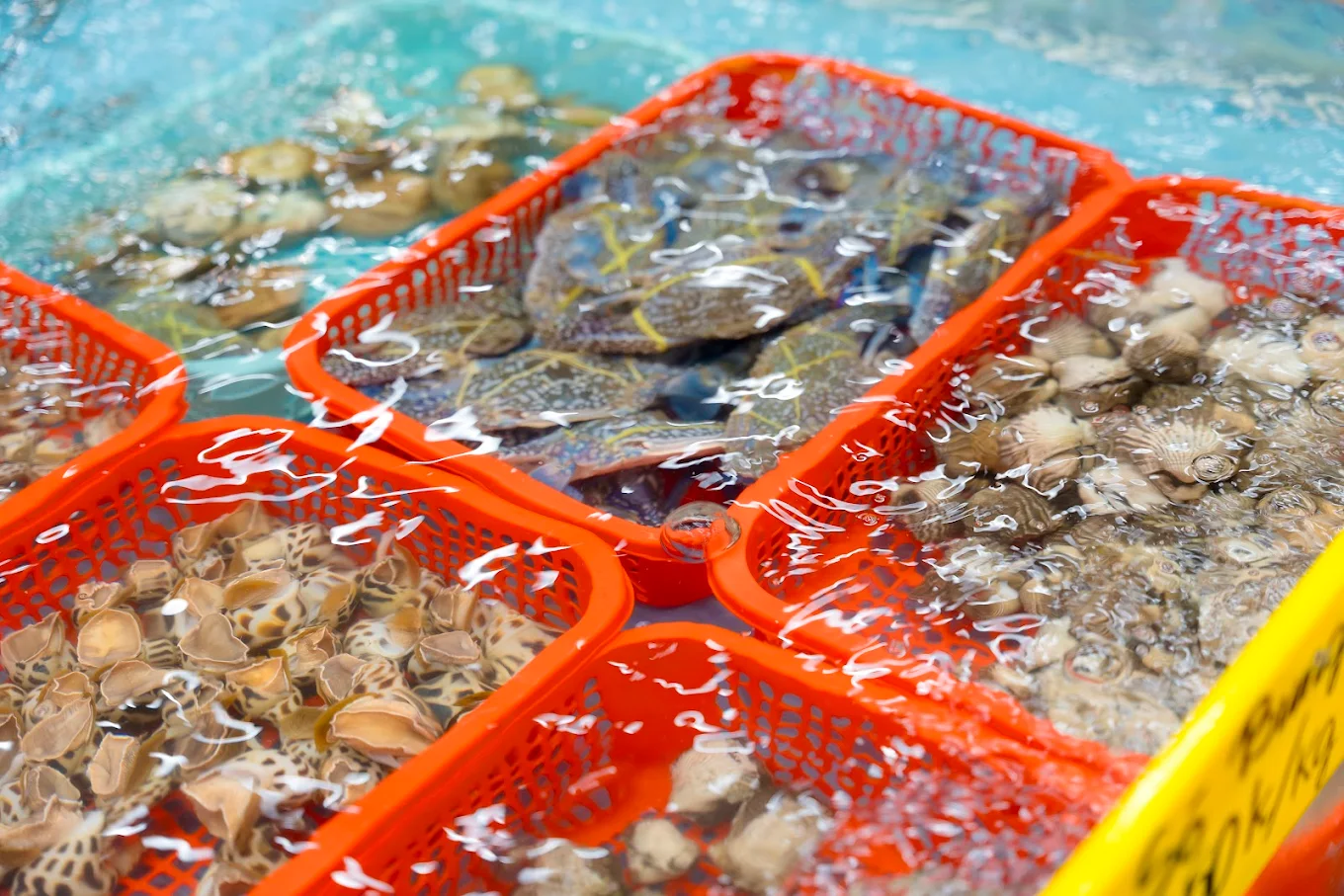
2.1. Live fish tanks — the “face” of the restaurant
Live fish tanks are the first and clearest criteria to evaluate whether fresh seafood is actually fresh. This is also the clearest distinction between an ordinary eatery and a true reliable seafood address. Observe four things carefully:
-
Is the water in the tank clear? Cloudy water is a sign of weak or dead seafood in the tank.
-
Are the seafood creatures moving flexibly? Shrimp, crabs, and sweet snails must be active.
-
Is the smell of the tank too strong? A light seafood smell is normal; a foul odor is not okay.
-
Is the staff ready to take the seafood out and weigh it directly in front of you?
A reliable seafood address is never afraid to let customers see the fish tanks, even actively inviting customers to choose the specific one they like.
2.2. Transparency in pricing — before ordering
This is the most controversial point in the seafood dining experience of many tourists. Seafood prices are calculated by the kg and fluctuate by season, species, and size — that is completely normal. The issue is that a reliable seafood address always clearly explains this before you order. Signs to be wary of:
-
The restaurant does not post prices or answers vaguely when asked.
-
The actual price on the invoice is different from the price stated verbally.
-
Weight is not confirmed before being taken into the kitchen for processing.
At Kim Seafood, the standard process is: select → weigh → quote price → customer confirms → process. No step is skipped.
2.3. Preparation menu — diversity with depth
A reliable seafood address does not just know how to steam and grill. They understand which processing method each seafood species is suitable for to maximize its natural sweetness. Diversity in the preparation menu is evidence of real experience, not just following business trends. Example: Lobster can be processed into fresh sashimi, grilled with cheese, or cooked into lotus seed porridge — three completely different ways in terms of flavor, suitable for different tastes and purposes. If the staff can clearly advise on this, you are in the right place.
2.4. Origin of seafood — the question few ask but is very important
Ask directly: “Where is the seafood here from?” A reliable seafood restaurant will answer without hesitation. For example: “Ornate spiny lobster is from Phu Yen, blue swimmer crab from Tho Quang fishermen, grouper from Quang Nam waters.” If the answer is just “fresh seafood imported every day” without any further details — you have the right to doubt the transparency of that place.
2.5. Actual reviews — reading correctly is helpful
Google Maps and TripAdvisor are good reference sources, but you need to know how to read them to determine where the truly reliable seafood is:
-
Prioritize reviews from people who have visited more than once — they come back for a reason.
-
Pay attention to 3–4 star reviews — they are usually the most honest because they are neither too complimentary nor too critical.
-
Read carefully how the restaurant responds to negative reviews — the handling attitude says a lot about the corporate culture.
2.6. Space and hygiene — hidden factors affecting quality
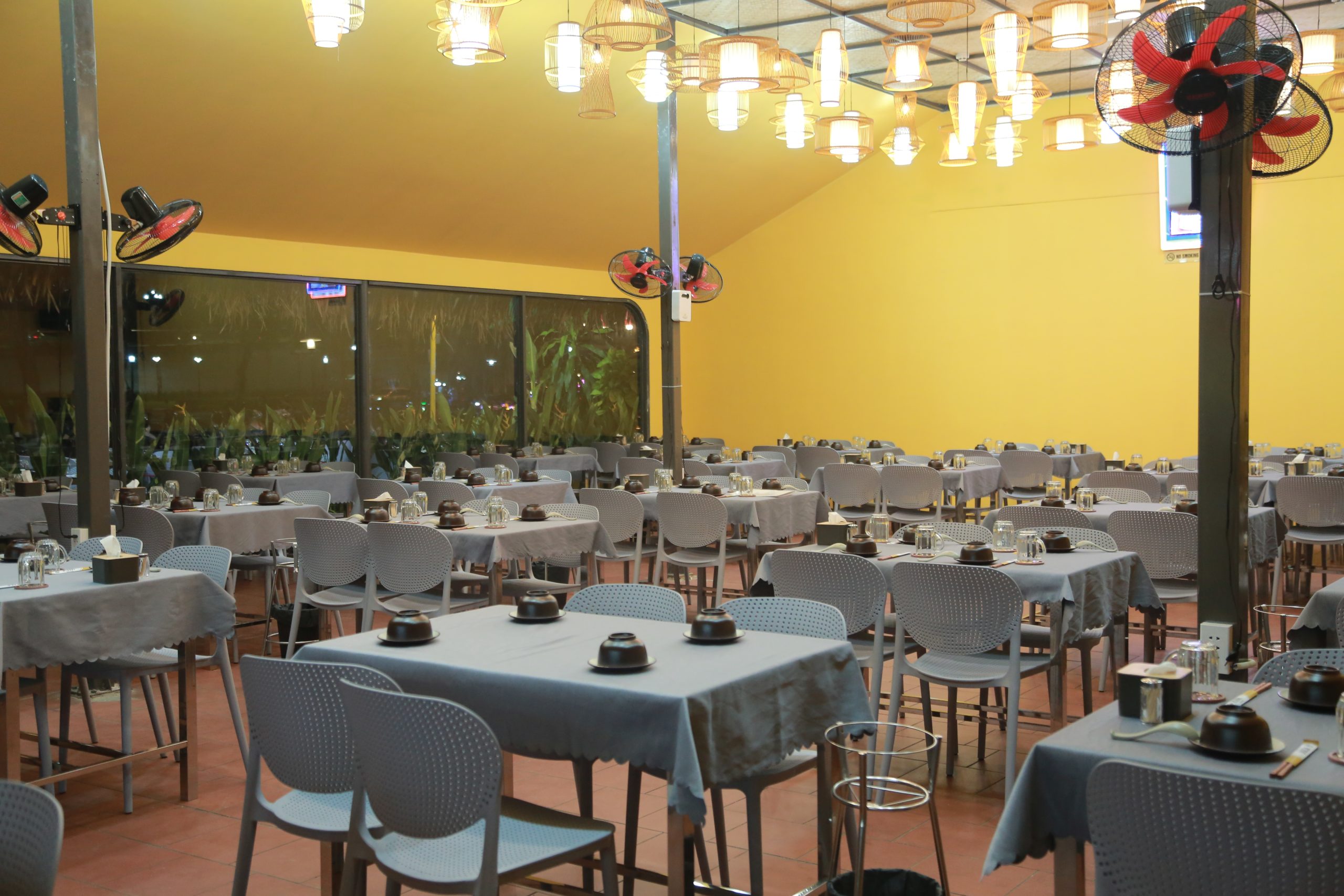
A reliable seafood address understands that a clean kitchen produces delicious dishes. You can recognize this indirectly through three things: the restroom is often a “mirror reflection” of the entire shop’s hygiene standards; dining utensils such as chopsticks, bowls, and hand towels are clean and dry; do staff wear aprons and handle food according to the correct process?
2.7. Service attitude — the factor distinguishing “okay” and “memorable” places
Eating seafood is not just about nutrition — it’s an experience. Staff who understand the product, actively support customers who are not familiar with eating seafood, and flexibly handle special requests are signs of a true reliable seafood address — a place that puts the customer’s experience above all else.
3. Guide to Eating Seafood Correctly — To Not Waste Money And Taste Buds
3.1. Ordering order is more important than you think
Many people order seafood by inspiration, leading to eating too many heavy-flavored dishes first, and by the time the best dish is on the table, they are already full. The ideal order for a full reliable seafood meal:
-
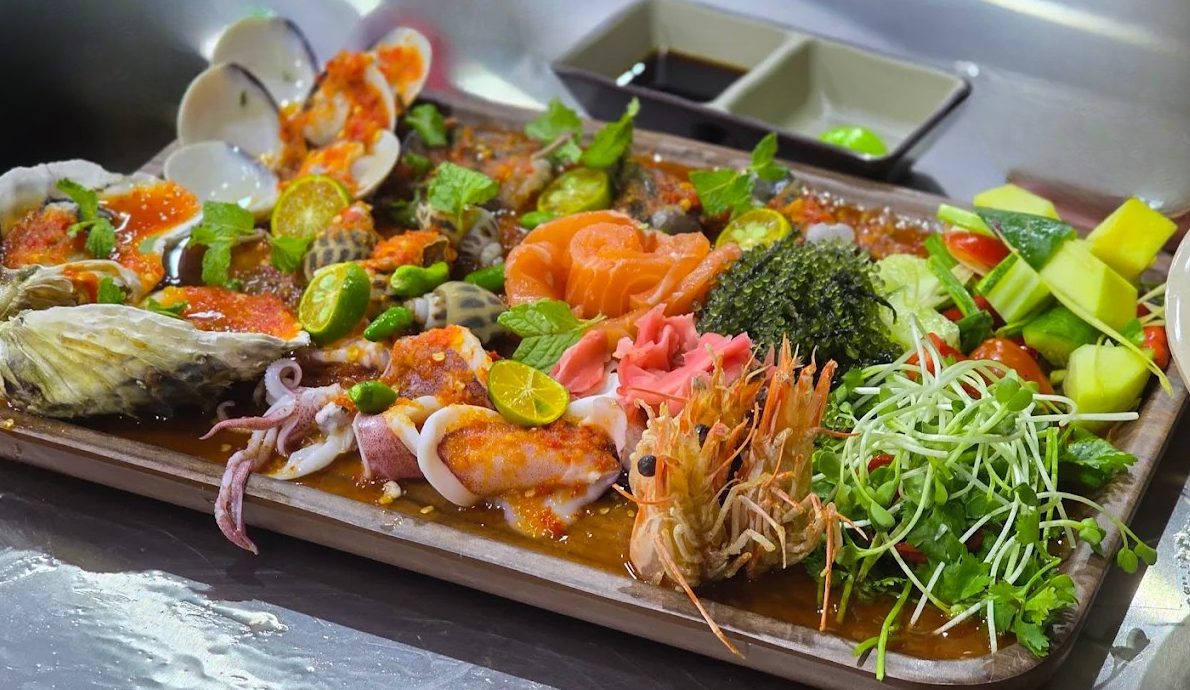
Light appetizers: Thai-style fresh oyster salad, seafood tray with Thai fish sauce, or seafood spring rolls with Mayo sauce — fresh taste, stimulating the taste buds without getting full early.
-
Light main courses: Steamed tiger prawns with fresh beer at the table, steamed rice squid — keeping the natural sweetness of fresh seafood.
-
Bold-flavored main courses: Ca Mau crab with tamarind sauce, blue swimmer crab with garlic butter sauce, lobster grilled with cheese — dishes that need to be enjoyed when the taste buds are still sharp.
-
Conclusion: Seafood porridge or pineapple fried rice — fresh taste, lasting fullness, ending the meal completely.
👉 See more: Fresh seafood – a clear difference in quality and natural flavor
3.2. How to eat each type of seafood — the real secret
-
Lobster grilled with cheese: This is the most ordered dish at Kim Seafood. Eat it immediately while the cheese is still melting, use a small spoon to take the roe in the shrimp head and mix it with the tail meat — this is the most delicious part that many guests waste because they don’t know.
-
Crab/Blue swimmer crab: The triangular apron part is the key to opening the shell — press lightly on the apron to separate the shell easily. The coral (roe) in the shell mixed with Yangchow fried rice or seafood fried rice is the way of eating most encouraged by Kim Seafood chefs.
-
Grilled sun-dried reef squid: Eat it while it’s still hot. If left to cool, the squid will become tough and lose its flavor. Kim Seafood serves sun-dried reef squid according to Central region tradition — dried just enough to keep the sweetness without being dry and woody.
-
Sweet snail: Use a small skewer to rotate lightly clockwise to get the whole meat. Lemongrass steamed sweet snails at Kim Seafood retain their natural light sweetness better than stir-frying or grilling at high temperatures.
-
Korean Abalone: This high-end seafood at Kim Seafood can be eaten as sashimi or grilled with scallion oil. If it’s your first time trying abalone, steamed with garlic oil is the best “introductory” processing method because of the gentle taste, easy to perceive the characteristic sweetness.
3.3. What to drink when eating seafood?
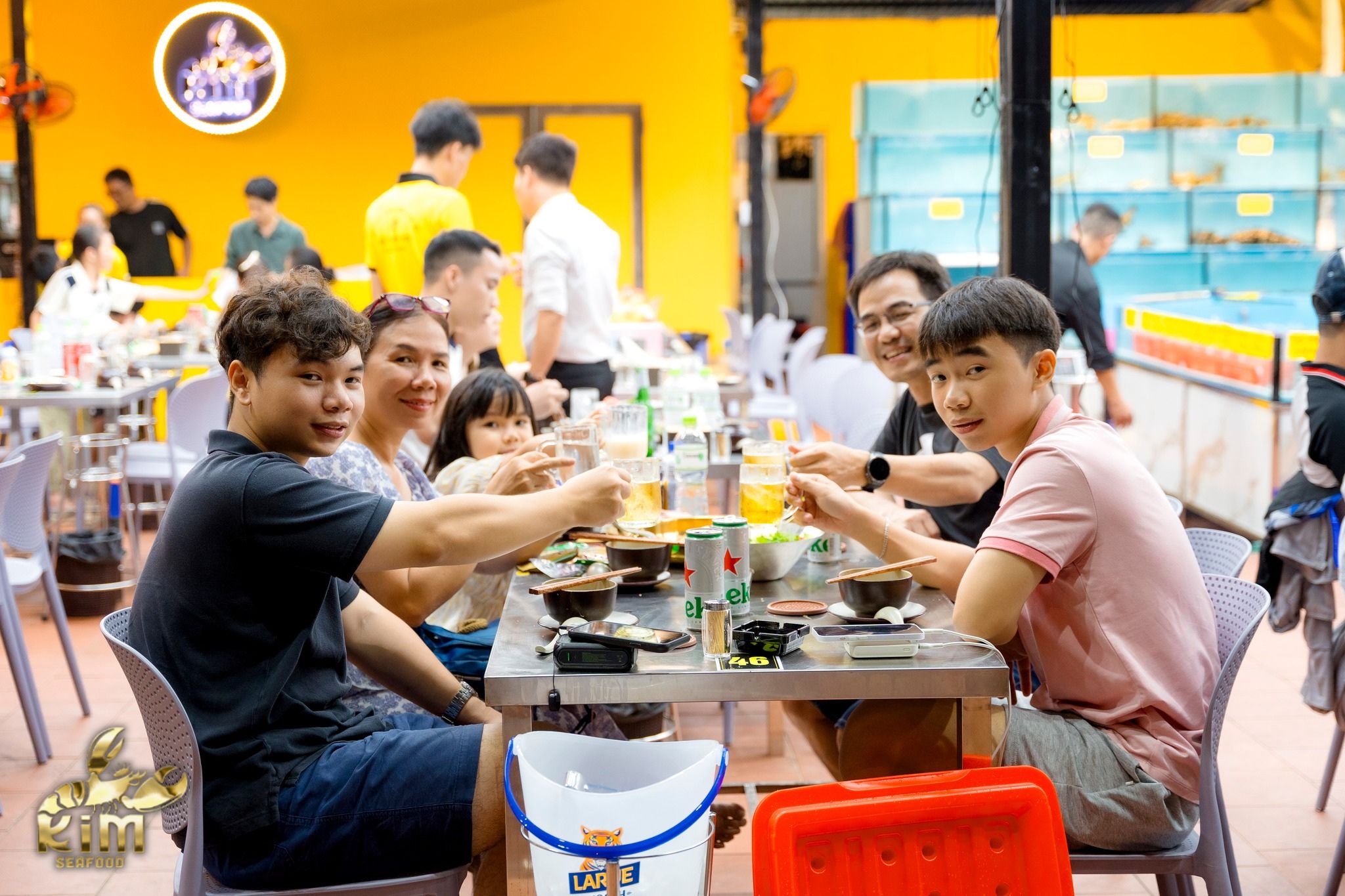
Seafood has cold properties (yin) according to traditional nutritional concepts. To balance and increase the experience:
-
Cold beer is the most popular choice — the light bitterness balances the fat and fishiness of seafood.
-
Dry white wine — especially suitable for lobster, abalone, and milk oysters.
-
Warm ginger tea after the meal — good for digestion and cooling down after a large amount of seafood.
4. Kim Seafood — The Story Behind A Reliable Seafood Address In Da Nang
4.1. Where did we start?
Kim Seafood was born from a simple question: Why does a coastal city like Da Nang lack a truly trustworthy seafood address? Instead of just asking the question, we decided to answer it ourselves. With an understanding of the Da Nang tourism market and a commitment to serious investment — from selecting fresh seafood every morning to standardized kitchen processes and a well-trained service team — Kim Seafood was built with a single goal: to become the reliable seafood address that every visitor to Da Nang wants to return to.
4.2. Supply chain — what makes the difference
What makes Kim Seafood different from many other seafood restaurants near the sea is not the menu or the interior decoration. It is the way we choose seafood. Every morning, our purchasing team is present at Tho Quang port from 5 AM — before most other restaurants wake up. We choose directly from the fishermen’s boats, no intermediaries, no centralized cold storage. Fresh seafood is present at Kim Seafood’s tanks before 8 AM — this is the operational commitment of a true reliable seafood address. Because we buy directly from fishermen, we control the quality from the source and provide high-quality reliable seafood at a much more reasonable price than many restaurants in the same segment.
👉 See more: Seafood by the Beach: A Tourist-Favorite Check-in Restaurant
4.3. Location — being near the sea is not just a geographical advantage
Kim Seafood is located at the Dragon Bridge area, one of the most prime locations in Da Nang. Just a few minutes from the beach and within reach of the city center — this is the natural choice for tourists who want to combine sightseeing and enjoying reliable seafood without spending a lot of time traveling far. Coming to Kim Seafood, you still feel the Da Nang sea atmosphere exactly the way you want.
5. Outstanding Menu — Dishes Not To Be Missed At Kim Seafood
Kim Seafood is a reliable seafood address with a menu spanning from high-end seafood to popular dishes with the right Central region flavor. Below are the most noteworthy groups of dishes.
5.1. High-end seafood — a distinct class
-
Ornate spiny lobster / Green lobster: This is the star of the menu. Kim Seafood serves it in 3 ways in one meal: head sashimi, head cooked with lotus seed porridge, and body grilled with cheese — the most complete way to perceive every dimension of fresh lobster taste. Guests can also choose individually: cheese grilled, garlic butter sauce, tamarind sauce, or salt-crusted.
-
Alaska Lobster: Similar to lobster, Kim Seafood serves the full 3-dish set or each method individually. Fresh mushroom and lotus seed porridge from Alaska lobster head is a dish few places have — the deep sweetness of the shrimp melts into the porridge, creating a truly special bowl of porridge.
-
Korean Abalone: Can be eaten as sashimi, grilled with scallion oil, steamed with garlic oil, steamed with lemongrass, or Thai-style steamed. This is a high-end seafood that rarely appears in Da Nang restaurant menus — its presence is a sign of a reliable seafood address seriously investing in raw materials.
-
King Crab: Served in a 3-dish set (garlic butter sauce, stir-fried glass noodles, steamed), or individually with Singapore sauce, black pepper sauce, or salt-crusted. The glass noodles stir-fried from King Crab soak up the sweet crab water — many guests call this the “side dish that is better than the main dish.”
5.2. Popular seafood — delicious in essence
-
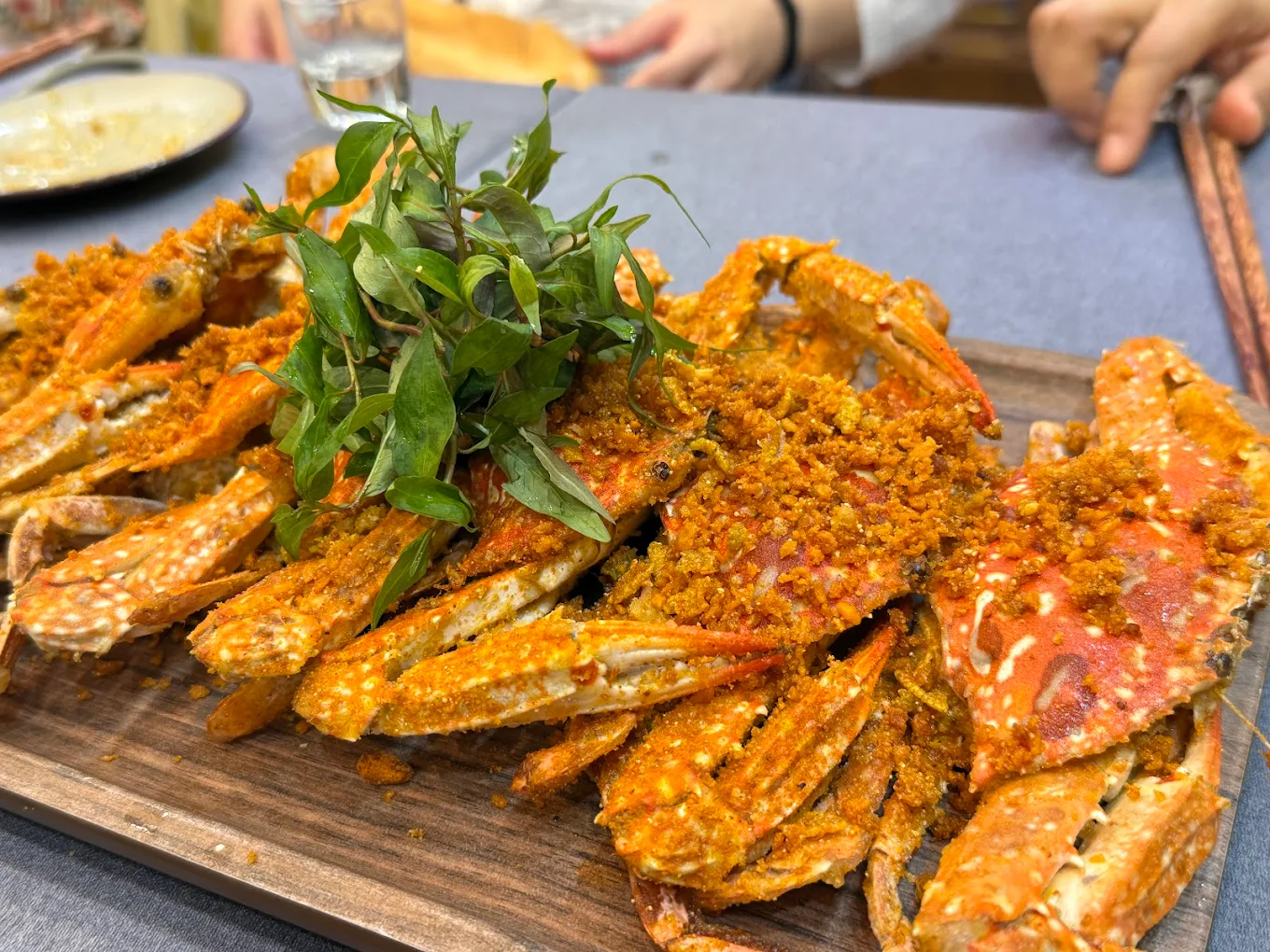
Blue Swimmer Crab: This is the most ordered mid-range option at Kim Seafood. Six processing methods: garlic butter sauce, Cajun sauce, Szechuan sauce, black pepper sauce, Singapore sauce, and tamarind fried — each way gives a completely different flavor personality on the same ingredient.
-
Ca Mau Crab: Whole steamed crab keeps the natural crab water. Tamarind fried is the most favorite choice — the sweet and sour taste of tamarind perfectly balances with the fat of the crab roe.
-
Tiger Prawns: The menu includes steamed, grilled with salt and chili, plain grilled, black pepper sauce, garlic butter sauce, Singapore sauce, Szechuan sauce, tamarind fried, salt-crusted, sashimi, and Thai sauce. Specifically, tiger prawns steamed with fresh beer at the table is a special experience that first-time visitors to Kim Seafood are introduced to by staff.
-
Mantis Shrimp: Steamed with ginger and lemongrass, fried with garlic, salt-crusted, or garlic butter sauce — fresh mantis shrimp eaten in any way gives the characteristic sweet and firm meat taste of this crustacean.
5.3. Appetizers and salads — the part with little attention but extremely worth trying
Kim Seafood has many rich appetizer and salad choices, often overlooked by guests because they focus on main dishes. These are dishes that should be ordered first:
-
Thai-style fresh oyster salad: Fresh milk oysters mixed with herbs and Thai sauce — sour, spicy, sweet, and salty flavors, ideal appetizer for a long seafood meal.
-
Seafood tray with Thai fish sauce: A beautifully presented mixed seafood plate, suitable for sharing while the whole table waits for the main dish.
-
Norwegian Salmon Sashimi: Not local seafood but a different highlight for the menu — fresh imported Norwegian salmon, fat pinkish-red meat, served with mustard and Japanese soy sauce.
-
Hand-pounded squid cake: An indispensable Central region specialty. Hand-pounded squid cake is completely different in texture and flavor compared to machine-made squid cake — tougher, more fragrant, and much more flavorful of the sea.
5.4. Rice, soup, and hotpot to end the meal
Kim Seafood also serves a full range of rice and soup dishes to end the meal completely:
-
Pineapple fried rice / seafood fried rice / egg-covered crab fried rice — three fried rice choices suitable for each level of seafood in the meal.
-
Blue swimmer crab soup with water spinach — rustic but deeply sweet soup, well-balanced after bold-flavored dishes.
-
Salmon porridge / seafood porridge / oyster porridge — a choice to end the meal lightly and freshly.
-
Thai-style seafood hotpot / Grouper hotpot with sour leaf — choices for groups wanting a long and warm meal.
❓ Frequently Asked Questions — From Real Guests
1. Is seafood more expensive in winter?
Yes. During rough sea season (November–February), supply decreases, so the price of lobster and sea crabs usually increases by 20–40% compared to summer. At Kim Seafood, we always inform customers of price fluctuations before they choose dishes — that is the commitment of a reliable seafood address to customers.
2. I’m not familiar with eating seafood, will staff support me?
Absolutely. The Kim Seafood team is trained to advise from how to choose the species, processing methods suitable for taste, to how to eat each one correctly. This is something we consider the responsibility of a reliable seafood address, not an extra service.
3. I am allergic to seafood but want to go with a group, is there anything to eat?
Kim Seafood has a diverse menu beyond seafood: shaken Kobe beef, pork ribs with kimchi, local vegetable dishes, fried rice, and soup. Please inform us when booking so we can prepare accordingly.
4. Can I bring dried seafood back as a gift?
Yes. Sun-dried reef squid and other Central region dried specialties are sold at the Kim Seafood counter, suitable for gifts or to take along on the journey.
5. Is there a parking space?
Kim Seafood has its own private car and motorbike parking lot. For groups arriving by large tour buses, please inform us in advance so we can arrange accordingly.
📌 Conclusion
Da Nang has countless seafood restaurants. But finding a reliable seafood address — a place where you know for sure you receive exactly what you paid for — is not easy. Hopefully, this article has equipped you with enough tools to evaluate any restaurant yourself before sitting down to order.
If you want a one-time experience of delicious Da Nang seafood in its true sense — fresh from the sea, processed with the right technique, served transparently, near-sea space, and a rich menu from popular to high-end seafood — Kim Seafood is the reliable seafood address we confidently introduce.
👉 See more: Delicious seafood in Da Nang – Why do diners keep coming back to Kim Seafood?
Contact Information:
- Address: Kim Seafood, A2.01 Ly Nam De Street, An Hai Trung Ward, Son Tra District, Da Nang, Vietnam.
- Phone: 0916111143
- Opening Hours: 10:00 AM – 11:00 PM
- Email: hello.kimseafood@gmail.com
- Facebook Fanpage: Hải sản KIM Seafood