Seafood Menu for Groups in Da Nang: How Many Dishes to Order?
Seafood Menu for Groups: Suggestions for the right number of dishes based on group size and budget. When dining with a group, the question is not only what to order but also how many dishes are enough for everyone without ordering too much.
For groups of 6, 10, 15, or 20 people, the way you order can vary depending on the number of guests, preferences, budget, and types of seafood selected. So, where should a Seafood Menu for Groups start, how should the dishes be divided into categories, and when should you choose a combo instead of ordering individual dishes?

See also: Da Nang Seafood for Groups of Friends – Meal Suggestions at KIM Seafood
1. Seafood Menu for Groups Should Start With the Number of Guests
Before choosing dishes, the first thing to determine is how many people will actually be dining. This information directly affects the number of tables, amount of food, and how the menu should be arranged.
A Seafood Menu for Groups for 6 people cannot simply follow the same ordering approach as a group of 20. If the number of guests has not been fully confirmed, the person in charge should provide the expected number and update the restaurant if there are any changes.
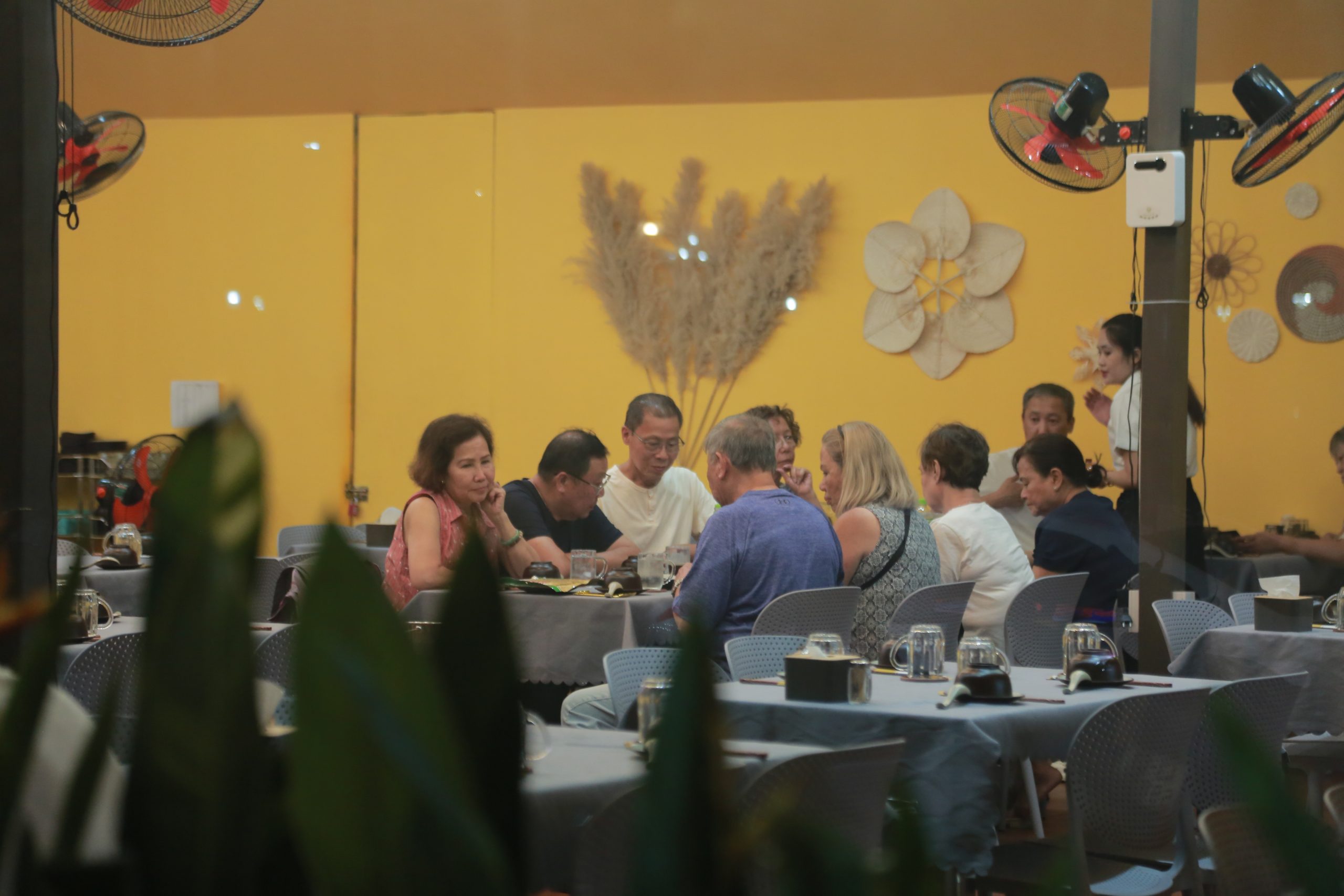
1.1. How Many Dishes Should You Order for a 6-Person Seafood Menu for Groups?
For a group of around 6 people, you can start with several shared dishes instead of having each person order an individual dish. This gives the table more variety while making it easier to control the amount of food.
A menu can be divided into main seafood dishes, lightly prepared dishes, side dishes, and a shared dish such as hotpot if the group wants one. The final quantity should still be adjusted according to the actual portion size of each dish.
1.2. What Is Different About a Seafood Menu for Groups of 10?
When the group increases to around 10 people, dishes should be divided into several categories so everyone can enjoy them together. You should not simply increase the quantity of one dish because people in the group may have different preferences.
You can balance steamed dishes, grilled dishes, sauced dishes, side dishes, and filling dishes. If the group wants to try different types of seafood, ordering several dishes in moderate quantities is usually easier to manage than ordering a large amount from the beginning.
1.3. Seafood Menu for Groups of 15–20 People
For groups of 15–20 people, the person in charge should discuss the menu with the restaurant in advance instead of calculating everything based on the experience of a smaller group. The number of dishes depends more on the serving style, portion sizes, and whether the group wants to choose a combo or order individual dishes.
When preparing a Seafood Menu for Groups, it is best to agree on the budget and the types of seafood that most members want first. Then, determine which dishes should be ordered in larger quantities and which dishes should only be ordered for everyone to try.
2. Seafood Menu for Groups Should Not Be Calculated Only by the Number of Dishes
Many people think that a large group simply needs more dishes according to the number of guests. This approach is not enough because each dish has a different portion size, and some types of seafood are priced by weight.
For example, a crab or shrimp dish can be shared by several people, while an individual dish may be served differently. Therefore, a Seafood Menu for Groups should be planned based on the number of guests, type of dish, portion size, and budget.
2.1. Distinguish Between Shared Dishes and Individual Orders
Shared dishes are usually suitable for larger groups because everyone can enjoy them together. For seafood, dishes such as crab, shrimp, squid, clams, shellfish, or hotpot can be considered depending on the table size and how the dishes will be shared.
Meanwhile, dishes that are not suitable for sharing or are intended for only a few members can be ordered separately. This approach keeps the Seafood Menu for Groups from becoming too large while still accommodating different preferences.
2.2. Seafood Priced by Kilogram Should Be Calculated Differently From Dishes Priced by Portion
This is something the person in charge of the group should clarify before ordering. With fresh seafood, the price may be based on weight, so you cannot estimate the total cost simply by counting the number of dishes.
Before preparation, ask about the type of seafood, price per kilogram, expected weight, and cooking method. This also helps control the budget when preparing a Seafood Menu for Groups.
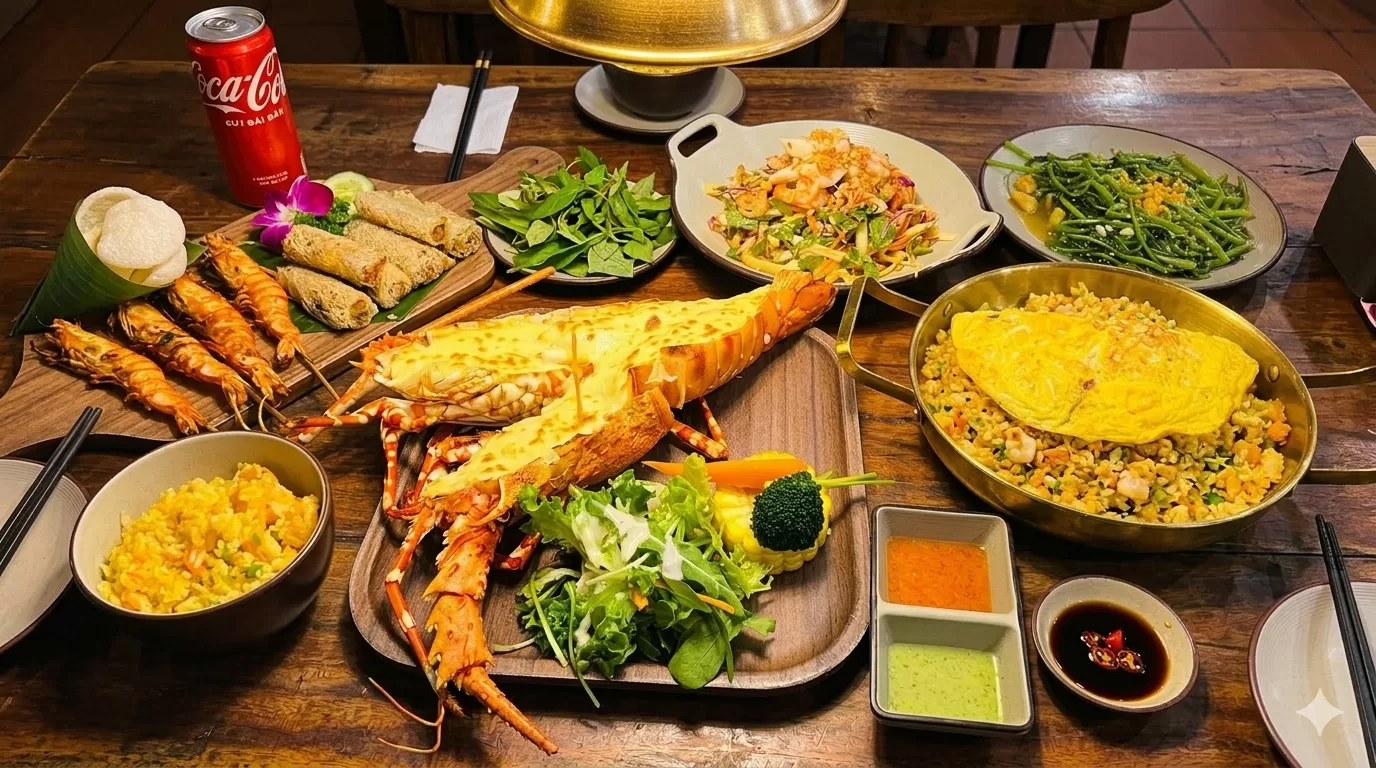
3. Seafood Menu for Groups Should Be Divided Into Dish Categories
Instead of choosing each dish one by one, the person in charge can divide the menu into different categories. This is especially useful when there are many people in the group and everyone has different preferences.
The official Da Nang tourism information source introduces many popular seafood groups such as shrimp, crab, squid, clams, shellfish, and snails, along with cooking methods such as steaming and other methods.
3.1. Seafood Menu for Groups With Steamed Dishes
Steamed dishes can be considered when the group wants to enjoy the natural flavor of the ingredients. At KIM Seafood, the current menu and combos include options such as steamed shrimp, steamed squid, and steamed clams.
For groups with members who do not prefer strong flavors, steamed dishes can also help create a more balanced menu. However, there is no need to order too many dishes prepared in the same way if the group also wants to try other options.
3.2. Seafood Menu for Groups With Grilled Dishes
Grilled dishes are suitable when the group wants to vary the cooking methods during the same meal. KIM Seafood’s current menu includes options such as grilled oysters, grilled shellfish with scallion oil, and several grilled dishes in its combos.
If you already have steamed and sauced dishes, adding just a few grilled dishes can create more variety. There is no need to order many separate dishes from every seafood category.
3.3. Seafood Menu for Groups With Sauced Dishes
Sauced dishes usually have stronger flavors and can easily become the main dishes on the table. KIM Seafood currently offers options such as Ca Mau crab with Singapore sauce, tamarind crab, and seafood dishes with different sauces on its menu and in its combos.
When choosing sauced dishes for a large group, consider the overall preferences of the group first. If many people prefer lighter flavors, you can combine sauced dishes with steamed dishes or side dishes instead of ordering too many strongly flavored options.
3.4. Should You Add Hotpot to a Seafood Menu for Groups?
Hotpot is usually a shared dish, so it can be suitable for groups that want a shared dish toward the end of the meal. KIM Seafood currently features seafood hotpot on its menu and in its group combos.
However, if the table already has many main dishes and filling dishes, adding hotpot may not be necessary. The person in charge should review the total amount of food before making the decision.
Want to know how to enjoy seafood hotpot? See: Where to Find Good Seafood Hotpot in Da Nang? Enjoy Fresh Seafood at KIM Seafood
4. How Many Dish Categories Should a Seafood Menu for Groups Have?
There is no fixed number that applies to every group. A group of 6 may need fewer dishes than a group of 15, but what matters more is whether the dishes are distributed appropriately.
An easy approach is to divide the Seafood Menu for Groups into four categories: main seafood dishes, other prepared dishes, side dishes, and filling dishes. From there, the person in charge can decide whether additional dishes are needed.
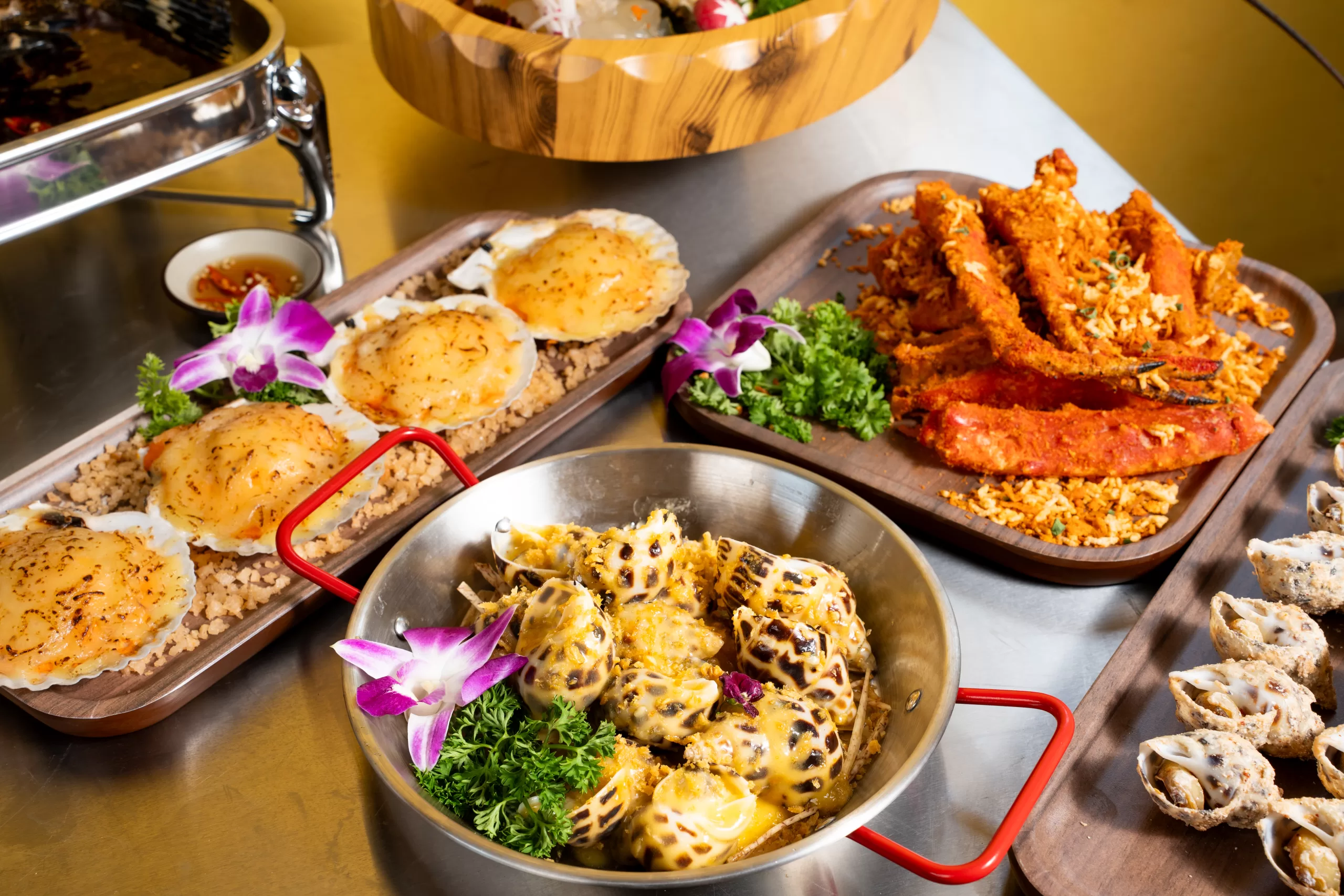
4.1. Main Seafood Dishes
This is the main part of the menu and is usually the category that receives the most attention from the group. You can choose several types of seafood that most members want to try instead of trying to include too many types in one meal.
KIM Seafood currently introduces a variety of fresh seafood such as King Crab, Alaska lobster, spiny lobster, Ca Mau crab, swimming crab, abalone, tiger prawns, grouper, squid, as well as various shellfish, snails, clams, and oysters.
4.2. Side Dishes
Side dishes give the table more options for members who do not eat a lot of seafood. KIM Seafood also offers salads, vegetables, rice, and several Vietnamese dishes that can be combined with a seafood menu.
For large groups, this category should not be overlooked because not everyone has the same preferences. Just a few suitable side dishes can help create a more balanced table.
4.3. Filling Dishes
Seafood fried rice or other filling dishes can be considered if the group wants them. KIM Seafood’s current menu includes seafood fried rice in some combos.
You should not order too many filling dishes from the beginning if the group mainly wants to enjoy seafood. Start with a moderate amount and order more if the group still needs additional food.
5. Seafood Menu for Groups: Should You Choose a Combo or Order Individual Dishes?
This is often an issue that takes the person in charge of a group a lot of time. Ordering individual dishes gives you more control, but when many people are involved, agreeing on the dishes can take a long time.
KIM Seafood currently offers combos for different group sizes, with the website featuring options for approximately 2–3 people, 3–4 people, and 4–6 people. Larger groups can discuss their needs further with the restaurant.
5.1. When Should You Choose a Combo?
A combo is suitable when the dishes in the set are generally appropriate for the group’s preferences. The biggest advantage is that the person in charge does not have to calculate every individual dish from the beginning.
For a Seafood Menu for Groups, a combo also makes it easier to estimate the amount of food before ordering. The group can then order additional dishes if needed.
5.2. When Should You Order Individual Dishes?
If the group has very different preferences, ordering individual dishes can offer more flexibility. For example, if a group mainly wants crab and shrimp, there is no need to choose a combo containing many other dishes.
Individual orders are also suitable when the group already knows exactly which types of seafood they want. However, the person in charge needs to control the quantities to avoid ordering duplicate or excessive dishes.
5.3. You Can Combine a Combo With Additional Dishes
This is an option worth considering for larger groups. A combo provides the main selection, and the group can then add a few dishes that many members particularly enjoy.
KIM Seafood also introduces the option of combining combos with additional dishes to better suit the number of guests, preferences, and actual needs.
6. Seafood Menu for Groups of 4–6 People
A group of 4–6 people is relatively easy to arrange because everyone can agree on the dishes more quickly. However, you should still avoid having every person choose an individual dish, which can cause the total number of dishes to increase unnecessarily.
A Seafood Menu for Groups of this size can prioritize several main seafood dishes, one side dish, and one filling dish or hotpot if the group wants one. After the dishes are served, you can assess the actual amount of food before ordering more.
6.1. Prioritize Dishes That Can Be Shared
Crab, shrimp, squid, clams, or hotpot dishes are generally easy to share within a group. When choosing dishes, prioritize options that several members can enjoy together.
This helps prevent a situation where one dish is eaten by only one person while other dishes are not enough for the whole table. It is also a simple principle when preparing a Seafood Menu for Groups.
7. How Should You Arrange a Seafood Menu for Groups of 10?
For 10 people, the person in charge should agree on the approximate budget and main dish categories in advance. Then, divide the menu into categories instead of choosing dishes based on individual preferences.
You can start with several main seafood dishes, add steamed or grilled dishes, one side dish, and one filling dish. If the group wants hotpot, review the total amount of food before deciding whether to add it.
7.1. Do Not Order Too Many Dishes From the Beginning
A common mistake among large groups is worrying about not having enough food and ordering too much from the start. With fresh seafood, ordering too much can also increase the budget quickly when dishes are priced by weight.
A reasonable Seafood Menu for Groups should leave some room for additional orders. This is easier to control than ordering the entire menu before knowing the group’s actual appetite.
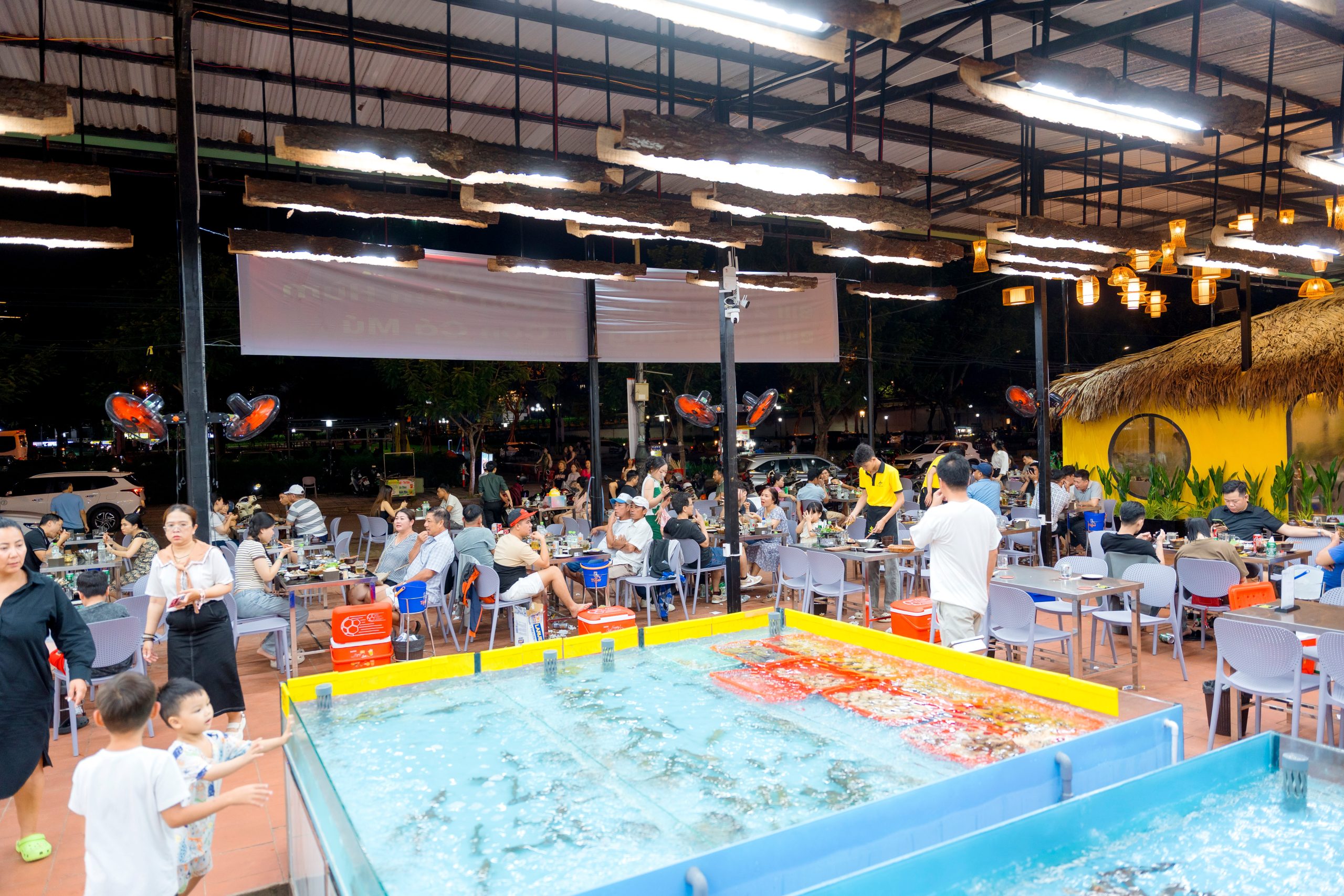
8. A Seafood Menu for Groups Should Start With a Budget
The budget should be agreed on before choosing the dishes, especially for groups ordering different types of fresh seafood. Without an estimated spending limit, choosing dishes can become difficult to control.
The person in charge can determine either a total budget or an estimated budget per person. The group can then discuss this with the restaurant to create a suitable Seafood Menu for Groups.
8.1. Ask About the Price Before Preparation
For seafood priced by kilogram, ask about the price and weight before requesting preparation. This helps the person in charge understand how each dish fits into the planned budget.
This is especially important when the group chooses seafood whose prices may vary over time. Do not rely only on prices from an old article or information that may no longer be updated.
8.2. Do Not Choose Dishes Based Only on Low Prices
The goal of a Seafood Menu for Groups is not to find as many low-priced dishes as possible but to balance the quantity, types of seafood, and needs of the entire group. A smaller menu with the right choices is often easier to manage than a table filled with dishes that no one finishes.
9. A Seafood Menu for Groups Should Consider Everyone’s Preferences
A group may include people of different ages and with different preferences. Some may prefer steamed dishes, while others may prefer grilled dishes, and some members may prioritize rice, salad, or side dishes.
Therefore, a Seafood Menu for Groups should not be based only on the preferences of the person making the reservation. The person in charge should quickly check which main dishes most members want before finalizing the menu.
9.1. What If Someone Cannot Eat Certain Types of Seafood?
Identify any seafood that should be avoided in advance and inform the restaurant if this affects the order. There is no need to change the entire menu; simply include suitable dishes for that member.
KIM Seafood also offers other dishes such as rice, nem lụi, bún chả, fresh spring rolls, salad, and vegetables, so the person in charge can consider combining different dishes instead of ordering only seafood.
10. A Seafood Menu for Groups Should Include the Seafood Available That Day
Fresh seafood can vary depending on the time of year and availability. Instead of creating a fixed menu several days in advance, the person in charge can ask the restaurant about the available options when confirming the order.
This helps make the Seafood Menu for Groups more suitable for the actual situation. The Da Nang tourism information portal also highlights the variety of local seafood, including shrimp, crab, squid, clams, shellfish, and snails.
10.1. What Should You Ask Before Finalizing the Order?
You can ask what types of seafood are available that day, which ones are still live, whether the price is calculated by kilogram or portion, and which cooking methods are available. For groups, it is also useful to ask which dishes are suitable for the number of guests.
These questions help the person in charge create a Seafood Menu for Groups based on actual information rather than simply choosing from a list of dishes.
Conclusion: A Seafood Menu for Groups Does Not Need Too Many Dishes
A suitable Seafood Menu for Groups is not a menu with as many dishes as possible. It is a menu that matches the number of guests, budget, and preferences of the group. Once these factors are clear, choosing dishes becomes easier and helps reduce unnecessary leftovers.
For smaller groups, you can start with a combo or several shared dishes. For larger groups, it is better to discuss the number of guests, budget, types of seafood, and cooking methods with the restaurant in advance instead of estimating the entire menu yourself.
At KIM Seafood, guests can explore combos based on group size and add dishes according to their actual needs. The KIM Seafood website currently introduces a variety of fresh seafood, prepared dishes, and combo options for families, groups of friends, and larger gatherings.
If you are preparing a meal for a group in Da Nang, start with the number of guests instead of starting with a list of dishes. Once you know how many people are dining, how much you want to spend, and which types of seafood you want to try, creating a Seafood Menu for Groups becomes much easier.
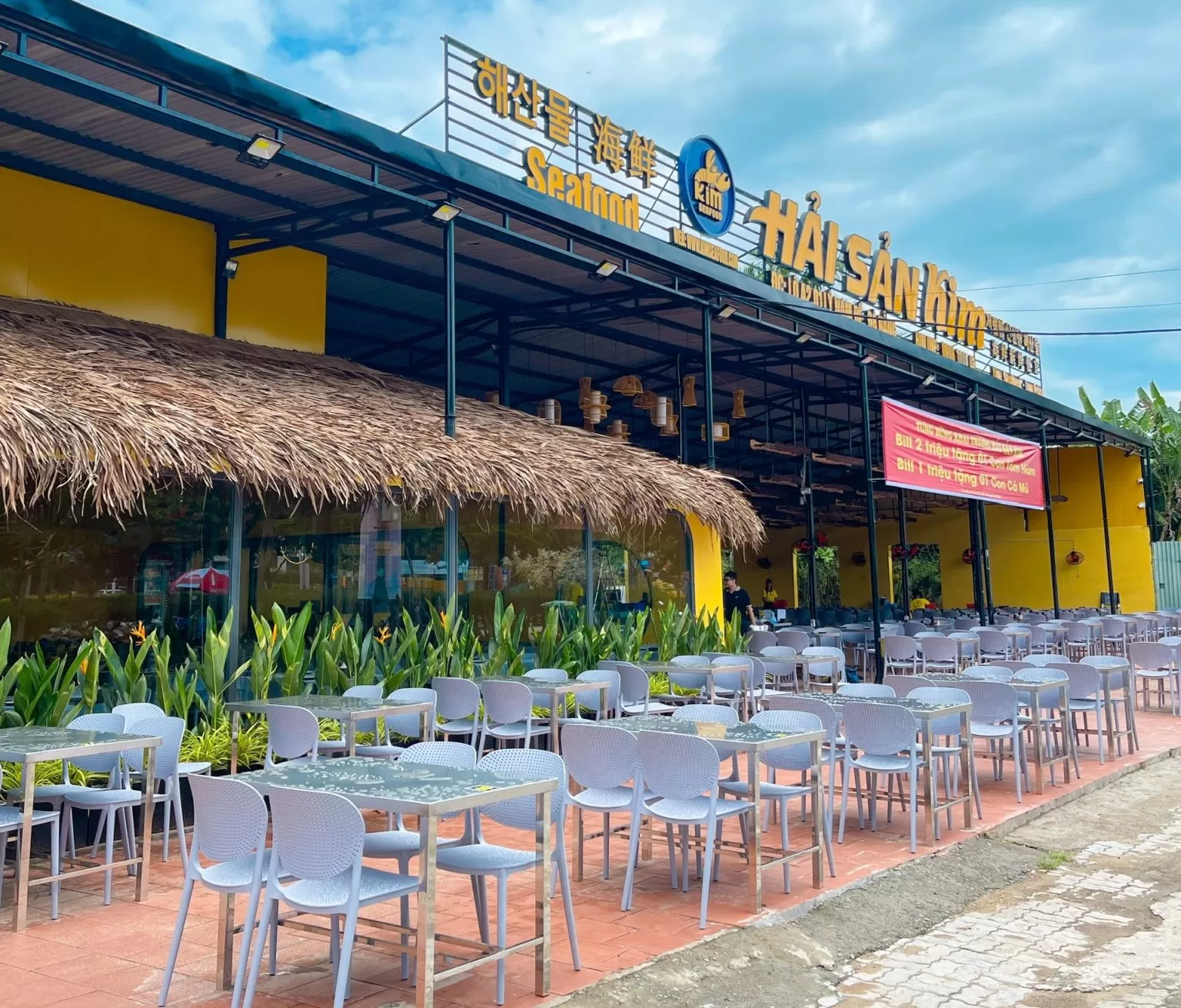
KIM Seafood is located at A2.01 Ly Nam De, An Hai Trung, Son Tra, Da Nang, and the website has a booking section where guests can provide the number of people and dining time. The website information currently shows operating hours of 10:30–23:00, so groups with schedules close to opening or closing time should confirm directly with the restaurant before arriving.
Finally, do not try to finalize an overly large Seafood Menu for Groups from the beginning. A well-organized menu with main dishes, side dishes, and room for adjustments based on actual needs will be easier for both the person making the reservation and everyone at the table.
See also: What Seafood Is Good in Da Nang? 10 Dishes to Try at KIM Seafood
Contact Information:
- Address: Kim Seafood, A2.01 Lý Nam Đế, An Hải Trung, Sơn Trà, Đà Nẵng, Việt Nam.
- Phone: 0916111143
- Opening Hours: 10:00 am – 23:00 pm
- Email: hello.kimseafood@gmail.com
- Fanpage Facebook: Hải Sản KIM Seafood